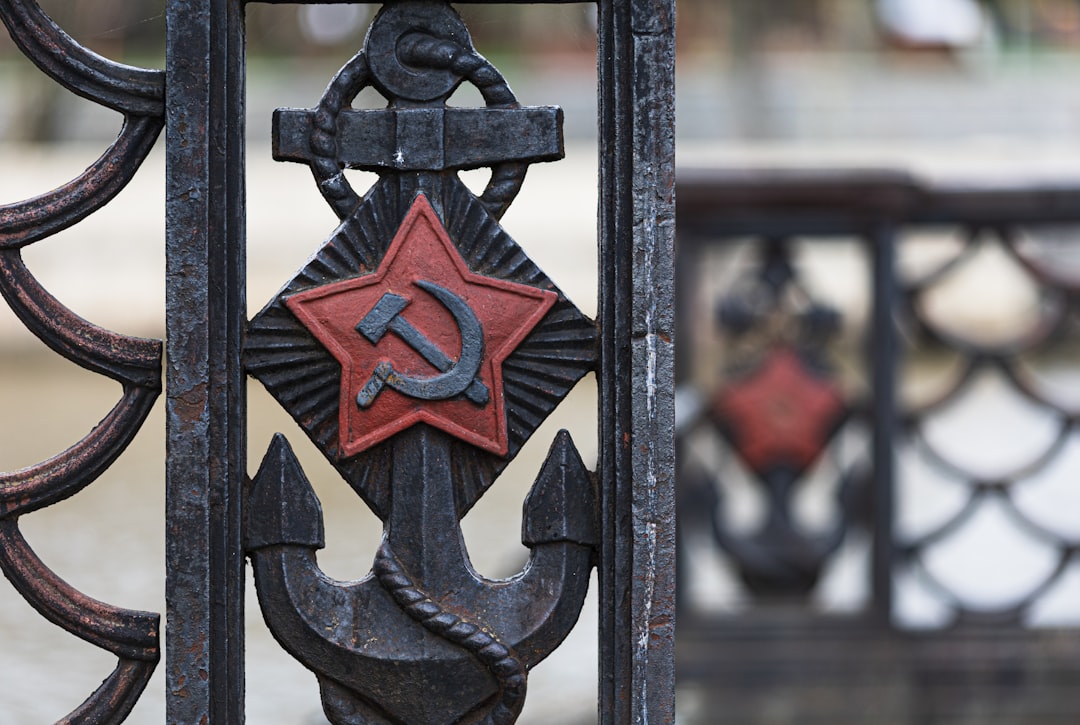
The colossal shadow of the Soviet Union, a geopolitical titan that once bestrode a significant portion of the globe, ultimately succumbed to internal pressures and external strains. One of the most significant contributing factors to its unraveling was a chronic case of military overextension. This article will delve into the multifaceted ways in which the Soviet Union’s unyielding commitment to military might became a self-destructive force, ultimately accelerating its collapse.
For decades, the Soviet Union maintained a military apparatus of unparalleled scale. This commitment was not merely a matter of defense; it was a fundamental pillar of its ideology, its perceived global role, and its very identity. The persistent allocation of a disproportionate share of national resources to the military acted as a relentless drain on the Soviet economy, akin to a massive, unyielding anchor dragging down a ship.
Economic Strain: A Zero-Sum Game
The foundational principle of Soviet economic planning was often at odds with the demands of its military. Resource allocation was not a flexible system, constantly adapting to civilian needs. Instead, it was an often rigid, top-down structure where military production frequently took precedence.
Industrial Prioritization and Scarcity
Heavy industry, particularly that geared towards defense, consistently received preferential treatment in terms of raw materials, skilled labor, and technological advancement. This left essential consumer sectors perpetually underdeveloped. Factories capable of producing refrigerators, washing machines, or quality clothing often found themselves at the back of the queue, struggling with inferior resources and outdated machinery. Imagine, if you will, an enormous farm where the vast majority of fertilizer and water is dedicated to growing a single, albeit impressive, crop, leaving other vital sustenance to wither. This was the fate of many civilian industries.
The Brain Drain into Military Research
The brightest minds, the most innovative engineers, and the most dedicated scientists were frequently channeled into military research and development. While this produced impressive weaponry, from intercontinental ballistic missiles to advanced tanks, it simultaneously deprived the civilian economy of crucial intellectual capital needed for innovation and efficiency. The consumer market, perpetually starved of modern goods and services, reflected this intellectual lacuna.
Technological Lag in Civilian Sectors
The focus on military technology had another profound consequence: it fostered a dramatic technological gap between the Soviet Union and the Western world in civilian applications. While Soviet military hardware often rivaled, and sometimes surpassed, its Western counterparts, the everyday lives of Soviet citizens often involved antiquated technology.
The Isolation of Military Innovation
Military research was largely conducted in closed, secret facilities, with little crossover or transfer of innovation to the civilian sector. This stands in stark contrast to Western economies where military research often has direct spin-offs that benefit consumer goods and services. For example, while the Soviet Union built powerful jet engines for its aircraft, its domestic automobile industry frequently struggled with reliability and fuel efficiency.
The military overextension of the Soviet Union played a crucial role in its eventual collapse, as highlighted in various analyses of the period. One such article discusses how the extensive military commitments and the burdensome costs associated with maintaining a vast arsenal contributed to economic strain and political instability within the USSR. This overreach not only drained resources but also diverted attention from pressing domestic issues, ultimately leading to the disintegration of the Soviet state. For more insights on this topic, you can read the article at Hey Did You Know This.
The Cost of Global Projection: Empire by Force
The Soviet Union’s military ambitions extended far beyond its borders. Its commitment to supporting satellite states, intervening in regional conflicts, and maintaining a global presence demanded immense resources and frequently led to direct military engagements. This global projection, while intended to solidify its standing as a superpower, ultimately became another heavy millstone around its neck.
The Burden of Satellite States
The Eastern Bloc, comprising numerous Soviet-allied nations in Central and Eastern Europe, was a strategic buffer and a source of political influence. However, maintaining these regimes often required significant economic and military subsidies.
Economic Support and Military Guarantees
The Soviet Union provided substantial economic aid to these countries, often at the expense of its own internal development. Furthermore, it bore the ultimate responsibility for their military defense, ensuring their armies were equipped and trained to Soviet standards. This created a complex web of financial and logistical obligations that were increasingly difficult to sustain.
Suppressing Dissent and Maintaining Control
The commitment to maintaining its sphere of influence also necessitated the use of military force to suppress dissent, as evidenced by interventions in Hungary (1956) and Czechoslovakia (1968). These actions, while restoring Soviet control in the short term, incurred significant international condemnation and solidified the image of the Soviet Union as an oppressive power, further isolating it from the global community.
The Afghanistan War: A Quagmire of Resources and Morale
The Soviet invasion of Afghanistan in 1979 proved to be a pivotal and ultimately disastrous undertaking. Intended as a swift intervention to prop up a communist government, it devolved into a protracted and costly conflict, consuming vast resources and eroding public support.
Financial and Human Cost
The war in Afghanistan became a gaping maw, swallowing billions of rubles and claiming the lives of tens of thousands of Soviet soldiers. The financial strain was immense, exacerbating existing economic difficulties. The human cost, while initially downplayed by state media, slowly seeped into public consciousness, undermining morale and fostering cynicism.
International Isolation and Sanctions
The invasion sparked widespread international condemnation, leading to boycotts of the 1980 Moscow Olympics and significant economic sanctions from Western nations. This further isolated the Soviet Union and hindered its access to crucial Western technology and markets. The war became a bleeding wound, a perpetual drain on the Soviet body politic, much like a chronic illness slowly but inexorably weakening a strong man.
The Arms Race: A Technological and Economic Treadmill
The Cold War era was defined by an unrelenting arms race between the Soviet Union and the United States. This technological competition forced both superpowers into an escalating cycle of military expenditure, but the Soviet Union, with its less robust economy, was uniquely vulnerable to its demands.
Mutually Assured Destruction (MAD) and its Price
The doctrine of Mutually Assured Destruction, while theoretically preventing direct large-scale conflict, necessitated both sides maintaining colossal arsenals of nuclear weapons. This ongoing development and maintenance of nuclear capabilities, from intercontinental ballistic missiles to nuclear submarines, consumed an unimaginable amount of resources.
The Space Race and its Military Implications
The space race, often presented as a scientific endeavor, was inherently intertwined with military aspirations. The development of powerful rockets capable of launching satellites had direct implications for delivering nuclear payloads. The constant push to outdo the West in space technology further diverted resources from civilian applications, a costly competition where the finish line was perpetually receding.
The SDI Challenge: A Fatal Gambit
In the 1980s, the United States launched the Strategic Defense Initiative (SDI), popularly known as “Star Wars.” While the feasibility of SDI was debated, the very threat of such a system placed immense pressure on the Soviet Union to respond in kind, or to develop countermeasures.
Exacerbating Economic Weaknesses
The notion of a new, technologically advanced arms race, particularly one involving space-based defenses, sent shivers down the spine of Soviet planners. The Soviet economy, already struggling, was ill-equipped to compete in such a high-stakes technological arena. Attempting to match SDI would have been an astronomical undertaking, practically guaranteed to bankrupt the nation. It was a bluff, perhaps, but one that exposed the gaping chasm between Soviet military aspirations and economic realities.
Internal Dissolution: The Echoes of Overreach
The pervasive military focus had a corrosive effect on the Soviet Union’s internal stability, eroding social cohesion and fueling discontent. The sacrifices demanded for the sake of military strength ultimately created a society riddled with unmet needs and a palpable sense of grievance.
Declining Living Standards and Public Disillusionment
While the Soviet state boasted of its military prowess, the average citizen faced chronic shortages, low-quality goods, and a lack of basic freedoms. The stark contrast between military might and civilian hardship became increasingly difficult to ignore.
Consumer Goods Shortages
A persistent characteristic of the Soviet economy was the scarcity of consumer goods. Even basic necessities could be difficult to obtain, often requiring queuing for hours or relying on black market connections. This created widespread frustration and a sense of being perpetually shortchanged for the sake of an invisible, all-consuming military apparatus.
Housing and Infrastructure Neglect
Investment in housing, infrastructure, and social services often lagged behind military spending. Cities suffered from dilapidated buildings, inefficient transportation, and inadequate healthcare. This tangible decline in living standards fostered a growing disillusionment with the communist system itself, as citizens questioned the value of sacrifices that yielded so little in return.
The Rise of Nationalism and Separatist Movements
The economic strain and the perceived failures of the centralized Soviet system also contributed to a resurgence of nationalist sentiments within the various republics. The sense of being exploited by Moscow, coupled with a desire for greater autonomy, began to chip away at the monolithic facade of the Soviet Union.
Economic Grievances and Ethnic Tensions
Many republics felt that their resources were being siphoned off to support the massive Soviet military and the central government, with little benefit returned to their own populations. This economic resentment often intertwined with existing ethnic and cultural differences, creating potent forces for separatism.
The military overextension of the Soviet Union played a crucial role in its eventual collapse, as the strain of maintaining a vast military presence across Eastern Europe and Afghanistan drained resources and weakened the economy. This situation is further explored in a related article that discusses the various factors contributing to the dissolution of the Soviet state. For more insights on this topic, you can read the article here. The combination of military commitments and economic challenges ultimately proved unsustainable, leading to significant political and social upheaval within the USSR.
The Collapse: A House of Cards Unraveling
| Metric | Data/Value | Impact on Soviet Collapse |
|---|---|---|
| Military Expenditure (% of GDP) | Up to 15% | High military spending strained the economy, diverting resources from consumer goods and infrastructure. |
| Number of Active Military Personnel | Approximately 4.5 million (1980s) | Large standing army required extensive funding and logistics, contributing to economic inefficiency. |
| Arms Race with the USA | Continuous escalation from 1960s to 1980s | Forced the USSR to allocate vast resources to maintain parity, exacerbating economic problems. |
| Military Engagements | Afghanistan War (1979-1989) | Costly and prolonged conflict drained resources and morale, weakening Soviet influence and economy. |
| Defense Industry Employment | Approximately 20 million workers | Large workforce in defense reduced labor availability for civilian industries, hindering economic diversification. |
| Percentage of GDP on Military vs Consumer Goods | Military: ~15%, Consumer Goods: ~25% | Imbalance led to shortages and reduced quality of life, fueling public dissatisfaction. |
| Impact on Technological Development | Focus on military tech over civilian tech | Limited innovation in consumer sectors, contributing to economic stagnation. |
Eventually, the cumulative weight of military overextension, economic stagnation, and internal dissent proved too much for the Soviet Union to bear. Like a bridge constantly overloaded with cargo, it eventually buckled and collapsed under the immense pressure.
The Gorbachev Reforms: Too Little, Too Late
Mikhail Gorbachev’s attempts at reform, Glasnost (openness) and Perestroika (restructuring), were aimed at revitalizing the flagging Soviet system. However, by opening up society and attempting to introduce market elements, he inadvertently accelerated the unraveling process.
Exposing the True State of Affairs
Glasnost allowed for unprecedented levels of criticism and exposed the true extent of economic inefficiency and social problems, including the immense cost of the military. This transparency, while necessary, further fueled public discontent and delegitimized the existing power structure.
Weakening Central Control
Perestroika aimed to decentralize economic decision-making, but in practice, it weakened central control without creating a viable alternative. This created a power vacuum that nationalist movements were quick to exploit, further fracturing the Soviet federal structure.
The Final Dominoes: External Pressures and Internal Fragility
The reforms, coupled with continued external pressures from the West and the persistent drain of military spending, created a perfect storm. The satellite states, no longer held in thrall by an iron fist, began to break away. The Berlin Wall fell in 1989, a symbolic crack in the very foundation of the Soviet empire.
The Disintegration of the Warsaw Pact
The erosion of Soviet power was dramatically demonstrated by the collapse of the Warsaw Pact, its military alliance with Eastern European nations. As these countries asserted their independence, the strategic rationale for the Soviet Union’s vast military commitment became increasingly untenable.
The August Coup and the End of an Era
The attempted coup by hardliners in August 1991, aimed at preserving the Soviet system, ultimately backfired, strengthening the hand of reformists and accelerating the demise of the Union. The final act, the formal dissolution of the Soviet Union in December 1991, was the culmination of decades of a self-destructive military focus that had weakened its very core. The Soviet Union, once a formidable fortress, had become a hollow shell, brought down not by external invasion, but by the relentless strain of its own overextension.
FAQs
What was the Soviet Union’s military overextension?
The Soviet Union’s military overextension refers to the excessive allocation of resources, manpower, and finances to maintain a vast military presence and engage in multiple conflicts and arms races during the Cold War. This included sustaining a large standing army, supporting satellite states, and competing with the United States in nuclear and conventional arms development.
How did military overextension affect the Soviet economy?
Military overextension placed a significant strain on the Soviet economy by diverting resources away from consumer goods and infrastructure development. The high defense spending contributed to economic stagnation, shortages of basic goods, and reduced investment in technological innovation, which weakened the overall economic stability of the Soviet Union.
What role did military overextension play in the collapse of the Soviet Union?
Military overextension was a key factor in the collapse of the Soviet Union as it exacerbated economic difficulties and exposed systemic inefficiencies. The unsustainable defense expenditures, combined with declining oil revenues and internal political challenges, undermined the government’s ability to maintain control and meet the needs of its population, leading to political instability and eventual dissolution.
Did the Soviet Union’s involvement in Afghanistan contribute to its military overextension?
Yes, the Soviet invasion of Afghanistan in 1979 significantly contributed to military overextension. The prolonged conflict drained military and economic resources, resulted in heavy casualties, and became a costly quagmire that further weakened the Soviet Union’s military and political standing both domestically and internationally.
How did the arms race with the United States impact Soviet military overextension?
The arms race with the United States intensified Soviet military overextension by compelling the USSR to invest heavily in nuclear weapons, missile technology, and conventional forces to keep pace with American advancements. This competition escalated defense spending to unsustainable levels, deepening economic problems and accelerating the decline of the Soviet state.