
The twilight of the Soviet Union in the 1990s was not merely a political transition but a period of profound social upheaval. Decades of simmering discontent, economic stagnation, and the iron grip of the state had finally given way, unleashing a torrent of complex emotions and societal transformations that irrevocably altered the lives of millions. As the USSR crumbled, its citizens found themselves standing on the precipice of an unknown future, grappling with the ghosts of the past and the anxieties of the present. This article aims to explore the multifaceted social turmoil that characterized the 1990s in the former Soviet Union, examining the economic shockwaves, the disintegration of social safety nets, the rise of crime, and the struggle for new national identities.
The transition from a centrally planned economy to a market-based system was, for many, akin to being thrown into a vast ocean without a life raft. The familiar, albeit often inefficient, structures that had dictated production, distribution, and consumption for decades were dismantled with bewildering speed.
Hyperinflation and the Devaluation of Savings
One of the most immediate and devastating consequences for ordinary citizens was hyperinflation. The money they had diligently saved for retirement, for their children’s education, or for future purchases, dissolved into thin air. Imagine waking up to find that your life’s savings, once enough to purchase a house, could now barely buy a loaf of bread. This was the stark reality for millions. The ruble, once a symbol of state power, plummeted in value, becoming a constant source of anxiety and a tangible representation of economic instability.
Mass Unemployment and Factory Closures
The closure of state-owned enterprises, many of which were inefficient and uncompetitive in a global market, led to widespread unemployment. Entire towns, built around single factories, faced economic decimation. The guaranteed employment that had been a cornerstone of Soviet ideology vanished, leaving millions adrift. The societal contract, where the state provided work in exchange for loyalty, lay shattered.
The Rise of the Oligarchs and Income Inequality
You often hear about the rise of the “new rich” during this period, and it’s a critical aspect of understanding the social fabric. While many struggled, a small segment of the population, often with connections to the former Soviet nomenklatura or through shrewd — and sometimes illicit — dealings, rapidly amassed immense wealth. This created a stark division, a gaping chasm between the impoverished masses and the newly minted millionaires and billionaires, fueling resentment and a sense of injustice that persists to this day. The sudden appearance of luxury goods alongside widespread poverty was a constant, visual reminder of this growing disparity.
The social unrest in the USSR during the 1990s was a pivotal period marked by economic turmoil and political upheaval, leading to the eventual dissolution of the Soviet Union. For a deeper understanding of the factors that contributed to this unrest, you can explore a related article that discusses the various social and economic challenges faced by the Soviet populace during this transformative decade. To read more about it, visit this article.
The Erosion of Social Safety Nets: A State in Retreat
For decades, the Soviet state had prided itself on providing a comprehensive, albeit often rudimentary, system of social welfare. This included guaranteed housing, free healthcare, education, and subsidized goods. As the state retreated and its coffers emptied, these crucial safety nets began to fray and, in many cases, outright collapse.
Deterioration of Healthcare and Education
Healthcare, once universally accessible, albeit often of varying quality, saw a dramatic decline. Hospitals struggled with shortages of medicines, equipment, and even basic supplies. Similarly, the education system, a pillar of Soviet society, suffered from underfunding, leading to a decline in quality and, for many, a loss of hope in upward mobility through academic achievement. Imagine a generation whose educational prospects are suddenly diminished, directly impacting their future ability to contribute and thrive.
Housing Crises and the End of Guaranteed Accommodation
The promise of free housing, while often involving lengthy waiting lists and cramped conditions, was a fundamental part of the Soviet social contract. With the collapse of the state, this promise evaporated. Housing became a commodity, subject to market forces that many could not afford. Homelessness, once officially non-existent, began to appear in cities, a visible manifestation of societal distress.
Pension System Collapse and Elderly Poverty
Perhaps one of the most poignant aspects of the social turmoil was the plight of the elderly. Their pensions, once modest but reliable, became almost worthless due to inflation. Many who had dedicated their lives to building the Soviet Union found themselves struggling to survive, forced to rely on relatives or even begging. This demographic suffered immensely, a silent testament to the breakdown of societal support systems.
The Deluge of Crime and Corruption: A Society Unmoored
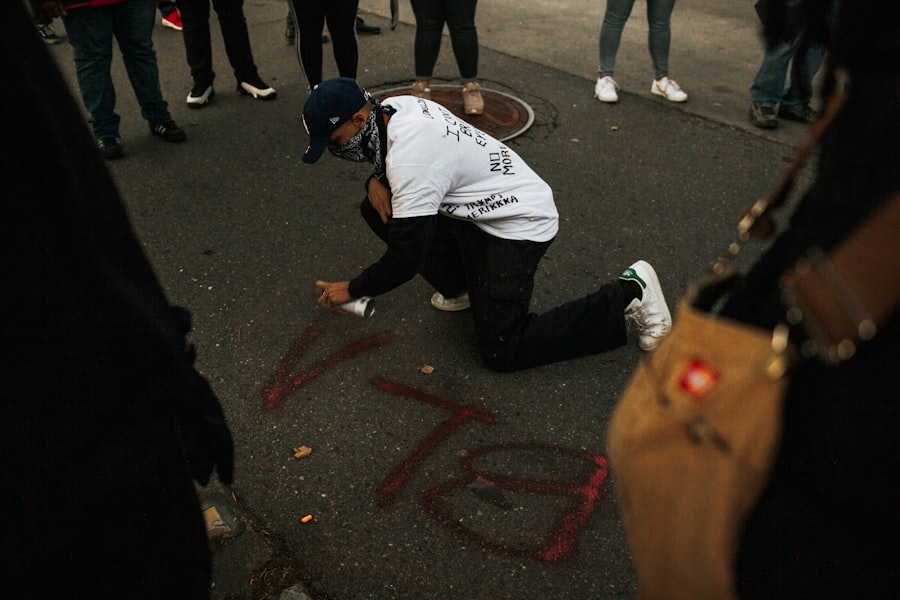
The vacuum created by the weakening of state authority, coupled with economic desperation, proved to be fertile ground for the explosion of crime and corruption. The rule of law seemed a distant memory as new, often brutal, power structures emerged.
Rise of Organized Crime and “Mafia” Culture
The 1990s became synonymous with the rise of organized crime. So-called “mafia” groups permeated all levels of society, from street-level racketeering to infiltrating government and businesses. Protection rackets became commonplace, and violence, including contract killings, became an alarmingly visible aspect of daily life. For many, fear became a constant companion, a stark contrast to the perceived safety and order, however oppressive, of the Soviet era.
Petty Crime and Survival Strategies
Beyond organized crime, petty crime surged as individuals, facing dire economic circumstances, resorted to desperate measures to survive. Theft, shoplifting, and even prostitution became more prevalent. This wasn’t merely about criminality in the traditional sense; for many, it was a brutal pragmatic response to existential threats, a desperate attempt to put food on the table.
Widespread Corruption and Lack of Trust in Institutions
Corruption, which had always existed within the Soviet system, escalated to unprecedented levels during the 1990s. From everyday interactions with bureaucrats to high-level political dealings, bribery and illicit exchanges became the norm. This pervasive corruption further eroded public trust in state institutions, including the police and the judiciary, creating a sense of lawlessness and impunity. When the very pillars of justice are perceived as corrupt, where does one turn for recourse?
Redefining Identities: Nationalism, Religion, and Lost Ideals
As the grand narrative of communism crumbled, societies grappled with the void, seeking new frameworks for identity and meaning. This led to a resurgence of nationalisms, a newfound embrace of religion, and a pervasive sense of ideological disorientation.
The Resurgence of Ethnic Nationalism
With the central authority weakened, ethnic tensions that had been suppressed for decades erupted, leading to conflicts in various regions, notably Nagorno-Karabakh, Chechnya, and Transnistria. The idea of a unified “Soviet people” disintegrated, replaced by often competing and sometimes violent national aspirations. For many, this was a difficult and often bloody process of self-definition, of carving out a distinct identity after years of being submerged under a larger, singular ideology.
The Return of Religion
For over 70 years, the Soviet state had actively suppressed religion, treating it as an “opiate of the masses.” The 1990s witnessed a dramatic resurgence of religious practice, particularly Orthodox Christianity, but also Islam and other faiths. Churches, once museums or warehouses, reopened, and a spiritual hunger, long denied, manifested itself. This was a complex phenomenon, offering solace and community to some, while for others, it became intertwined with nationalist sentiments.
The Search for a New Ideology and Nostalgia
The abrupt disappearance of communism left a significant ideological void. Many citizens, particularly older generations, felt a deep sense of loss for the stability and perceived certainties of the Soviet era, even if they were born of repression. This nostalgia, sometimes romanticized, became a coping mechanism for the chaotic present. Younger generations, on the other hand, struggled to articulate a new vision for their respective nations, often oscillating between Western ideals and a longing for a more structured, albeit authoritarian, past.
The social unrest in the USSR during the 1990s was a complex phenomenon driven by a multitude of factors, including economic hardship and a growing desire for political reform. Many citizens found themselves disillusioned with the government, leading to widespread protests and movements that ultimately contributed to the dissolution of the Soviet Union. For a deeper understanding of this tumultuous period, you can read more about it in this insightful article on social movements and their impact on society. If you’re interested, check out the related piece here.
The Psychological Scars: Disillusionment, Uncertainty, and Resilience
| Year | Type of Unrest | Location | Estimated Number of Participants | Cause | Government Response |
|---|---|---|---|---|---|
| 1990 | Protests | Vilnius, Lithuania | Thousands | Independence movement from USSR | Military crackdown, casualties reported |
| 1991 | August Coup Protests | Moscow, Russia | Hundreds of thousands | Opposition to hardline coup against Gorbachev | Failed coup, increased political instability |
| 1992 | Ethnic Clashes | Nagorno-Karabakh | Tens of thousands displaced | Territorial dispute between Armenia and Azerbaijan | Military conflict, ceasefire attempts |
| 1993 | Constitutional Crisis | Moscow, Russia | Thousands | Power struggle between President Yeltsin and Parliament | Military assault on parliament building |
| 1994-1996 | Chechen War | Chechnya | Hundreds of thousands affected | Chechen independence movement | Full-scale military conflict |
| 1998 | Economic Protests | Various cities in Russia | Thousands | Economic crisis and devaluation of ruble | Government attempts at stabilization |
Beyond the tangible shifts in economics and politics, the 1990s left deep psychological scars on the populations of the former Soviet Union. It was a period defined by disillusionment, pervasive uncertainty, and, remarkably, a testament to the human capacity for resilience.
Disillusionment with Democracy and the West
Many had initially embraced the promises of democracy and a market economy with optimism. However, the harsh realities of the transition – the poverty, crime, and corruption – led to widespread disillusionment. The notion of a benevolent “West” providing a blueprint for prosperity quickly faded, replaced by skepticism and a sense of betrayal. This legacy of disillusionment continues to shape political attitudes in the region today.
Pervasive Uncertainty and Future Anxiety
The future, once meticulously planned by the state, became an uncharted territory. The sense of security, however false it may have been, vanished. People grappled with profound uncertainty about their jobs, their savings, their children’s prospects, and the very stability of their nascent states. This psychological burden of constant anxiety was a heavy weight, shaping individual decisions and collective moods.
The Emergence of a “Shadow Economy” and Adapting to New Realities
In the face of official collapse, ingenuity often thrived. Many individuals adapted by engaging in the “shadow economy,” resorting to informal trade, bartering, and unofficial services to make ends meet. This period exemplified a remarkable human capacity to survive and adapt in extreme circumstances, showcasing a gritty resilience even amidst profound social turmoil. Individuals, often with no prior experience in entrepreneurship, found innovative ways to navigate the new, unforgiving landscape.
A Legacy of Trauma and Generational Divide
The 1990s left a complex legacy, creating a stark generational divide. Those who lived through it often carry a unique set of experiences and perspectives, frequently marked by trauma and a deep-seated distrust of institutions. Younger generations, growing up in the aftermath, have a different understanding of their history, one shaped by the consequences of this turbulent decade. Understanding this period is not just an academic exercise; it is crucial for comprehending the current sociopolitical landscapes of the post-Soviet states. The memories and lessons of the 1990s remain etched into the collective consciousness, shaping perspectives on governance, economic policy, and national identity to this very day.
FAQs
What were the main causes of social unrest in the USSR during the 1990s?
The social unrest in the USSR during the 1990s was primarily caused by economic instability, political upheaval, the collapse of the Soviet Union in 1991, widespread unemployment, inflation, and shortages of basic goods. These factors led to significant public dissatisfaction and protests.
How did the collapse of the Soviet Union contribute to social unrest?
The collapse of the Soviet Union resulted in the loss of centralized control, economic disintegration, and the emergence of new national borders. This transition caused uncertainty, disrupted social services, and led to conflicts over resources and political power, fueling social unrest.
What role did economic reforms play in the social unrest of the 1990s USSR?
Economic reforms such as “shock therapy” aimed at rapid market liberalization led to hyperinflation, unemployment, and a decline in living standards for many citizens. These hardships intensified public dissatisfaction and contributed to protests and strikes.
Were there any significant protests or movements during this period?
Yes, there were numerous protests, strikes, and demonstrations across the former Soviet republics. Notable examples include labor strikes, nationalist movements seeking independence, and public demonstrations against government policies and economic conditions.
How did the government respond to social unrest in the 1990s?
Government responses varied but often included attempts at political reform, use of security forces to suppress protests, and efforts to stabilize the economy. In some cases, there were violent clashes between protesters and authorities, while in others, governments negotiated with opposition groups.