The ubiquitous recycling symbol, a triumvirate of chasing arrows, has become a global pictogram for environmental conscientiousness. However, behind this seemingly simple emblem lies a complex and often contradictory narrative, one heavily influenced by industry interests. This article delves into the historical propagation of recycling as a panacea, exposing the strategic dissemination of misinformation that has shaped public perception and policy, ultimately obscuring the deeper systemic issues of waste generation.
The modern recycling movement, while ostensibly a grassroots environmental initiative, bears the indelible imprint of powerful corporate actors. Their involvement was not solely driven by ecological altruism but by a more pragmatic concern: protecting their existing economic models from the growing tide of environmental regulation and public criticism.
The Dawn of Disposable Culture and Its Critics
The mid-20th century witnessed a dramatic shift towards a throwaway society. Mass production and consumerism, fueled by innovations in plastics and packaging, led to an unprecedented proliferation of waste. This surge in discarded materials began to overwhelm landfills and pollute natural environments, sparking a burgeoning environmental movement that demanded accountability from manufacturers.
The Rise of Packaging Lobbyists and PR Strategies
Faced with the prospect of bans on single-use plastics and mandated reusable packaging, a consortium of industries—including plastics manufacturers, beverage companies, and packaging producers—began to strategize. Their response was not to fundamentally alter their production methods but to shift the burden of waste management to the consumer. This marked the genesis of the “Keep America Beautiful” campaign and, subsequently, the promotion of recycling as a primary solution. These campaigns, often featuring poignant imagery of litter and calls for individual responsibility, skillfully deflected attention from the producers of the waste.
The “Solution” That Served Industry Interests
Recycling, presented as a virtuous act, offered a politically convenient alternative to more transformative changes in manufacturing and consumption patterns. It allowed industry to continue producing disposable goods while appearing environmentally responsible. This strategy effectively reframed the waste problem from one of product design and corporate responsibility to one of consumer behavior and municipal infrastructure. It was a classic “blame the victim” approach, where the individual’s failure to recycle correctly became the primary hurdle, rather than the inherent unsustainability of the products themselves.
In the recycling industry, misleading information can significantly impact public perception and participation. A recent article highlights various misconceptions surrounding recycling practices and the effectiveness of recycling programs. For a deeper understanding of these issues and to learn more about how misinformation can hinder recycling efforts, you can read the full article here: Misleading Information in the Recycling Industry.
The Illusion of Infinite Loop: Technical and Economic Realities
The popular understanding of recycling often envisions an endless cycle, where discarded materials are perpetually reborn into new products. However, the reality is far more nuanced, constrained by technical limitations and economic imperatives that often render this ideal an unattainable dream for many materials.
The Myth of Material Homogeneity
The sheer diversity and complexity of materials used in modern products present a significant challenge to effective recycling. A single plastic bottle, for example, is not just “plastic”; it often comprises different types of plastic, glues, labels, and even colorants. Separating these components effectively and economically is a monumental task. When different plastics are mixed and melted together, they often degrade in quality, resulting in a weaker, less versatile material, akin to trying to mix oil and water and expecting a perfectly homogenous solution.
Market Demand and Contamination Challenges
Even when materials can be technically recycled, their economic viability depends on market demand for the recycled content. If the cost of virgin material is lower, or if consumers and manufacturers prefer the aesthetic or performance characteristics of virgin plastic, recycled materials struggle to find buyers. Furthermore, contamination is a perpetual battle. A single non-recyclable item can spoil an entire bale of otherwise recyclable material, rendering it worthless and destined for landfill or incineration. This makes the recycling stream highly vulnerable and inefficient.
The Downcycling Dilemma
For many materials, especially plastics, recycling often leads to “downcycling.” This means that the recycled material is used to create products of lower quality or value than the original item. For instance, a clear plastic bottle might be downcycled into a park bench or carpet fiber, but it cannot be endlessly recycled back into another high-quality, food-grade bottle. This is not a true closed loop but rather a linear process with a slightly extended lifespan, eventually culminating in landfill or incineration. The material loses its inherent properties with each cycle, much like a photocopy of a photocopy gradually loses resolution.
Greenwashing and the “Wishcycling” Phenomenon
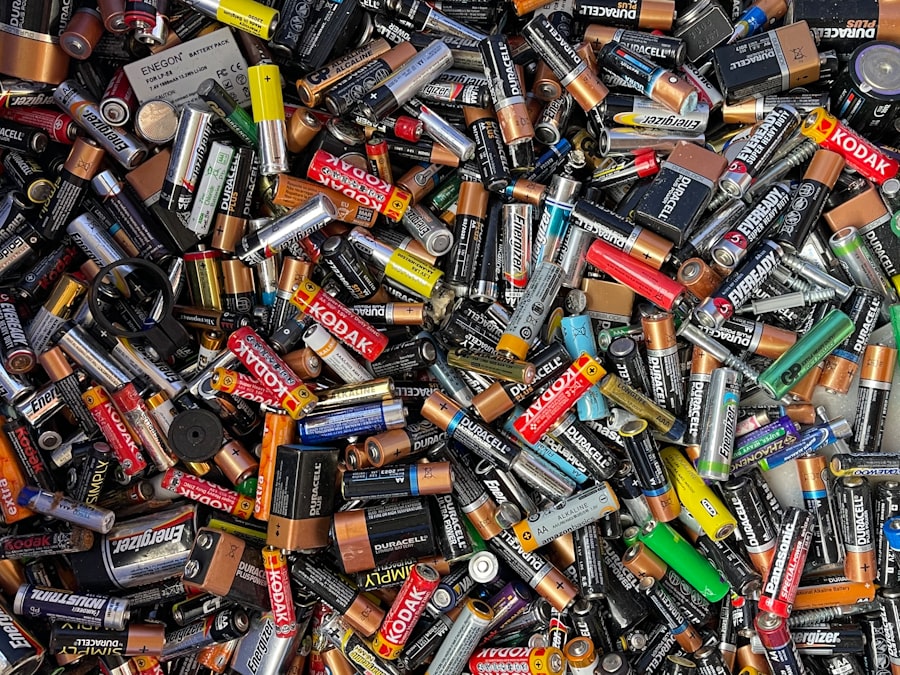
The constant messaging encouraging recycling, often without clear and consistent guidance, has fostered a phenomenon known as “wishcycling.” This refers to the act of consumers placing non-recyclable items into recycling bins in the optimistic belief that they will be processed, or simply to assuage guilt.
The Ambiguity of Recycling Labels
The proliferation of different recycling symbols and local regulations has created significant confusion for the average consumer. What is recyclable in one municipality may not be in another, leading to a patchwork of rules that are difficult to navigate. This ambiguity, often seen as a subtle form of misinformation, incentivizes wishcycling, as individuals, striving to “do the right thing,” err on the side of inclusion rather than exclusion.
Corporate Responsibility in Communicating Recyclability
Many companies continue to display the recycling symbol on products that are not widely recyclable, or that contain components that render the entire product unrecyclable. This practice, often labeled as greenwashing, creates a misleading impression of a product’s environmental footprint. It is a critical example of industry promoting an illusion of recyclability without the corresponding infrastructure or market demand to support it. This puts the onus back on the consumer to decipher complex labeling and local regulations, rather than the producers designing for actual recyclability.
The Unintended Consequences of Wishcycling
Wishcycling is not a benign act. It introduces contaminants into the recycling stream, increasing sorting costs, reducing the quality of recycled materials, and ultimately decreasing the overall efficiency and economic viability of recycling programs. It’s like adding sand to a carefully brewed coffee; it pollutes the whole batch. This reinforces the narrative that recycling is a flawed system, inadvertently blaming consumers for systemic failures.
The Export of Our Waste Problem: A Global Shell Game
For decades, developed nations, particularly the United States, have relied heavily on other countries, primarily in Asia, to process their recycling. This practice effectively outsourced the environmental and social burdens of waste management, while simultaneously masking the true scale of our domestic waste problem.
China’s “National Sword” Policy and Its Repercussions
For years, China was the primary destination for the world’s recyclables. However, in 2018, China implemented its “National Sword” policy, severely restricting the import of most recycled materials due to high contamination rates. This seismic policy shift exposed the fragility of the global recycling system and sent shockwaves through waste management industries worldwide.
The Unveiling of Domestic Infrastructure Deficiencies
With China no longer accepting contaminated materials, many Western nations found themselves without adequate domestic infrastructure to process their own recycling. This led to a surge in stockpiled materials, increased landfilling, and even incineration, revealing the long-ignored cracks in their recycling facades. The reliance on other nations had allowed these countries to avoid investing in robust domestic recycling capabilities, much like a homeowner neglecting roof repairs because a neighbor was always offering an umbrella.
The Ethical and Environmental Implications of Waste Export
The export of waste often entailed significant environmental and social costs for the receiving countries. Improperly sorted or contaminated materials frequently ended up in landfills or were burned, leading to air and water pollution, and adversely impacting local communities. This practice raised serious ethical questions about environmental justice and the disproportionate impact of consumption in wealthy nations on the developing world.
The recycling industry has been facing significant challenges due to the prevalence of misleading information that can confuse consumers and hinder effective waste management practices. For instance, an insightful article discusses how misconceptions about what can and cannot be recycled contribute to contamination in recycling streams. This issue not only affects the efficiency of recycling processes but also undermines public trust in recycling programs. To learn more about these common misconceptions and their impact, you can read the full article here.
Beyond the Bin: Towards a More Sustainable Future
| Metric | Description | Common Misleading Information | Actual Data/Clarification |
|---|---|---|---|
| Recycling Rate | Percentage of waste material recycled | Claim: 90% of plastic is recycled | Actual: Global plastic recycling rate is around 9-12% |
| Energy Savings | Energy saved by recycling compared to producing new materials | Claim: Recycling saves 90% of energy | Actual: Energy savings vary by material; e.g., aluminum saves up to 95%, but glass saves about 30% |
| Contamination Rates | Percentage of non-recyclable materials in recycling bins | Claim: All materials placed in bins are recycled | Actual: Contamination rates can be 20-30%, leading to landfill disposal |
| Export of Recyclables | Amount of recyclable waste exported to other countries | Claim: All recyclables are processed domestically | Actual: Significant portion exported, sometimes to countries with poor processing standards |
| Economic Impact | Jobs and revenue generated by recycling industry | Claim: Recycling industry creates millions of jobs globally | Actual: Industry supports millions of jobs but often with low wages and unstable conditions |
While recycling plays a role in waste management, it is not the silver bullet the industry once presented it to be. A truly sustainable future requires a paradigm shift that extends far beyond the recycling bin, focusing on reduction, reuse, and fundamental changes in product design and consumption patterns.
Prioritizing Reduction and Reuse
The most effective way to manage waste is to prevent its creation in the first place. This principle, often encapsulated by the “reduce, reuse, recycle” hierarchy, emphasizes that reduction and reuse should take precedence over recycling. This means designing products for durability, facilitating repair, promoting refillable systems, and shifting away from a culture of disposability. It is about closing the tap rather than continually mopping the overflowing floor.
Extended Producer Responsibility (EPR)
A critical step towards genuine sustainability is the implementation of robust Extended Producer Responsibility (EPR) schemes. EPR holds manufacturers accountable for the entire lifecycle of their products, from design to end-of-life management. This incentivizes companies to design products that are more durable, repairable, and truly recyclable, shifting the financial and logistical burden of waste management back to where it belongs: with the producers.
Fostering a Circular Economy
The ultimate goal is to transition from a linear “take, make, dispose” economy to a circular economy. In a circular system, resources are kept in use for as long as possible, extracting the maximum value from them whilst in use, then recovering and regenerating products and materials at the end of each service life. This involves innovative product design, new business models focused on service and access rather than ownership, and investment in genuine closed-loop material cycles for truly recyclable materials. It’s about designing out waste and pollution, keeping products and materials in use, and regenerating natural systems.
The narrative around recycling has been skillfully curated by industries whose economic models benefit from the continued production of disposable goods. Recognizing this historical context and the inherent limitations of current recycling systems is crucial. The path forward demands a critical reassessment of our consumption habits, proactive policy changes that prioritize prevention and reuse, and a collective commitment to holding producers accountable for the lifecycle of their products. Only by looking beyond the illusion of infinite recycling can society truly address the escalating global waste crisis.
FAQs
What is misleading information in the recycling industry?
Misleading information in the recycling industry refers to false or inaccurate claims about recycling processes, the effectiveness of recycling programs, or the environmental benefits of recycling certain materials. This can include overstating the percentage of materials actually recycled or misrepresenting the impact of recycling on reducing waste.
Why is misleading information about recycling a concern?
Misleading information can undermine public trust in recycling programs, lead to improper disposal of waste, and reduce the overall effectiveness of recycling efforts. It may also cause consumers to believe that certain products are recyclable when they are not, resulting in contamination of recycling streams.
How can consumers identify misleading recycling claims?
Consumers can identify misleading claims by checking for credible sources, such as government or environmental organizations, verifying recycling symbols and guidelines, and being cautious of vague or exaggerated statements about recycling benefits. Researching local recycling rules can also help clarify what materials are accepted.
What impact does misleading information have on the environment?
Misleading information can lead to increased contamination in recycling facilities, causing more waste to be sent to landfills or incinerators. This reduces the efficiency of recycling programs and can increase environmental pollution, resource depletion, and greenhouse gas emissions.
What steps are being taken to address misleading information in the recycling industry?
Efforts to combat misleading information include stricter regulations on recycling claims, public education campaigns to improve awareness, improved labeling standards, and increased transparency from recycling companies about their processes and outcomes. These measures aim to ensure accurate information and promote effective recycling practices.