
The final journey for any individual is a moment of profound grief and vulnerability for their loved ones. In this delicate state, individuals often find themselves navigating a complex and frequently opaque industry: the funeral sector. For centuries, this industry has assumed the role of custodian for the rites of passage surrounding death, offering solace and practical assistance. However, beneath this veneer of dignified service, numerous critics and consumer advocates contend that exploitative tactics are not uncommonly employed, transforming a necessary service into a lucrative enterprise that often preys on emotional distress.
The funeral industry is frequently criticized for its convoluted and often deliberately opaque pricing structures. Unlike many other sectors where itemized lists are standard, funeral homes often present packages that bundle services, making direct comparisons difficult for consumers. This lack of transparency can lead to significant overspending as grieving families, under emotional duress, are less likely to scrutinize individual costs.
The Package Deal Predicament
Many funeral homes offer “full-service” funeral packages that include a vast array of items, from embalming and viewing to transportation and interment. While seemingly convenient, these packages often include services that may not be desired or are legally unnecessary. For instance, embalming is often presented as a mandatory component for viewing, despite being legally required only under specific circumstances, such as interstate transport of an uncremated body or if there is a prolonged delay between death and burial. Consumers, unfamiliar with these nuances, may accept these inclusions without question, adding substantial, avoidable costs to the final bill.
The Itemized Statement Illusion
Even when presented with an itemized statement, the terminology used can be deliberately vague or technical, designed to obscure the true nature or necessity of a charge. Terms like “basic services fee,” “transfer of remains,” or “facilities and staff for visitation” often encompass multiple elements, some of which might be negotiable or unnecessary if unbundled. This intentional ambiguity leaves consumers in a rhetorical fog, struggling to discern essential services from optional extras.
The Pressure to Upgrade
Sales tactics within the funeral industry can often subtly, or sometimes overtly, pressure families to opt for more elaborate and expensive options. This can manifest in pushing higher-cost caskets, more luxurious urns, or more extensive memorial services, all under the guise of “showing respect” for the deceased. The unspoken implication is that a more expensive funeral equates to a greater display of love or honor, an emotional lever that few grieving individuals are equipped to resist.
The funeral industry has long been criticized for exploiting families during one of their most vulnerable moments, often leading to inflated costs and unnecessary services. A related article that delves deeper into this issue is available at Hey Did You Know This, which highlights how the emotional turmoil of losing a loved one can be manipulated by certain funeral providers. This exploration sheds light on the importance of transparency and ethical practices within the industry, urging families to be informed and vigilant when making end-of-life arrangements.
The Embalming Enigma: Unnecessary Procedure, Unjustified Cost
Embalming, a practice dating back to ancient Egypt, is a cornerstone of the modern funeral industry’s profit model. While presented as a necessary step for preservation and aesthetics, its legal necessity is often overstated, and its cost frequently inflated.
The Legal Loopholes and Misinformation
In many jurisdictions, embalming is not a legal requirement unless specific conditions are met. However, funeral directors often present it as a standard or even mandatory procedure, especially if a public viewing is desired. This misinformation can lead families to believe they have no alternative, effectively coercing them into an expensive and often unnecessary service. The industry capitalizes on the emotional desire to see a loved one “at peace,” implying that embalming is essential for this presentation.
The Environmental and Ethical Concerns
Beyond the cost, embalming raises environmental and ethical questions. The process involves injecting toxic chemicals, primarily formaldehyde, into the deceased’s body. These chemicals can leach into the soil when buried, posing environmental hazards. Furthermore, for those who choose cremation, embalming is entirely redundant, yet families are often persuaded to undergo the procedure, adding an additional burden before a body is reduced to ash.
The Alternatives Overshadowed
Simpler, less invasive, and significantly cheaper alternatives to embalming, such as refrigeration or dry ice, are often not prominently presented or are downplayed by funeral homes. These methods can adequately preserve a body for a short period, sufficient for most viewings and timely dispositions, without the associated chemical processes and higher costs. The industry’s reluctance to highlight these alternatives reinforces the perception that embalming is the primary, if not only, viable option.
The Casket and Urn Cartel: Profiteering on Final Repose

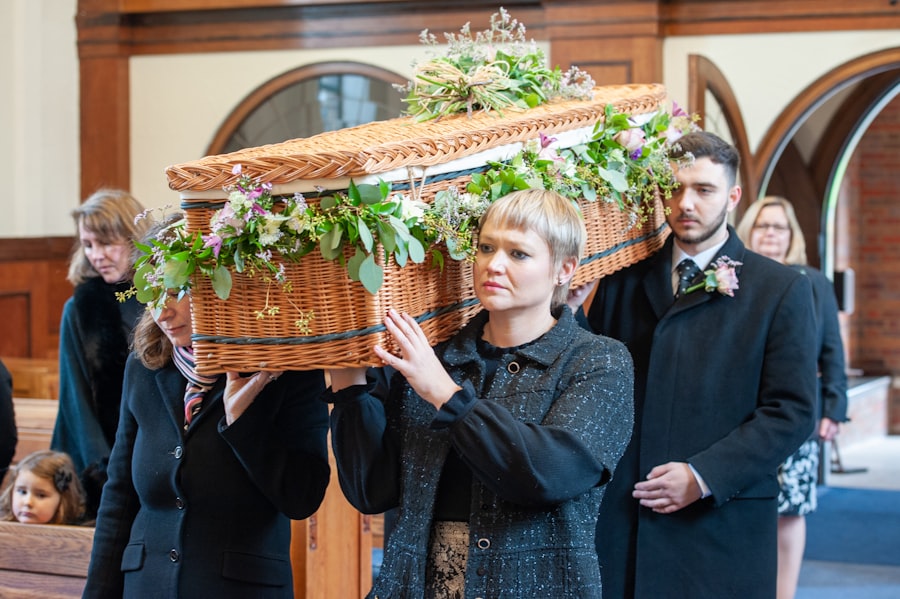
The sale of caskets and urns represents a significant profit center for funeral homes. The margins on these items can be extraordinarily high, often exceeding several hundred percent, transforming what should be a utilitarian container into a luxury item.
The Markup Maze
Caskets, often constructed from relatively inexpensive materials like pressboard or thin metal, are regularly sold at prices ranging from several hundred to tens of thousands of dollars. The markups are staggering, with funeral homes often purchasing caskets at wholesale prices and then applying retail markups that bear little relation to the intrinsic value of the materials or craftsmanship. This disparity is particularly stark when compared to the cost of purchasing similar items through independent casket retailers, which, due to consumer protection laws like the “Funeral Rule” in the United States, funeral homes are legally obligated to accept. However, many consumers are unaware of this right or feel uncomfortable exercising it during a period of grief.
The Emotional Appeal of “Quality”
Funeral homes expertly leverage emotional appeals to encourage the purchase of more expensive caskets. Marketing narratives often emphasize “quality,” “durability,” and “honoring the deceased” through a higher price tag. This frames the casket not merely as a container, but as a final gift, blurring the line between respectful remembrance and conspicuous consumption. Materials like mahogany, copper, or bronze are presented as superior choices, subtly implying that anything less is somehow inadequate.
The Urn Unconsciousness
Similarly, urns, which store cremated remains, also exhibit significant markups. While some urns can be artistic and handcrafted, many are mass-produced yet sold at inflated prices. The sentimental value attached to these final resting places allows funeral homes to command prices far exceeding manufacturing costs, capitalising on the desire for a beautiful and lasting memorial. The sheer variety and aesthetic choices available often distract from the fundamental purpose and intrinsic value of the container.
The “Basic Services Fee”: An Exploding Lump Sum
A pervasive and often contentious charge in the funeral industry is the “Basic Services Fee.” This seemingly innocuous fee is designed to cover the funeral home’s overhead and the non-declinable services necessary to facilitate any funeral arrangement. However, its contents and cost are frequently a source of ambiguity and concern.
The Umbrella of Ambiguity
The “Basic Services Fee” often acts as a catch-all, sometimes encompassing elements that could be itemized separately or are disproportionately expensive given the actual services rendered. It typically includes the funeral director’s professional services, administrative support, compliance with regulatory requirements, and arrangement consultations. However, the lack of transparency regarding specific components within this fee can lead to families paying for services they do not fully understand or perceive as individually valuable. It functions as a foundational charge, an entry ticket into the funeral home’s ecosystem of services.
Non-Declinable Yet Negotiable?
While often presented as “non-declinable,” the scope and cost of the Basic Services Fee can vary significantly between funeral homes. This suggests that while some core services are indeed necessary, the packaging and pricing are ultimately at the discretion of the establishment. The industry’s ability to bundle a wide array of diffuse costs into a single, often substantial, figure makes it challenging for consumers to ascertain fair value or to contest specific components.
Regulatory Oversight and Its Limitations
Consumer protection regulations, such as the Federal Trade Commission’s (FTC) Funeral Rule in the United States, mandate that funeral homes provide an itemized general price list (GPL) to consumers. This rule was intended to bring transparency to the Basic Services Fee and other charges. However, critics argue that the rule’s implementation and enforcement are often inadequate. Funeral homes may provide the GPL at a point where families are already emotionally invested, or the language used within it remains complex, effectively undermining its purpose of ensuring informed decision-making. The sheer volume of information can overwhelm grieving individuals, rendering the “transparency” somewhat academic.
The funeral industry often takes advantage of families during their most vulnerable moments, leading to practices that can be both exploitative and distressing. Many families are unprepared for the emotional and financial burdens that come with planning a funeral, which can result in them being pressured into making hasty decisions. A related article explores this troubling aspect of the industry and sheds light on how families can protect themselves from such exploitation. To read more about this important issue, you can visit this article.
The Profiteering on Grief: Psychological and Financial Exploitation
| Metric | Description | Impact on Families | Source/Study |
|---|---|---|---|
| Average Funeral Cost | Typical price families pay for a traditional funeral service | Financial burden during emotional distress | National Funeral Directors Association (NFDA), 2023 |
| Markup on Caskets | Percentage increase from wholesale to retail price | Exploits lack of price transparency | Federal Trade Commission (FTC) Report, 2022 |
| Pressure Sales Incidents | Percentage of families reporting feeling pressured to buy additional services | Emotional manipulation during vulnerable moments | Consumer Reports Survey, 2021 |
| Pre-Need Contract Complaints | Number of complaints related to pre-paid funeral plans | Families locked into costly or inflexible agreements | Better Business Bureau (BBB), 2023 |
| Hidden Fees | Percentage of families encountering unexpected charges | Financial exploitation through lack of upfront disclosure | Consumer Financial Protection Bureau (CFPB), 2022 |
| Average Time to Make Decisions | Hours families have to decide on funeral arrangements | Limited time increases susceptibility to upselling | Journal of Consumer Psychology, 2020 |
The fundamental critique of the funeral industry’s exploitative tactics revolves around its unique position to capitalize on human vulnerability. Grief, by its very nature, impairs rational decision-making, creating an environment ripe for subtle, and sometimes overt, financial exploitation.
The Shield of “Tradition” and “Dignity”
Funeral homes often invoke “tradition” and the need to “maintain dignity” as justification for higher prices and more elaborate services. This rhetorical framing can make it difficult for grieving families to question costs, as doing so might be perceived as disrespectful to the deceased or a deviation from established norms. The industry skillfully weaves a narrative where spending more equates to showing more love, respect, or honour, a powerful emotional lever that stifles inquiry and encourages acquiescence.
The Time Constraint Conundrum
The immediate aftermath of a death leaves families with very limited time to make complex financial decisions. Funeral arrangements typically need to be made within a few days, creating a sense of urgency that precludes careful comparison shopping or extensive research. Funeral homes are acutely aware of this temporal pressure and often use it to their advantage, guiding families through quick decisions that may not be in their best financial interest. The pressure cooker environment leaves little room for considered thought.
The Absence of Pre-Need Planning
While pre-need funeral planning is available, it is not widely adopted. When arrangements are made in advance and lucidly, individuals can make detached, rational decisions about their final rites, often opting for simpler, more cost-effective options. However, the discomfort associated with contemplating one’s own death or that of a loved one often leads to procrastination. The industry, by not actively promoting genuinely consumer-centric pre-need planning that offers flexibility and avoids locking in inflated prices, tacitly benefits from this societal reluctance, ensuring that most decisions are made during peak emotional fragility.
In conclusion, the funeral industry, while providing an undeniably essential service, stands accused by many of employing an array of exploitative tactics. From the deliberate obfuscation of pricing and the overstatement of embalming’s necessity to the exorbitant markups on caskets and the opaque nature of the “Basic Services Fee,” these practices collectively contribute to significant financial burdens on grieving families. This exploitation is particularly insidious because it preys on individuals at their most vulnerable, leveraging emotional distress, time constraints, and societal expectations to drive profit. As consumers, awareness and proactive planning are the only bulwarks against these often subtle, yet deeply impactful, strategies. Just as a shepherd guides his flock, seemingly for their well-being, the industry sometimes leads families down paths that serve its own financial interests more than the true needs of the bereaved.
FAQs
What are common ways the funeral industry exploits grieving families?
The funeral industry can exploit families by using high-pressure sales tactics, upselling unnecessary services or products, and taking advantage of families’ emotional vulnerability to increase costs.
Why are grieving families particularly vulnerable to exploitation?
Grieving families are often overwhelmed, emotionally distressed, and may lack knowledge about funeral options, making them more susceptible to accepting expensive or unnecessary services without fully understanding the costs or alternatives.
Are there regulations in place to protect families from exploitation in the funeral industry?
Yes, in many countries, there are laws and regulations requiring funeral homes to provide clear pricing information, disclose all fees upfront, and prohibit deceptive practices. However, enforcement and awareness can vary.
How can families protect themselves from being exploited by funeral service providers?
Families can protect themselves by researching funeral options in advance, requesting detailed price lists, comparing multiple providers, asking for written contracts, and seeking advice from trusted friends or consumer protection agencies.
What alternatives exist to traditional funeral services that may reduce the risk of exploitation?
Alternatives include direct cremation or burial without a formal service, using nonprofit or community-based funeral providers, pre-planning funerals to lock in prices, and exploring green or natural burial options that can be more affordable and transparent.