
Fifty years have elapsed since humanity achieved one of its most audacious and symbolically potent feats: the landing of Apollo 11 on the lunar surface. This half-century marker provides a unique vantage point from which to assess the Apollo program’s immediate and enduring impacts. The successful execution of a mission that, at its inception, seemed to many a fantastical endeavor, represented a confluence of scientific ambition, engineering prowess, and political will.
The decision to embark on a manned lunar mission was not born solely from scientific curiosity; geopolitical considerations largely fueled its inception. The Cold War, then a pervasive backdrop to international relations, fostered an intense competition between the United States and the Soviet Union.
The Space Race Ignites
The Soviet Union’s launch of Sputnik 1 in October 1957 sent ripples of apprehension through the United States, signaling a perceived technological superiority that threatened national security. This event acted as a powerful catalyst, galvanizing American efforts to catch up, and then surpass, Soviet achievements in space.
- Sputnik’s Legacy: The orbital flight of the first artificial satellite illuminated the potential for intercontinental ballistic missiles, intertwining space exploration with military strategy.
- Yuri Gagarin’s Orbit: The Soviet cosmonaut’s orbital flight in April 1961 further intensified the pressure on the US, demonstrating the feasibility of manned spaceflight and highlighting a perceived deficit in American technological capabilities.
Kennedy’s Bold Challenge
In May 1961, President John F. Kennedy articulated a audacious national goal: to land a man on the Moon and return him safely to Earth before the decade was out. This declaration, made before a joint session of Congress, was a direct response to Soviet successes and a clear commitment to reassert American technological leadership.
- Political Implications: The Apollo program was framed not merely as a scientific endeavor but as a crucial demonstration of American resilience, ingenuity, and democratic potential in the face of ideological rivalry.
- Economic Impetus: The immense financial investment required for Project Apollo, while a subject of ongoing debate, also stimulated significant advancements in various industries, fostering economic growth and job creation across the United States.
As we reflect on the monumental achievement of the moon landing, it’s fascinating to explore the broader implications of space exploration on our understanding of the universe. A related article that delves into the historical context and technological advancements stemming from this event can be found at Hey Did You Know This. This resource provides insightful perspectives on how the moon landing has influenced scientific research and inspired generations to look beyond our planet.
Engineering the Impossible
The logistical and technical challenges inherent in a Moon landing mission were staggering. From propulsion systems to life support, every component demanded innovation and meticulous execution, pushing the boundaries of contemporary engineering.
The Saturn V Rocket: A Colossus of the Skies
The development of the Saturn V rocket, a multi-stage liquid-propellant launch vehicle, stands as a testament to unparalleled engineering achievement. Its colossal size and immense thrust were essential for escaping Earth’s gravitational pull and propelling the Apollo spacecraft toward the Moon.
- Multi-Stage Design: The rocket’s three stages were designed to perform specific functions, shedding spent sections as it ascended, maximizing efficiency for the journey.
- Reliability Under Pressure: The Saturn V’s consistent performance throughout the Apollo missions, particularly during critical launch phases, underscored the rigor of its design and manufacturing processes.
The Apollo Command and Lunar Modules
The Apollo spacecraft itself comprised several interconnected modules, each with a distinct role in the mission’s success. The Command Module (Columbia) served as the crew’s living quarters and control center for the journey to and from the Moon, while the Lunar Module (Eagle) was specifically designed for lunar descent and ascent.
- Redundancy and Safety: Engineers incorporated numerous redundant systems into both modules to mitigate risks associated with equipment failure in the harsh environment of space.
- Precision Guidance and Navigation: The development of sophisticated inertial guidance systems and onboard computers was critical for ensuring accurate trajectory calculations and precise lunar landing.
The Human Factor: Training and Teamwork
Beyond the machinery, the human element was paramount. The astronauts underwent rigorous training, not only in piloting and navigation but also in geology, photography, and emergency procedures, preparing them for every conceivable scenario. The ground control teams at NASA’s Mission Control Center in Houston, Texas, provided an invaluable support system, monitoring every aspect of the mission and offering real-time guidance.
- Astronaut Selection and Preparation: The selection process for Apollo astronauts was a stringent one, emphasizing not only piloting skills but also intellectual acumen, psychological resilience, and the ability to work under extreme pressure.
- Mission Control’s Role: The iconic image of mission controllers, intently watching their screens and communicating with the crew, symbolizes the intricate coordination and dedication required to execute such a complex mission.
The Lunar Surface: A New Frontier
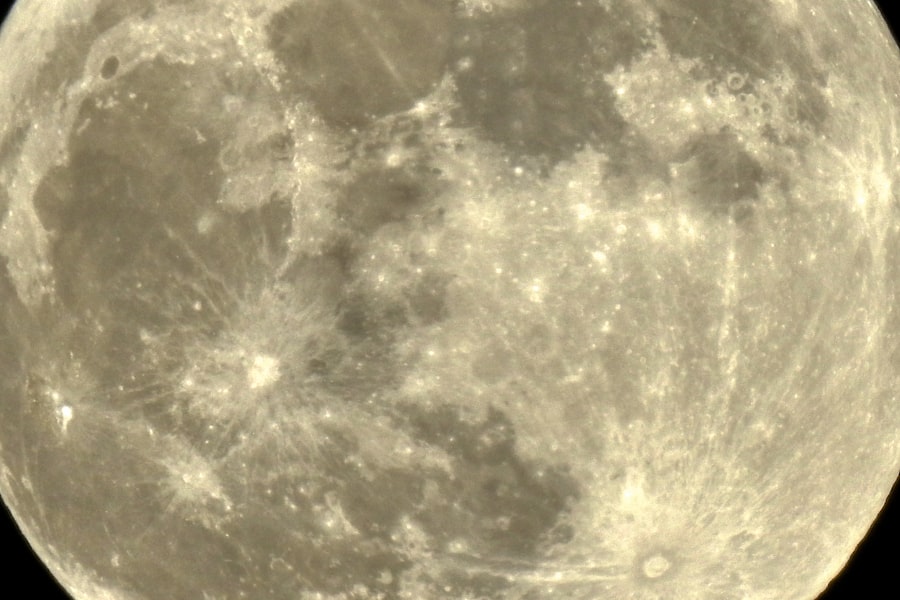
On July 20, 1969, Neil Armstrong and Buzz Aldrin stepped onto the Moon, marking a watershed moment in human exploration. The immediate experiences and observations from the lunar surface provided invaluable data and visual documentation that reshaped humanity’s understanding of its celestial neighbor.
First Steps and Scientific Forays
Armstrong’s declaration, “That’s one small step for [a] man, one giant leap for mankind,” encapsulated the profound significance of the event. The astronauts spent over two hours on the lunar surface, collecting samples, deploying scientific instruments, and photographing the desolate landscape.
- Geological Sampling: The collection of lunar rocks and soil allowed scientists to directly analyze the Moon’s composition, age, and formation, providing crucial insights into the early solar system.
- Deployment of Experiments: Instruments such as the Passive Seismic Experiment Package (PSEP) were deployed to measure lunar seismic activity, offering a glimpse into the Moon’s internal structure.
Sensory Impressions and Challenges
The Moon’s environment presented a unique set of sensory experiences and operational challenges. The stark contrast of light and shadow, the fine-grained regolith, and the reduced gravity all contributed to a dramatically different landscape from Earth.
- Regolith’s Properties: The pervasive lunar dust, or regolith, posed practical challenges for equipment and even stained the astronauts’ suits, demonstrating its abrasive nature.
- Communication Delays: The vast distance between Earth and the Moon resulted in noticeable communication delays, requiring precise timing and clear protocols for interaction.
The Echoes of Apollo: Legacy and Impact

The Apollo program, though concluded decades ago, continues to cast a long shadow on scientific inquiry, technological development, and humanity’s perception of its place in the cosmos. Its legacy extends far beyond the immediate achievement of landing on the Moon.
Scientific Enrichment
The unparalleled wealth of data and lunar samples returned by the Apollo missions revolutionized selenology, the study of the Moon. This scientific bounty allowed for a more comprehensive understanding of lunar formation, evolution, and its relationship to Earth.
- Giant Impact Hypothesis Validation: Data from Apollo missions provided strong support for the Giant Impact Hypothesis, the prevailing theory for the Moon’s formation.
- Comparative Planetology: The study of lunar samples also contributed to the broader field of comparative planetology, offering insights into the processes that shape other planetary bodies.
Technological Spinoffs
The intense research and development undertaken for the Apollo program yielded numerous technological advancements that later found applications in various terrestrial industries. These “spin-offs” demonstrably improved daily life and fueled economic growth.
- Miniaturization of Electronics: The need for compact and lightweight electronic components for spacecraft led to significant progress in solid-state electronics, paving the way for modern computing.
- Medical and Communication Technologies: Innovations in areas such as remote monitoring (telemetry), fire-resistant materials, and advanced insulation found applications in medical devices, consumer products, and telecommunications.
Cultural and Philosophical Resonance
The Moon landing permeated global consciousness, inspiring generations and altering humanity’s self-perception. It demonstrated the extraordinary capabilities of human endeavor and expanded the boundaries of what was considered achievable.
- Inspiration for Future Generations: The imagery of humans walking on an extraterrestrial body served as a powerful symbol of human potential, encouraging interest in science, technology, engineering, and mathematics (STEM) fields.
- Shifting Perspectives of Earth: The iconic “Earthrise” photograph, taken during Apollo 8, offered a profound and unprecedented perspective of Earth as a fragile, blue marble, fostering a nascent environmental consciousness.
As we reflect on the monumental achievement of the moon landing, it’s fascinating to explore how this event has shaped our understanding of space exploration and technology. A related article that delves deeper into the implications of this historic moment can be found here, where it discusses the lasting impact of the Apollo missions on modern science and innovation. The insights provided in this piece enhance our appreciation for the courage and ingenuity that made lunar exploration possible. For more information, you can read the article at this link.
Retrospective and Forward Glances
| Aspect | Metric/Detail | Reflection/Significance |
|---|---|---|
| Mission | Apollo 11 | First successful manned moon landing, July 20, 1969 |
| Astronauts | Neil Armstrong, Buzz Aldrin, Michael Collins | Armstrong and Aldrin walked on the moon; Collins orbited |
| Duration on Moon Surface | 21 hours 36 minutes | Time spent conducting experiments and collecting samples |
| Samples Collected | 47.5 pounds (21.5 kg) of lunar rocks and soil | Provided valuable scientific data about the moon’s composition |
| Technological Impact | Development of computer technology and materials science | Advanced technology used in space exploration and everyday life |
| Cultural Impact | Global broadcast watched by 600 million people | Inspired generations and symbolized human achievement |
| Environmental Reflection | Earthrise photo taken from lunar orbit | Raised awareness about Earth’s fragility and environmental protection |
| Legacy | Ongoing lunar exploration missions | Foundation for future space exploration and potential colonization |
Fifty years removed from the initial lunar exploits, it is imperative to critically evaluate the long-term ramifications of the Apollo program and ponder its implications for future space exploration. While the immediate geopolitical drivers have largely receded, the scientific and aspirational impulses remain.
The Sustained Debate on Space Exploration’s Value
The considerable financial investment in Apollo prompted ongoing discussions about the opportunity costs and the societal benefits derived from such ambitious undertakings. These debates continue to inform current discussions regarding funding for space programs.
- Cost-Benefit Analysis: Critics often point to terrestrial problems that could have been addressed with Apollo’s budget, while proponents emphasize the scientific, technological, and inspirational returns on investment.
- Public Engagement and Support: Sustained public interest and political will are crucial for the long-term viability of grand scientific and exploratory endeavors, a lesson gleaned from the ebb and flow of space program funding.
The Future of Lunar Exploration
With renewed interest from various nations and private entities, the Moon is once again becoming a focal point
of space exploration. Programs like Artemis aim to establish a sustained human presence on the lunar surface, paving the way for deeper space missions.
- Resource Utilization: Potential lunar resources, such as water ice in shadowed craters, could be vital for supporting future missions and even facilitating propellant production.
- Gateway to Mars and Beyond: The Moon is increasingly viewed as a crucial proving ground and staging area for future human missions to Mars and other destinations in the solar system.
The Moon landing of 1969 was not merely an American triumph; it was a human achievement that transcended national boundaries and ideological divisions. It served as a stark reminder of humanity’s capacity for ingenuity, perseverance, and collective endeavor in pursuit of the seemingly impossible. As we observe this half-century milestone, reflect on the images of those first steps, consider that even now, the dust disturbed by those boots remains undisturbed, a frozen testament to an indelible human mark on an extraterrestrial body. The journey to the stars, initiated with those first steps, continues to beckon.
FAQs
What was the significance of the first moon landing?
The first moon landing, achieved by Apollo 11 in 1969, marked a historic milestone in human space exploration. It demonstrated the capability of humans to travel beyond Earth, showcased technological advancements, and symbolized a major achievement during the space race between the United States and the Soviet Union.
Who were the astronauts involved in the Apollo 11 moon landing?
The Apollo 11 mission included three astronauts: Neil Armstrong, Buzz Aldrin, and Michael Collins. Neil Armstrong and Buzz Aldrin landed on the moon’s surface, while Michael Collins remained in orbit around the moon in the command module.
What were some of the key challenges faced during the moon landing?
Key challenges included navigating and landing safely on the lunar surface, managing limited fuel supplies, ensuring reliable communication with Earth, and dealing with the unknown conditions of the moon’s environment. The mission required precise calculations and coordination to overcome these obstacles.
How did the moon landing impact science and technology?
The moon landing accelerated advancements in various fields such as aerospace engineering, materials science, and computer technology. It also inspired further space exploration missions and contributed to scientific understanding of the moon’s geology and environment.
What are some common reflections or lessons learned from the moon landing?
Reflections often highlight the importance of international cooperation, the value of perseverance and innovation, and the potential for human achievement when ambitious goals are pursued. The moon landing also serves as a reminder of the need for continued exploration and investment in science and technology.