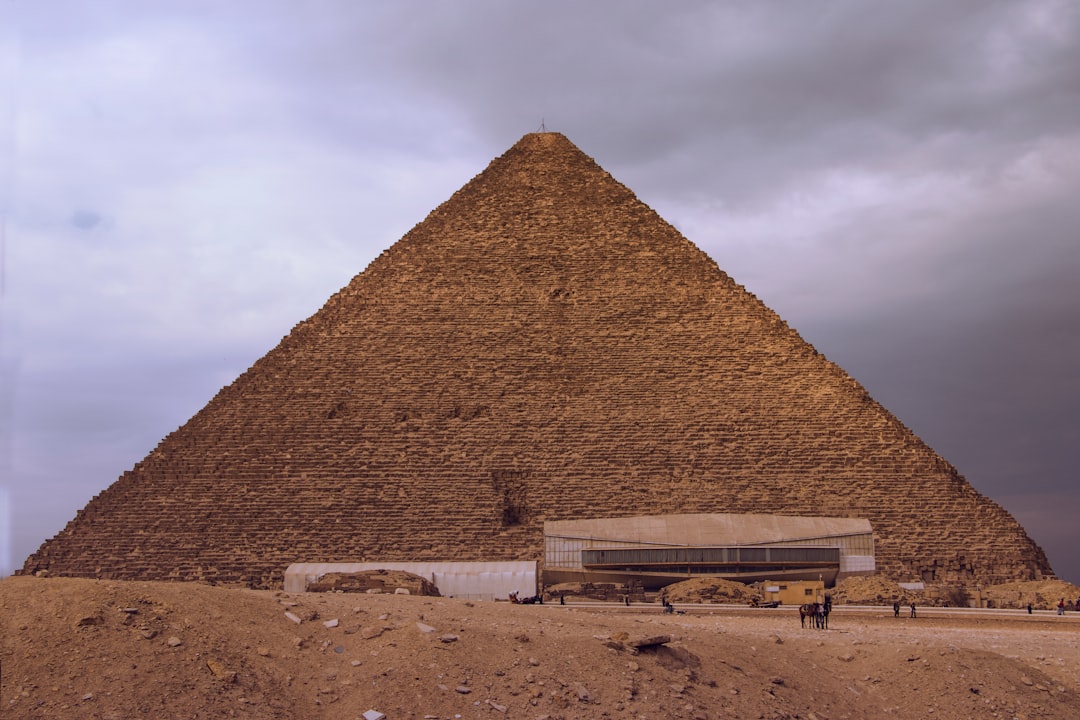
The construction of the ancient Egyptian pyramids represents one of humanity’s most enduring architectural and engineering enigmas. These monumental structures, primarily built as tombs for pharaohs and queens, have captivated scholars and the public for centuries. Their sheer scale, precision, and the limited technological capabilities attributed to the Bronze Age Egyptians continue to fuel debate and inspire a multitude of theories regarding their construction methodologies. This article delves into the various facets of pyramid construction, examining the prevailing hypotheses and the evidence supporting or refuting them.
The genesis of a pyramid lay in meticulous planning and a sophisticated understanding of geometry, astronomy, and statics. The transition from mastaba tombs to the stepped pyramid, and subsequently to the true pyramid, reflects an evolving architectural ambition and engineering prowess.
Site Selection: Foundations of Immortality
The selection of a pyramid’s site was paramount, influencing its stability, visibility, and symbolic significance.
Geological Stability: A Solid Base
Pyramids were invariably constructed on bedrock, typically limestone or granite outcrops, to ensure a stable foundation capable of bearing the immense weight of the structure. This strategic choice mitigated the risk of subsidence or structural failure, which would have been catastrophic.
Proximity to Resources: Logistical Considerations
Sites were often chosen in proximity to quarries, reducing the logistical burden of transporting colossal quantities of stone. The Giza plateau, for instance, offered readily available nummulitic limestone.
Astronomical Alignment: Celestial Guidance
Many pyramids exhibit remarkable astronomical alignments, often oriented to true north with a high degree of accuracy. This suggests a sophisticated understanding of observational astronomy and its application in architectural planning. The method used for achieving such precision remains a subject of ongoing research, with theories ranging from stellar observations (e.g., using a circumpolar star) to the manipulation of shadow casting from gnomons.
Proportions and Geometry: The Golden Ratio and Beyond
Ancient Egyptian builders demonstrated a profound grasp of mathematical principles, arguably incorporating elements that resonate with modern geometric concepts.
The Pythagorean Triplet: Early Mathematical Applications
Evidence suggests the Egyptians were familiar with the principles of the Pythagorean theorem, long before Pythagoras himself. The use of ropes knotted at specific intervals could have facilitated the layout of right angles, crucial for establishing the square base of the pyramid.
Golden Ratio and Pi: Intentionality or Coincidence?
Some scholars propose that the proportions of certain pyramids, such as the Great Pyramid of Giza, approximate the golden ratio ($\phi$) or incorporate relationships involving pi ($\pi$). While the deliberate inclusion of these specific mathematical constants is debated, their presence suggests a highly refined aesthetic and functional understanding of geometry. For example, the ratio of the perimeter to twice the height of the Great Pyramid is remarkably close to $\pi$.
Recent discoveries and theories surrounding the construction of the pyramids have sparked significant interest among historians and archaeologists alike. For a deeper dive into the secrets of how these monumental structures were built, you can explore a related article that discusses various innovative techniques and tools that may have been employed by the ancient Egyptians. To learn more about these fascinating insights, visit this article.
Material Acquisition: From Quarry to Construction Site
The scale of pyramid construction necessitated an industrial-level operation for quarrying, transporting, and shaping millions of tons of stone.
Quarrying Techniques: Extracting the Giants
The vast majority of pyramid stone was quarried locally, primarily from limestone beds. However, higher-quality casing stones and internal structural elements, such as granite for burial chambers, were often sourced from more distant locations.
Limestone Quarries: The Local Supply
Limestone was typically extracted using copper chisels, dolerite pounding stones, and wooden levers. Workers would make cuts in the rock face and then wedge wooden blocks into cracks. These blocks, when soaked with water, would expand and split the stone.
Granite Quarries: Precision and Power
Granite, being a much harder rock, required more robust techniques. Evidence from quarries at Aswan indicates the use of dolerite pounding balls to repeatedly abrade and fracture granite. The sheer force required for this process implies a large workforce and a systematic approach to rock removal.
Dressing the Stones: Shaping for Fit
Once extracted, the rough-hewn blocks underwent initial dressing at the quarry or on the construction site. This involved removing irregularities and shaping them to specific dimensions, though the final, incredibly precise fitting of casing stones occurred in situ.
Transportation Methods: Moving Mountains
The movement of immense blocks, some weighing upwards of 80 tons (like the sarcophagus in the King’s Chamber), presented a monumental logistical challenge.
Sledges and Rollers: Overland Movement
Archaeological evidence and ancient depictions suggest the primary method for overland transport involved wooden sledges pulled by large teams of laborers. While the use of rollers is often hypothesized, their effectiveness on soft sand or uneven terrain is debated. Lubrication of the path with water or mud could have reduced friction, as depicted in a tomb painting from Djehutihotep’s tomb.
Riverine Transport: The Nile’s Lifeline
For stones quarried at a distance, particularly the granite from Aswan or the Tura limestone for casing, the Nile River served as an essential artery. Blocks were loaded onto barges, particularly during the annual inundation when water levels were high, allowing closer access to the Giza plateau. This method highlights the seasonal nature of much of the construction work.
Construction Methodologies: The Ramp Debate
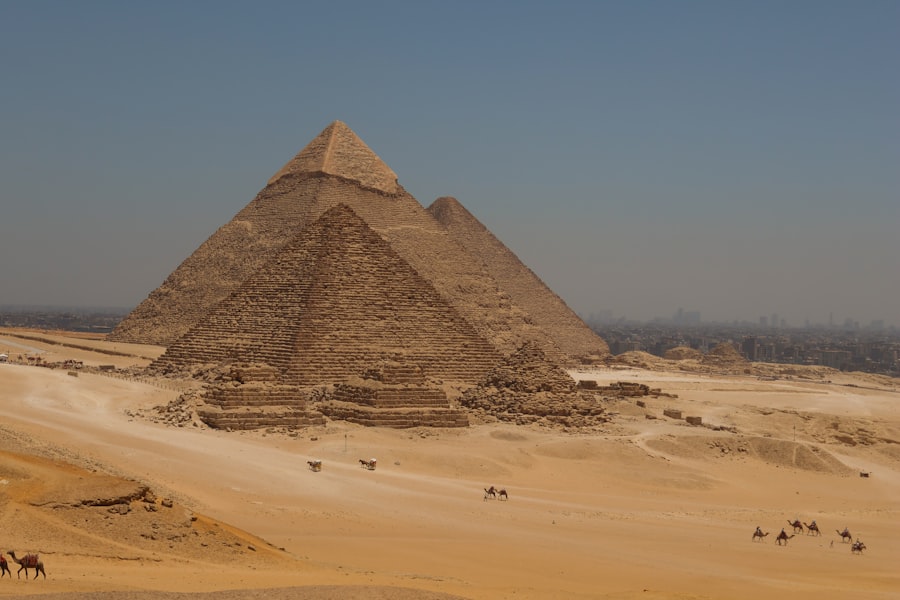
The physical erection of the pyramid’s core structure and its subsequent casing is perhaps the most intensely debated aspect of pyramid construction. Numerous theories exist, each with its proponents and detractors.
Theories of Rampe-Based Construction: The Prevailing View
The most widely accepted theories involve the use of ramps to elevate the massive stone blocks. The varying designs of these ramps are where a significant divergence of opinion occurs.
Straight Ramps: A Direct Approach
A straight ramp extending from the ground to the summit of the pyramid would require an immense volume of material, potentially exceeding the volume of the pyramid itself, and would become impossibly long and steep as the pyramid grew. This theory is generally considered impractical for the later stages of construction.
Spiral Ramps: Winding Upwards
Spiral ramp theories propose ramps that either wrapped around the pyramid’s exterior in a continuous spiral or were built internally, within the pyramid’s mass. The external spiral ramp is appealing for its efficiency in space but would obscure the corners, making accurate alignment difficult.
Internal Ramp: Jean-Pierre Houdin’s Hypothesis
One of the more recent and compelling theories, proposed by French architect Jean-Pierre Houdin, posits an external straight ramp for the first 43 meters of the Great Pyramid, followed by an internal spiral ramp. This internal ramp, he suggests, allowed for the elevation of blocks within the pyramid’s core, protecting it from erosion and allowing work to continue year-round. Evidence for this theory includes anomalies in gravitational readings and potential internal ramps identified through microgravity surveys.
Zig-Zag Ramps: Overcoming Steepness
This variation suggests multiple ramps running diagonally up the pyramid’s face, switching directions at each corner. While this addresses the issue of ramp length and steepness, navigating the corners with large blocks would be a complex maneuver.
Alternative Theories: Beyond the Ramp
While ramps remain the dominant paradigm, other theories, some more unconventional, have been proposed to explain how the blocks were raised.
Water Levitation: A Hydrodynamic Approach
Some theories suggest that the Egyptians might have used water locks or flotation systems within channels to lift blocks. However, the engineering complexity involved in maintaining water levels and creating robust enough containment systems across such a massive structure makes this theory highly speculative and lacking direct archaeological evidence.
Levers and Inclined Planes: Mechanical Advantage
The use of levers and simple inclined planes for smaller lifts, particularly for the upper sections or for maneuvering blocks into precise positions, is plausible. However, these methods alone would struggle to explain the elevation of blocks to the pyramid’s towering height.
Tools and Techniques: Precision in a Pre-Industrial Age
The remarkable precision of pyramid construction, particularly the flush fit of casing stones, highlights sophisticated tooling and measurement techniques.
Copper Tools: The Workhorse of the Quarries
Copper chisels were the primary cutting tools for limestone. While softer than iron, continuous resharpening and skilled application allowed for effective shaping of the relatively soft limestone.
Dolerite Pounders: For Harder Stone
For granite and shaping harder parts of the limestone, dolerite pounding balls were instrumental. These heavy, hard stones were used to abrade and chip away at the rock.
Abrasives: Smoothing and Finishing
Sand, quartz grit, and other abrasive materials mixed with water were likely used for polishing and achieving the incredibly smooth surfaces of the casing stones.
Plumb Bobs and Squares: Ensuring Level and Verticality
Straight-edges, plumb bobs, set squares, and leveling instruments (e.g., using water-filled troughs) would have been indispensable for ensuring the levelness of courses, the verticality of walls, and the accurate angles of the pyramid’s faces.
The Workforce: Manpower and Organization

The construction of the pyramids was an undertaking on an epic scale, requiring an immense, well-organized workforce. Dispelling myths of slave labor, modern archaeological evidence points to a skilled and provisioned workforce.
The Builders’ Villages: Evidence of a Society
Archaeological excavations at Giza, particularly by Mark Lehner, have uncovered extensive evidence of workers’ camps, suggesting a permanent or semi-permanent settlement dedicated to the pyramid projects.
Housing and Infrastructure: A Populated City
These settlements included barracks-style housing, bakeries, breweries, workshops, and even small cemeteries. This indicates a well-established infrastructure supporting a large population of workers.
Diet and Healthcare: Sustaining the Labor
Analysis of skeletal remains from these cemeteries reveals that the workers were well-fed, with a diet rich in meat, fish, and bread – far exceeding the typical diet of peasants. There is also evidence of rudimentary healthcare, with some individuals showing signs of treated injuries, suggesting that the well-being of the workforce was a priority.
Labor Organization: A Hierarchical System
The immense scale of the enterprise necessitated a complex organizational structure, likely overseen by high-ranking officials and architects.
Divisions of Labor: Specialized Skills
The workforce was likely divided into specialized teams: quarrymen, transporters, masons, architects, scribes, and administrative staff. This specialization would have enhanced efficiency and quality of work.
Seasonal Labor: The Agricultural Cycle
While skilled workers may have been employed year-round, a significant portion of the labor force, particularly for heavy lifting and transportation, likely consisted of corvée labor (a form of tax paid in labor) during the annual inundation of the Nile. This period, when agricultural work was suspended, allowed a large labor pool to be mobilized for public works.
The construction of the pyramids has long been shrouded in mystery, leading to numerous theories about how these monumental structures were built. Recent research has shed light on some of the secrets behind their construction, revealing advanced techniques and tools that ancient Egyptians may have used. For those interested in exploring this fascinating topic further, you can read a related article that delves into the methods and innovations that made the building of the pyramids possible by following this link.
Unanswered Questions and Future Research
| Secret Aspect | Description | Supporting Evidence | Estimated Timeframe |
|---|---|---|---|
| Quarrying Techniques | Use of copper tools and stone hammers to extract limestone blocks from nearby quarries. | Archaeological findings of copper chisels and quarry marks. | Several weeks per block extraction |
| Transportation Methods | Blocks transported on sledges lubricated with water to reduce friction on sand. | Wall paintings depicting sledges and experimental archaeology studies. | Hours to days depending on distance |
| Ramp Systems | Use of straight, zigzagging, or spiral ramps to move blocks up the pyramid. | Remnants of ramp foundations and historical records. | Months to years for ramp construction and use |
| Labor Organization | Skilled laborers organized into crews with specialized roles. | Worker villages and graffiti indicating crew names. | Continuous workforce over decades |
| Alignment Precision | Use of stars and the sun for precise cardinal alignment of the pyramid. | Astronomical studies and pyramid orientation measurements. | Initial planning phase |
Despite centuries of inquiry, the pyramids continue to hold secrets, prompting ongoing research and the development of new investigative techniques.
Erosion and Degradation: A Veil of Time
The passage of millennia has taken its toll on the pyramids, with the loss of many casing stones and the erosion of the outer layers. This degradation obscures crucial evidence that might shed light on construction techniques.
Lost Casing Stones: The Original Finish
The smooth, polished white Tura limestone casing that originally covered the Great Pyramid is almost entirely gone, having been plundered over centuries for building materials in Cairo. These stones would have borne tool marks or inscriptions that could have clarified construction methods.
Surface Erosion: Masking Clues
The exposed core masonry has suffered from wind and sand erosion, further obscuring any superficial evidence of ramp attachments or specific construction-related markings.
New Technologies: Peering Within and Beyond
Modern scientific advancements offer unprecedented opportunities to investigate the pyramids non-invasively, potentially revealing hidden structures or shedding light on construction.
Muon Tomography: Seeing Through Stone
Projects like the ScanPyramids mission have utilized muon tomography, a technology borrowed from particle physics, to detect density variations within the pyramids. This has led to the discovery of previously unknown voids, such as the “Big Void” in the Great Pyramid, which may or may not be related to construction passages or chambers.
Geophysical Surveys: Mapping the Subsurface
Ground-penetrating radar, seismic surveys, and other geophysical methods can map subsurface anomalies, potentially identifying buried ramps, tunnels, or other archaeological features that remain unseen on the surface.
The construction of the Egyptian pyramids remains a testament to human ingenuity, perseverance, and organizational prowess. While definitive answers to all questions remain elusive, the ongoing interplay of archaeology, engineering, and scientific investigation continues to peel back the layers of time, gradually revealing the methods behind these monumental achievements. Each new discovery refines our understanding, moving us closer to fully comprehending how ancient Egyptians managed to bridge the gap between ambitious design and colossal execution. The pyramids stand not just as tombs, but as enduring monuments to human capacity, challenging future generations to continue unraveling their profound mysteries.
FAQs
1. How were the massive stones of the pyramids transported?
The massive stones used in pyramid construction were transported using a combination of sledges, rollers, and lubricated pathways. Workers likely dragged the stones over wet sand to reduce friction, making it easier to move these heavy blocks from quarries to the building site.
2. What materials were primarily used to build the pyramids?
The pyramids were primarily constructed from limestone blocks, with higher quality limestone used for the outer casing. Granite was also used for certain interior chambers and structural elements, sourced from quarries located farther away.
3. How did ancient Egyptians achieve precise alignment and measurements?
Ancient Egyptians used simple but effective tools such as plumb bobs, leveling instruments, and sighting rods to achieve precise alignment. They also aligned the pyramids with cardinal points using astronomical observations, ensuring remarkable accuracy.
4. Who built the pyramids and how was the workforce organized?
Contrary to popular belief, the pyramids were built by skilled laborers and craftsmen, not slaves. The workforce was well-organized into teams with specialized roles, and workers were housed in nearby villages with access to food and medical care.
5. What construction techniques were used to lift heavy stones into place?
Various techniques were employed to lift heavy stones, including the use of ramps—straight, zigzagging, or circular—that allowed workers to haul blocks upward. Lever systems and counterweights may also have been used to position stones precisely.