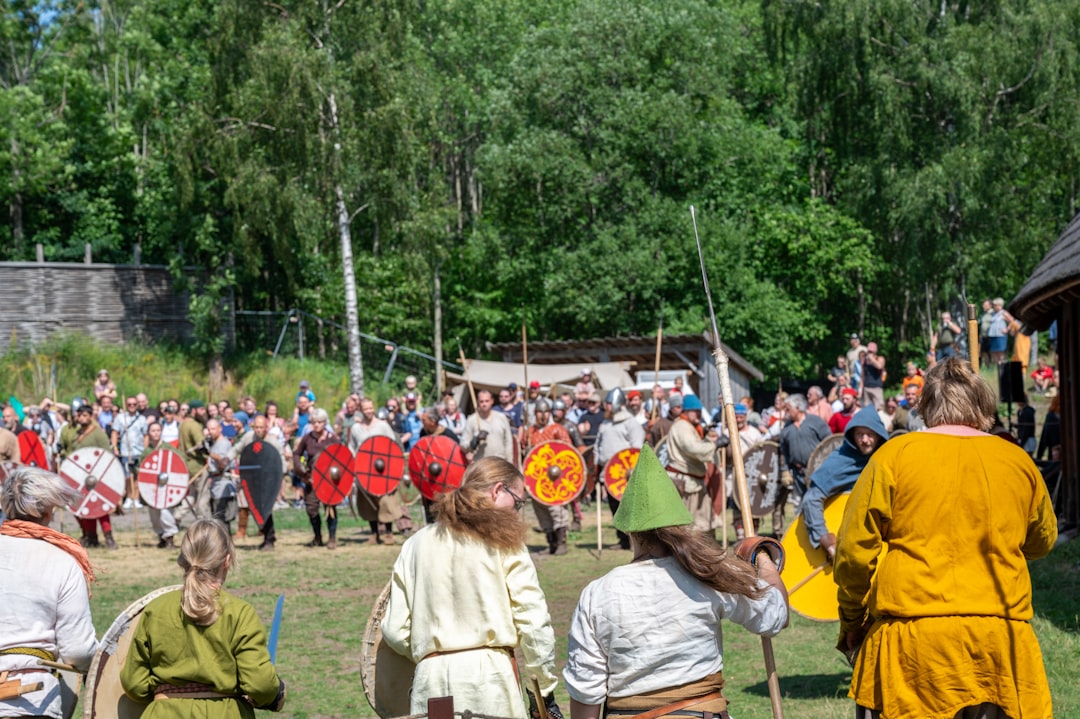
The concept of Viking headgear, particularly the horned helmet, is deeply ingrained in popular culture. However, historical and archaeological evidence reveals a more nuanced reality concerning the head protection employed by Norsemen during the Viking Age (c. 793–1066 CE). This article explores the historical authenticity of Viking headgear, its practical applications, and its evolution from functional protective wear to a globally recognized symbol, albeit one often misrepresented. By examining archaeological findings, sagas, and contemporary artwork, a clearer picture emerges, allowing for an understanding of how one might authentically engage with this aspect of Viking material culture.
The enduring image of the Viking warrior in a horned helmet is a relatively modern construct, largely popularized in the 19th century. This depiction is deeply ingrained in the collective consciousness, influencing everything from opera to children’s cartoons. However, this iconic image lacks substantiation in the archaeological record.
Origins of the Popular Misconception
The widespread proliferation of the horned helmet likely originated with costume designer Carl Emil Doepler. In 1876, Doepler designed horned helmets for the first Bayreuth Festival production of Richard Wagner’s opera cycle, Der Ring des Nibelungen. Doepler’s inspiration for these designs is speculated to have come from earlier Celtic and Germanic depictions, some of which feature horned ceremonial headwear from the Bronze Age, centuries before the Viking Age. These ancient artifacts, such as the Vikso helmets from Denmark, were likely ceremonial and not battle-ready, as their construction would have been impractical and dangerous in combat.
Archaeological Evidence and Artistic Representations
Despite centuries of archaeological excavations across Scandinavia, Iceland, Greenland, the British Isles, and other areas where Vikings expanded, no horned helmets dating to the Viking Age have ever been discovered. The only known full helmet from this period, the Gjermundbu helmet, discovered in Norway in 1943, provides a stark contrast to the popular image. It is a spectacle helmet, featuring a rounded iron cap and a guard around the eyes and nose, reminiscent of contemporary Anglo-Saxon and Frankish helmets. This single archaeological find is invaluable as it offers a tangible representation of actual Viking head protection.
Moreover, contemporary artistic representations from the Viking Age, such as tapestry fragments, carvings, and runestones, consistently depict warriors wearing unadorned, often conical or rounded helmets, or no head protection at all. These visual sources, created by individuals contemporaneous with the Vikings, offer a crucial perspective that directly contradicts the Hollywood-esque imagery.
Viking headgear has long been a topic of fascination, often surrounded by myths and misconceptions. Many people believe that Vikings wore horned helmets, but recent research suggests that this popular image is largely a fabrication from the 19th century. To explore more about the truth behind Viking attire and the cultural significance of their headgear, you can read a related article that delves into the history and evolution of Viking fashion. For more information, visit this article.
Authentic Viking Headgear: Functional Protection
While the horned helmet is a fantasy, Vikings did utilize various forms of head protection. These were primarily functional, designed to protect the wearer in combat. The materials and construction methods varied depending on the warrior’s wealth and status.
The Gjermundbu Helmet: A Solitary Example
The Gjermundbu helmet stands as the preeminent example of Viking Age headgear. Discovered in a chieftain’s burial, it suggests that such helmets were likely reserved for individuals of significant status or wealth. Its construction, featuring an iron cap made of several plates riveted together and an eye/nose guard (a “spectacle” or “face mask”), would have offered substantial protection against blows. The spectacle portion would have shielded a vulnerable area of the face while still allowing for reasonable peripheral vision, a critical factor in close-quarters combat.
The design of the Gjermundbu helmet shows clear similarities to helmets found in other parts of Europe during the early medieval period, indicating a diffusion of helmet technology and design across the continent. This connection highlights the interconnectedness of early medieval societies and the practical considerations that drove the evolution of armor.
Leather and Padded Headwear
For the majority of Viking warriors, particularly the bóndi (free farmers) who made up the bulk of Viking armies, full iron helmets like the Gjermundbu helmet would have been prohibitively expensive and difficult to acquire. Consequently, simpler and more affordable forms of head protection were likely commonplace.
- Padded Caps: Thickly padded caps, constructed from layers of felt, leather, or linen, would have offered a degree of protection against glancing blows and minimized the impact of blunt force trauma. These would have been relatively inexpensive to produce and comfortable to wear, making them a practical choice for many warriors.
- Leather Helmets: Helmets constructed from hardened leather, sometimes reinforced with metal studs or strips, represent another plausible form of head protection. Leather, when properly treated and shaped, can be surprisingly resilient. While offering less protection than a full iron helmet, it would have been superior to no head protection at all.
Sagas occasionally mention warriors wearing “helmets” without specifying their material. Given the economic realities of the time, it is reasonable to infer that many of these would have been of simpler construction, employing readily available materials.
Chainmail Coifs and Other Defenses
While chainmail hauberks (shirts) are well-documented, full chainmail coifs (hoods that covered the head and neck) designed to be worn independently of a helmet are less commonly depicted or found. However, a warrior wearing a simple helmet might also don an aventail, a piece of chainmail attached to the helmet to protect the neck and shoulders. This combination would have provided comprehensive protection against slashing attacks. The integration of various protective elements speaks to an understanding of vulnerability and the desire to mitigate risk in combat.
Symbolism and Status: Beyond Practicality

While the primary function of headgear was protection, helmets could also serve as symbols of status, wealth, and authority. The material, craftsmanship, and ornamentation of a helmet could convey information about the wearer’s position within Viking society.
Ornate Embellishments and Craftsmanship
Archaeological finds from other early medieval cultures show a tradition of richly decorated helmets, such as the Sutton Hoo helmet from Anglo-Saxon England. While no such elaborate helmets have been found from the Viking Age itself, the existence of such craftsmanship elsewhere suggests that Viking elites may have also commissioned finely adorned headgear.
- Precious Metals: A helmet crafted from polished iron, perhaps even inlaid with silver or bronze, would have been a visible sign of wealth. The processing of metals was an advanced craft, and owning such an item would have underscored one’s economic standing.
- Animal Motifs: Depictions of animals, such as raven, wolf, or boar, held significant symbolic meaning in Norse mythology. A helmet adorned with such motifs would not only be aesthetically pleasing but would also convey a message about the wearer’s ferocity, wisdom, or connection to specific deities. These motifs would serve as apotropaic symbols, designed to ward off evil and imbue the wearer with the animal’s characteristics.
The Display of Power and Authority
A well-crafted and distinctive helmet would have been an unmistakable sign of a leader in battle. In the chaos of combat, identifying commanders was crucial for maintaining unit cohesion and executing tactical maneuvers. A prominent helmet would have helped in this regard, signaling the wearer’s command presence.
Furthermore, outside of battle, a helmet could be displayed as a testament to the owner’s status. Imagine a chieftain addressing his assembly, his polished helmet catching the firelight – an object of power and prestige, a silent declaration of his accomplishments and authority. This symbolism extends beyond mere protection; it encapsulates the social fabric of Viking society.
Modern Interpretations and Re-enactment

The enduring fascination with Viking culture has fostered a vibrant community of historical re-enactors, living historians, and craftspeople dedicated to recreating the material culture of the Viking Age. For these enthusiasts, authenticity is paramount, and understanding the true nature of Viking headgear is a cornerstone of their practice.
Crafting Authentic Reproductions
For individuals seeking to embrace the spirit of the Vikings authentically, the focus shifts from fantastical horned helmets to historically accurate reproductions. This involves meticulous research into archaeological findings and a deep understanding of historical craftsmanship.
- Material Selection: Re-enactors often seek out materials that would have been available during the Viking Age, such as wrought iron, high-carbon steel (for modern safety, though less historically authentic in its modern form), and historically accurate leathers. The challenge lies in sourcing these materials and replicating the historical processes of working with them.
- Construction Techniques: The reconstruction of the Gjermundbu helmet, for example, involves understanding riveting techniques, metal shaping, and the integration of separate plates to form a cohesive protective shell. This requires a considerable skill set and a dedication to historical accuracy.
- Tooling and Finishing: Even the tools used to create reproductions often aim for historical accuracy, or at least for methods that produce results consistent with historical techniques. The finishing of the metal, whether unpolished or polished, also contributes to the overall authenticity.
Re-enactment and Living History
In the context of historical re-enactment, a commitment to authentic headgear is more than just an aesthetic choice; it is a matter of both historical integrity and, in combat re-enactment, safety. Re-enactors meticulously research and recreate clothing, weaponry, and armor to accurately portray the lives of Vikings.
- Educational Value: Accurate headgear in re-enactment serves an important educational purpose. It allows the public to see and understand what Viking warriors truly looked like, dispelling popular myths and fostering a more informed appreciation of history.
- Combat Safety: For combat re-enactors, helmets are not merely props; they are vital pieces of safety equipment. While aiming for historical accuracy in appearance, modern safety standards often necessitate modifications to ensure the protection of participants. This can involve using slightly thicker steel or incorporating modern padding discreetly within the historically accurate shell. The inherent danger of historical combat, even with blunted weapons, underscores the importance of effective head protection.
Viking headgear has long been a subject of fascination, often depicted with horned helmets in popular culture, despite historical evidence suggesting that such designs were likely a myth. For those interested in exploring more about the misconceptions surrounding Viking attire and the truth behind their actual headgear, a related article can provide valuable insights. You can read more about this intriguing topic in the article found here. Understanding the real history of Viking helmets can enhance our appreciation for these remarkable seafarers and their culture.
Beyond the Battlefield: Cultural Resonance
| Type of Headgear | Material | Purpose | Historical Accuracy | Common Misconceptions |
|---|---|---|---|---|
| Helmet (e.g., Gjermundbu helmet) | Iron with leather lining | Protection in battle | High – confirmed by archaeological finds | Did not have horns |
| Leather Cap | Leather | Everyday wear and light protection | Moderate – less preserved but mentioned in texts | Often overlooked in favor of metal helmets |
| Chainmail Coif | Interlinked iron rings | Neck and head protection in battle | Moderate – some evidence from burial sites | Not always worn under helmets |
| Cloth Hood | Wool or linen | Protection from weather | High – common in everyday Viking attire | Not used as armor |
| Horned Helmet | Mythical depiction | None – modern myth | None – no archaeological evidence | Popularized by 19th-century romanticism |
While the focus of authentic headgear often centers on defensive capabilities in battle, its cultural resonance extends beyond purely practical applications. Adornment, symbolism, and connection to heritage play a significant role in how individuals engage with Viking material culture today.
Personal Expression and Identity
For many, acquiring authentic Viking headgear is a form of personal expression, a tangible connection to a historical and cultural identity. It is a way to acknowledge and celebrate an ancestral heritage or a personal fascination with the Viking Age.
- Hobby and Craft: The detailed craftsmanship involved in creating authentic headgear can be a deeply rewarding hobby. It allows individuals to engage with historical skills and techniques, fostering a hands-on understanding of Viking-era technology.
- Community and Belonging: Wearing authentic headgear, whether at a historical event or as a personal item, can foster a sense of community among those who share an interest in Viking culture. It acts as a visual signifier of shared passion and knowledge.
Eschewing Misconceptions for Accuracy
The conscious choice to embrace historically accurate headgear means shedding the pervasive myth of the horned helmet. This act itself is an affirmation of a desire for genuine knowledge and an rejection of historical inaccuracies. It is a subtle but powerful act of historical revisionism, albeit on a personal scale.
By choosing a helmet reminiscent of the Gjermundbu or a practical leather cap, one signals an understanding that the spectacle of popular culture, while entertaining, often distorts historical reality. It is a commitment to seeing the past through the lens of evidence, rather than invention. This approach demonstrates intellectual rigor and a respect for the historical record, rather than succumbing to the allure of a captivating, yet ultimately baseless, visual trope.
In essence, whether one is a re-enactor, a historical enthusiast, or simply someone drawn to the Viking Age, embracing authentic headgear represents a journey of discovery. It is a journey that moves beyond romanticized imagery to engage with the practical ingenuity, the social complexities, and the genuine martial traditions of the Norse people. By understanding the true nature of Viking headgear, one gains a deeper appreciation for the resourceful and adaptable warriors who shaped an era.
FAQs
What type of headgear did Vikings commonly wear?
Vikings typically wore simple woolen or leather caps and hoods for warmth and protection. There is no historical evidence that they wore horned helmets in battle.
Did Vikings wear helmets with horns?
No, the popular image of Vikings wearing horned helmets is a myth. Archaeological findings show that Viking helmets were usually made of iron and had a rounded or conical shape without horns.
What materials were Viking helmets made from?
Viking helmets were primarily made from iron, sometimes reinforced with leather or other materials. They were designed for practical protection rather than decoration.
Were Viking headgear used for ceremonial purposes?
Some Viking headgear may have been used in ceremonial contexts, but most surviving evidence points to practical use in daily life and combat. Ornate or symbolic headgear is less commonly documented.
How do we know about Viking headgear today?
Knowledge about Viking headgear comes from archaeological finds, such as helmet fragments, contemporary illustrations, and written descriptions from the Viking Age and later historical sources.