
The Viking Age, a period spanning roughly from the late 8th century to the mid-11th century CE, has captivated the human imagination for centuries. From tales of fearsome berserkers to epic sagas of exploration and conquest, the popular image of the Viking is often one painted with broad strokes of brutality and adventure. However, beneath the veneer of popular culture and romanticized narratives lies a complex and multifaceted historical reality that often diverges significantly from widespread perceptions. This article endeavors to uncover the truth about Viking historical accuracy, dissecting common misconceptions and presenting a more nuanced understanding of these fascinating people.
The term “Viking” itself presents a fascinating linguistic and historical puzzle. While commonly understood today as an ethnic group or people, its original meaning was far more fluid.
Etymological Considerations
The etymology of “Viking” is a subject of ongoing academic debate. One prominent theory suggests its derivation from the Old Norse word vík, meaning “bay” or “cove,” implying “one who dwells by a bay” or “one who comes from a bay” – a reference to coastal communities from which many expeditions originated. Another theory posits a connection to víkja, meaning “to turn away,” “to travel,” or “to go on an expedition.” This emphasizes the transient and exploratory nature of their activities. It is also important to consider the verb “to go viking,” which describes the act of embarking on overseas expeditions, often with raiding as a primary objective. Therefore, the term was likely initially an activity rather than an identity.
Beyond the Raiders: Farmers, Traders, and Artisans
It is crucial to recognize that not everyone living in Scandinavia during the Viking Age was a “Viking” in the sense of undertaking overseas expeditions. The vast majority were settled farmers, cultivating crops, raising livestock, and living largely agrarian lives. These communities formed the bedrock of Scandinavian society, providing the resources and manpower that enabled overseas ventures. Furthermore, Viking society was characterized by skilled artisans – smiths, carpenters, weavers, and jewelers – whose craftsmanship is evident in archaeological finds, demonstrating a sophisticated material culture that often goes unacknowledged in popular portrayals focused solely on violence.
The Breadth of Scandinavian Expansion
The term “Viking” has also become a convenient shorthand for the broader Scandinavian expansion during this period. This expansion encompassed a wide array of activities beyond raiding. Indeed, exploration, trade, and settlement were equally, if not more, significant. From the bustling trade networks stretching across Eastern Europe to the establishment of settlements in Iceland, Greenland, and even temporary outposts in North America, the reach of Scandinavian influence was immense and multifaceted, akin to a vast, interconnected web rather than a series of isolated thunderclaps of violence.
For those interested in exploring the historical accuracy of Viking culture and their portrayal in popular media, a related article can be found at this link: Hey Did You Know This. This article delves into various aspects of Viking history, examining the myths and realities surrounding their lifestyle, exploration, and societal structure, providing readers with a comprehensive understanding of how these fascinating figures have been represented throughout history.
The Brutality Myth: A Balanced Perspective
Popular culture often paints Vikings as unremittingly savage and brutal, solely driven by bloodlust and pillage. While their raids were undeniably violent and left a trail of destruction, this singular focus overshadows a more complex reality.
Contextualizing Violence
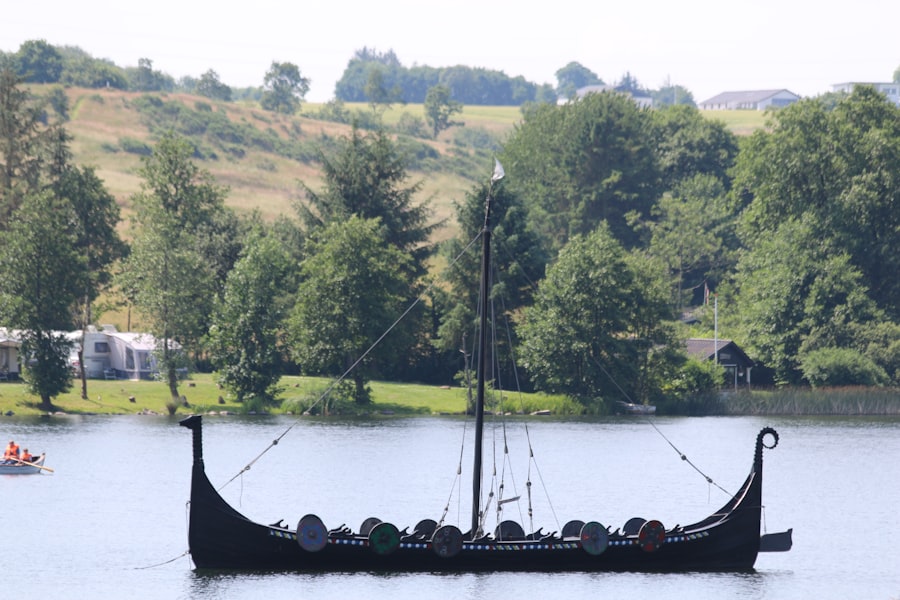
Violence was an inherent part of life in the early medieval period across Europe. Feuds, warfare, and punitive measures were commonplace. The Vikings were not unique in their capacity for violence; rather, their effectiveness, particularly in hit-and-run raids, earned them a fearsome reputation. Their longships provided an unparalleled advantage, allowing them to strike quickly and retreat before effective resistance could be mounted. To view their actions in isolation without understanding the broader societal context of the time is to paint an incomplete picture.
The Role of Raiding in Viking Society
Raiding served multiple purposes within Viking society. It was a means of acquiring wealth, slaves, prestige, and even new lands for settlement. Successful raids could elevate a chieftain’s status, attract followers, and provide resources to support growing communities. For young men seeking renown and opportunity, “going viking” offered a path to distinction. It was not mere wanton destruction, but often a calculated strategy, a means to an end within their social and economic framework. Imagine it as a high-stakes lottery, where the prize was immense wealth and status, but the cost was often life itself.
Beyond the Battlefield: Law and Order
Despite their reputation for lawlessness, Viking societies had established legal systems and codes of conduct. Assemblies (things) were held to resolve disputes, administer justice, and enact laws. While blood feuds were a feature, they were often regulated by custom and could be settled through compensation (wergild). This structured approach to dispute resolution suggests a society far removed from mere anarchy, demonstrating a societal scaffold that supported their communities, even amidst the chaos of external conflict.
The Visuals: Horned Helmets and Other Misconceptions
When one conjures an image of a Viking, a horned helmet almost invariably comes to mind. This iconic image, however, is a product of 19th-century romanticism rather than historical fact.
The Myth of Horned Helmets
Archaeological evidence for horned helmets during the Viking Age is virtually nonexistent. The popularization of this imagery can be traced to costume designs for Richard Wagner’s opera Der Ring des Nibelungen in the late 19th century. Such designs were intended for dramatic effect, not historical accuracy. Actual Viking helmets, as evidenced by archaeological finds like the Gjermundbu helmet, were typically simple, functional, and conical or rounded, constructed from iron, designed for protection in battle, not ceremonial display. The idea of horns on a helmet would have been impractical and dangerous in combat, serving as a convenient handhold for an opponent.
Appearance and Hygiene
Contrary to popular belief, historical and archaeological evidence suggests that Vikings were quite fastidious about their personal hygiene. Combs, ear cleaners, and tweezers are common finds at Viking settlements, indicating a concern for cleanliness and grooming. Written accounts from contemporaries, such as an English chronicler who lamented their excessive cleanliness compared to local customs, further support this. Their attention to appearance was also evident in their clothing, which was often colorful, well-made, and adorned with intricate patterns and jewelry, reflecting a sophisticated aesthetic sense.
Runes and Literacy
The Viking Age often evokes an image of a largely illiterate society. However, the use of runic script was widespread throughout Scandinavian lands. While not as pervasive as Latin literacy in other parts of Europe, runic inscriptions are found on rune stones, tools, weapons, and personal items, serving purposes from commemorating the dead to marking ownership and even mundane messages. This demonstrates a functional form of literacy that was integral to their communication and cultural expression.
Women in the Viking Age: Beyond the Domestic Sphere
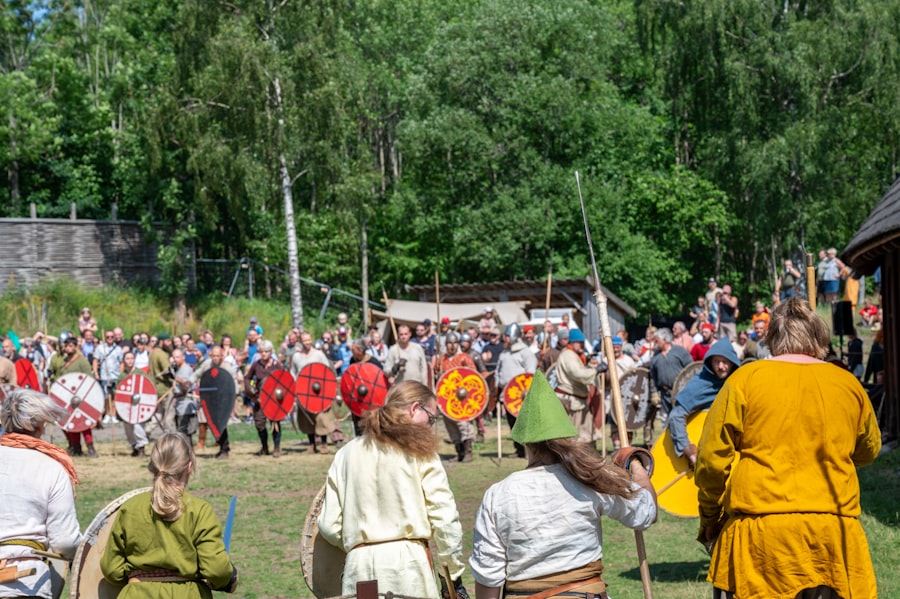
The popular perception of Viking women often confines them to the domestic sphere, solely responsible for household duties. While these roles were undoubtedly important, archaeological evidence and sagas reveal a more multifaceted and empowered position for women than commonly imagined.
Guardians of the Home and Property
Viking women held significant authority within the household. As controllers of the keys to the household chests and provisions, they managed the family’s resources and often oversaw farm operations while men were away on expeditions. In the absence of men, they were the de facto heads of the household, wielding considerable influence over economic and social affairs. This made them vital pillars of the community, holding the social fabric together.
Economic Agency and Trade
Saga evidence and archaeological finds suggest that Viking women were active participants in trade and commerce. They could own property, initiate legal proceedings, and engage in business ventures. Some archaeological evidence, such as female burials containing weights, scales, and foreign coins, indicates their involvement in market activities, challenging the notion of women being solely confined to domestic labor. They were not merely consumers but active producers and traders, contributing significantly to the household economy and broader commercial networks.
Warrior Women? The Shieldmaiden Debate
The concept of the “shieldmaiden” – a female warrior – is a potent image derived from sagas and later Norse mythology. While archaeological evidence for widespread female warriors is limited and often reinterpreted, there are isolated instances and intriguing finds that fuel this debate. The famous Birka grave, initially identified as a male warrior due to its grave goods, including weapons and game pieces for strategizing, was later revealed through osteological analysis to be that of a woman. While this single grave does not automatically prove a widespread phenomenon of female warriors, it powerfully challenges preconceived notions and highlights the potential for exceptional women to break societal norms. The debate continues, painting a picture of a society where gender roles might have been more fluid than previously assumed in specific circumstances.
When exploring the fascinating world of Viking history, it’s essential to consider the accuracy of the narratives we encounter. A related article that delves into the complexities of Viking historical accuracy can be found here. This piece highlights various sources and interpretations that shape our understanding of these seafaring warriors, offering insights that challenge common misconceptions. By examining archaeological findings and historical texts, we can gain a more nuanced perspective on the Viking Age and its impact on Europe. For more information, check out the article here.
Enduring Legacy: Beyond the Sack of Lindisfarne
| Aspect | Common Myth | Historical Accuracy | Notes |
|---|---|---|---|
| Appearance | Horned helmets | Inaccurate | No archaeological evidence supports horned helmets; likely a 19th-century romantic invention. |
| Clothing | Fur-lined, heavy armor | Partially accurate | Vikings wore layered wool and linen; armor was mostly chainmail and leather, not heavy plate or excessive fur. |
| Raiding Behavior | Constantly violent and barbaric | Partially accurate | Vikings were raiders but also traders, settlers, and explorers with complex societies. |
| Navigation Skills | Primitive and inaccurate | Accurate | Vikings were expert navigators using sunstones, landmarks, and stars for long voyages. |
| Weapons | Only axes and swords | Partially accurate | Axes and swords were common, but they also used spears, bows, and shields extensively. |
| Religion | Only violent pagan warriors | Inaccurate | Vikings had a rich mythology and religious practices; many converted to Christianity over time. |
| Settlement | Only temporary camps | Inaccurate | Vikings established permanent settlements in places like Iceland, Greenland, and parts of the British Isles. |
The Viking Age left an indelible mark on European history, extending far beyond the initial shock of their raids on monastic institutions like Lindisfarne. Their influence resonated across various facets of societies they encountered.
Linguistic Echoes
The English language, in particular, bears a significant linguistic footprint of Old Norse. Hundreds of everyday words, such as “sky,” “leg,” “scraps,” “knife,” “anger,” “take,” “give,” and “they,” are direct borrowings or heavily influenced by Old Norse. This linguistic amalgamation testament to the long-term intermingling and settlement of Scandinavians in Anglo-Saxon England, transforming the very lexicon we use today. It’s a subtle but pervasive reminder of their enduring impact, a deep current flowing beneath the surface of our speech.
Political and Social Structures
Viking settlements in areas like the Danelaw in England led to the establishment of new legal customs and administrative practices. In Russia, the Rurikid dynasty, founded by Scandinavian chieftains, would go on to shape the political landscape for centuries, laying the foundation for what would become the nascent Russian state. Their organizational skills and ability to establish stable governance in newly conquered or settled territories demonstrate a sophisticated understanding of political power and administration, moving beyond the image of mere marauders.
Exploration and Global Connection
The Vikings were intrepid explorers, their longships pushing the boundaries of the known world. Their journeys to Iceland, Greenland, and North America (Vinland) represent an extraordinary feat of seafaring and navigation. These voyages not only expanded geographical knowledge but also established new trade routes and forged connections across vast distances, demonstrating a spirit of adventure and entrepreneurialism that connected disparate parts of the globe long before official “discovery” by other European powers. They were, in essence, the trailblazers of a globalized world, a network of pathways etched across oceans.
In conclusion, to truly understand the Viking Age is to move beyond the simplistic narratives often propagated by popular culture. While the raids were undoubtedly a powerful and terrifying aspect of their history, they represent only one facet of a rich, complex, and multifaceted society. The Vikings were farmers, traders, artisans, explorers, and lawmakers, whose influence stretched across continents and left an enduring legacy in language, culture, and political structures. By examining the historical evidence with a discerning eye, we uncover a truth far more compelling and nuanced than the popular myth, revealing a people whose ingenuity, resilience, and adaptability continue to fascinate and inform our understanding of the medieval world. The popular perceptions serve as a thick fog, but beneath it lies a vibrant and intricate landscape waiting to be explored.
FAQs
How accurate are the depictions of Vikings in popular media?
Popular media often takes creative liberties with Viking portrayals, emphasizing drama and action over strict historical accuracy. While some elements like clothing, weapons, and ships are based on archaeological findings, many stories and characterizations are fictional or exaggerated.
Did Vikings really wear horned helmets?
No, the iconic horned helmets commonly associated with Vikings are a myth. There is no archaeological evidence supporting that Vikings wore helmets with horns; this image originated from 19th-century romanticized art and opera costumes.
What kind of clothing did Vikings actually wear?
Vikings typically wore practical clothing made from wool, linen, and animal skins. Men wore tunics and trousers, while women wore long dresses with aprons. Their clothing was often dyed with natural colors and decorated with simple patterns or embroidery.
Were Vikings only raiders and warriors?
No, Vikings were also farmers, traders, explorers, and skilled craftsmen. While raiding was part of their culture, many Vikings engaged in peaceful activities such as trading goods across Europe and establishing settlements.
How reliable are the historical sources about Vikings?
Historical sources about Vikings include archaeological evidence, runic inscriptions, and contemporary accounts from other cultures such as the Anglo-Saxons and Byzantines. However, many Viking sagas were written centuries after the events they describe and contain mythological elements, so historians cross-reference multiple sources to assess accuracy.