Historical reconstructions and popular culture often depict Vikings adorned in horned helmets. However, archaeological evidence presents a stark contrast to this pervasive imagery. This article aims to deconstruct the popular myth surrounding Viking helmets and explore the actual symbolism and practical considerations that influenced their design. By examining archaeological findings, sagas, and contemporary artwork, a more accurate understanding of Viking head protection emerges, one that is far more nuanced and less fantastical than commonly portrayed. The reader is encouraged to approach this information with an objective lens, shedding preconceived notions developed through media portrayals.
The image of a Viking warrior in a horned helmet is deeply ingrained in the popular consciousness, serving as an almost universally recognized symbol of the Norsemen. This iconic representation, however, lacks substantial historical basis, representing a powerful example of how artistic interpretation and cultural appropriation can shape historical perceptions.
Origins of the Misconception
The origin of the horned Viking helmet can largely be traced back to the 19th century, a period marked by a significant resurgence of interest in Norse mythology and history. This era, characterized by Romantic nationalism, sought to imbue national identities with heroic and ancient origins.
Gustav Malmström and the Ring des Nibelungen
One of the most prominent contributors to this enduring myth was the Swedish illustrator Gustav Malmström. In 1876, Malmström designed costumes for Richard Wagner’s operatic cycle, Der Ring des Nibelungen. For the première in Bayreuth, Germany, he adorned the Viking characters with elaborate helmets featuring prominent horns. This artistic decision, while visually striking and arguably serving the dramatic operatic narrative, was not grounded in historical fact. Yet, the visual impact of these costumes, combined with the widespread popularity of Wagner’s operas, cemented the horned helmet in the public imagination as an authentic Viking accoutrement.
Subsequent Artistic Reinforcement
Following Malmström’s designs, numerous other artists, illustrators, and theatrical productions adopted the horned helmet motif. This continuous artistic reinforcement, repeated across various media, solidified its status as an “authentic” Viking artifact. The image became a powerful meme, spreading globally and overshadowing the actual historical record. Consequently, popular culture, from cartoons to movies, embraced and perpetuated this romanticized depiction, contributing to its enduring power.
Viking helmets have long been a subject of fascination, not only for their distinctive design but also for the symbolism they carry. These helmets, often associated with the fierce warriors of the Norse sagas, represent bravery, strength, and a connection to the divine. For a deeper understanding of the cultural significance of Viking helmets and their role in Norse mythology, you can explore this related article at Hey Did You Know This.
Archaeological Evidence of Viking Head Protection
In stark contrast to the horned helmet myth, archaeological excavations across Scandinavia and other Viking-Age settlements have yielded a consistent, if less dramatic, picture of Viking head protection. The evidence suggests a focus on practicality, protection, and sometimes, symbolic ornamentation that did not involve animal horns.
The Gjermundbu Helmet: A Unique Find
The most significant and unequivocally Viking-Age helmet discovery is the Gjermundbu helmet, unearthed in 1943 in Buskerud, Norway. This helmet, dating to the late 9th or early 10th century, stands as a singular, well-preserved example of Viking headgear. Its significance cannot be overstated, as it offers a tangible glimpse into the reality of Viking battlefield attire.
Construction and Features of the Gjermundbu Helmet
The Gjermundbu helmet is a spectacle helmet, characterized by iron bands forming a frame to which four plates are riveted. It features a prominent “spectacle” guard around the eyes and nose, offering significant protection to the face, arguably the most vulnerable part of a warrior’s head. A chainmail aventail, likely attached to the rim, would have protected the neck and shoulders. This design emphasizes practicality and robust defense over elaborate, impractical adornment. Its construction reflects skilled smithing and a clear understanding of projectile and blunt force trauma protection.
Absence of Horns
Crucially, the Gjermundbu helmet is entirely devoid of horns or any attachments that might resemble them. Its design is purely functional, aimed at deflecting blows and safeguarding the wearer. This single, well-preserved artifact provides strong counter-evidence to the popularized horned helmet and serves as a benchmark against which other potential Viking helmet fragments are assessed.
Other Potential Helmet Fragments and Depictions
While the Gjermundbu helmet is a full and largely intact specimen, other archaeological finds and contemporary depictions offer supplementary, albeit sometimes fragmentary, evidence. These collectively reinforce the notion of functional, non-horned head protection.
Possible Helmet Fragments
Scattered iron fragments, potentially parts of helmets, have been found at various Viking-Age sites. These fragments rarely offer enough information to reconstruct a complete helmet, but they generally align with simple, robust designs, akin to those found in other early medieval cultures. These pieces often suggest riveted plates or a single dome, designed to withstand impacts.
Depictions in Art and Sagas
Limited contemporary artistic depictions of warriors from the Viking Age, such as those found on runestones and tapestries, typically show warriors with simple, rounded helmets, often without elaborate ornamentation. These depictions, while stylized, generally depict functional headgear, not fantastical creations. Similarly, the sagas, while rich in descriptions of weaponry and armor, rarely mention horned helmets, focusing instead on practical and sometimes ornate, but unhorned, headwear. This silence is significant, given the often dramatic and descriptive nature of these literary works.
Symbolism and Practicality in Viking Headwear
Beyond the simple dichotomy of horned versus unhorned, an exploration of potential symbolism and the overarching practical considerations reveals a more nuanced understanding of Viking headwear. The choices made in helmet design, even for those without decorative elements, carried inherent meaning.
Protection as Primary Symbolism
The most fundamental symbolism of a Viking helmet was protection. Its very presence on a warrior’s head signaled a readiness for combat and a commitment to personal survival. In a brutal age, where personal combat was common, head protection acted as a clear signifier of intent and preparedness. The helmet was a literal bulwark against death, a shell that encased the most vital part of the warrior.
The Warrior’s Identity
For a Viking warrior, a helmet was not merely a piece of equipment; it was an extension of their identity. It differentiated the equipped warrior from the unarmored commoner. Wearing a helmet could signify status, wealth, or a particular role within a warband. Much like a modern uniform, it communicated belonging and purpose.
Absence of Impractical Embellishments
The lack of horns on actual Viking helmets suggests a strong emphasis on practicality over ostentatious display. In the chaos of battle, protruding horns would have been a significant liability, snagging on branches, impeding movement, and even offering an opponent a leverage point.
Functionality in Combat
Viking warfare was often characterized by close-quarters combat, often involving shield walls and individual duels. In such environments, unhindered vision, ease of movement, and robust protection were paramount. Helmets that allowed for these necessities would have been favored by experienced warriors. The very simplicity of the Gjermundbu helmet speaks volumes about these priorities – it was built to protect, not to impress with unwieldy adornments.
The Role of Animal Symbolism in Viking Culture
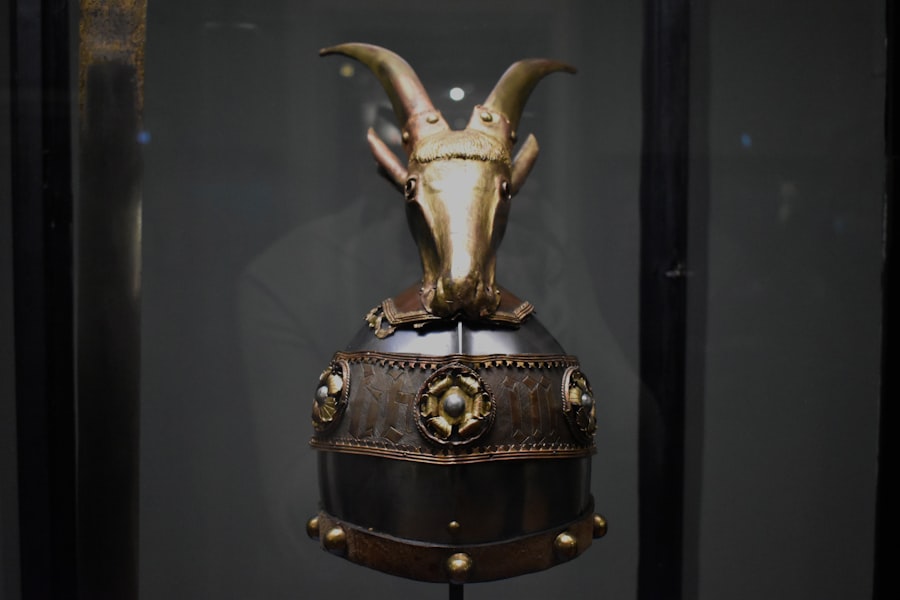
While horned helmets were not a feature of Viking combat, animal symbolism certainly permeated other aspects of Norse culture. This distinction is crucial for understanding the selective application of symbolic motifs.
Animals in Mythology and Cosmology
Animals held deep significance in Norse mythology, cosmology, and daily life. They were often associated with gods, powerful forces, or specific virtues. This pervasive animal symbolism is present in various forms of Viking art and artifacts.
Wolves, Ravens, and Bears
Wolves (like Fenrir and Geri and Freki), ravens (like Huginn and Muninn), and bears were particularly potent symbols. Wolves were associated with ferocity and destruction, ravens with knowledge and the battlefield (followers of Odin), and bears with strength and berserker rage. These animals frequently appeared on carvings, jewelry, and even as names or nicknames for warriors. These were symbols of power and spiritual connection, not necessarily literal representations to be attached to headwear.
Serpent and Dragon Motifs
Serpents and dragons, embodying both destruction and protection, were another recurring motif. Longships often featured dragon heads on their prows, intended to ward off evil spirits or intimidate their enemies. This application of animal imagery was often strategic and ritualistic, applied to objects with distinct symbolic functions.
Distinguishing Symbolic Art from Practical Gear
It is vital to differentiate between artistic and ritualistic symbolism and the practical design of combat gear. While a warrior might wear a pendant depicting a wolf or a raven, or have such imagery carved into their weapon, adorning a helmet with large, cumbersome horns would have been counterproductive in a combat scenario. This distinction underscores the Viking pragmatism when it came to tools of warfare. The battlefield was not a place for impractical artistic flourishes that could compromise a fighter’s life.
The symbolism of Viking helmets has intrigued historians and enthusiasts alike, shedding light on the cultural significance of these iconic artifacts. Many people associate Viking helmets with fierce warriors, but their designs often carried deeper meanings related to status and protection. For those interested in exploring this topic further, a related article can be found at this link, which delves into the various interpretations and historical contexts surrounding Viking helmet symbolism. Understanding these elements can enhance our appreciation of the Viking Age and its lasting impact on modern culture.
The Enduring Legacy and Misinterpretations
| Aspect | Description | Symbolic Meaning | Historical Accuracy |
|---|---|---|---|
| Horned Helmets | Helmets with protruding horns often depicted in popular culture | Symbolizes fierceness, warrior spirit, and connection to Norse gods | Myth; no archaeological evidence supports Vikings wore horned helmets in battle |
| Winged Helmets | Helmets featuring wing-like decorations | Represents speed, divine protection, and valor | Mostly a romanticized 19th-century invention, not historically accurate |
| Simple Iron Helmets | Conical or rounded helmets made of iron | Practical protection, symbolizing the warrior’s readiness and resilience | Historically accurate; commonly used by Viking warriors |
| Decorative Elements | Engravings, animal motifs, and metalwork on helmets | Indicates status, clan affiliation, and spiritual beliefs | Some evidence found in archaeological finds, though limited |
| Helmet as a Symbol | General use of helmets in Viking culture | Represents protection, warrior identity, and social status | Widely accepted in historical context |
Despite overwhelming archaeological evidence, the image of the horned Viking remains firmly entrenched in popular culture. This persistent misinterpretation highlights the powerful influence of artistic license and simplified historical narratives.
Pop Culture Reinforcement
The horned helmet, once a 19th-century operatic prop, has evolved into a global shorthand for “Viking.” This imagery is consistently reinforced in modern media:
- Film and Television: From early adventure films to contemporary fantasy series, horned helmets frequently appear, even in productions that strive for historical accuracy in other aspects.
- Video Games: Many video game adaptations of Norse mythology or historical settings often feature horned helmets, catering to established player expectations.
- Sports Mascots and Brands: The Minnesota Vikings NFL team mascot, for instance, prominently features horns, solidifying the image in mainstream sports culture.
- Children’s Media: Books, cartoons, and toys often portray Vikings with horns, shaping early perceptions and perpetuating the myth for new generations.
The Power of Visual Tropes
Visual tropes are powerful. They simplify complex historical figures into easily recognizable symbols. The horned helmet, with its dramatic silhouette, serves this purpose effectively, offering an instant visual cue for “Viking” regardless of its historical accuracy. It has become a visual metonym, standing in for an entire culture.
Re-educating the Public
Challenging deeply ingrained historical myths requires ongoing effort. Education plays a crucial role in dispelling the horned helmet misconception and fostering a more accurate understanding of Viking history.
The Role of Museums and Academics
Museums, with their curated archaeological collections, are at the forefront of this re-education. Displays featuring the Gjermundbu helmet and explanations of its significance are vital. Academics and historians, through publications, lectures, and public outreach, work to disseminate accurate information, providing richer, more nuanced historical narratives that move beyond simplistic stereotypes.
Examining the “Why”
Understanding why the myth originated and why it persists is as important as presenting the facts. It allows for a broader discussion about historical interpretation, cultural appropriation, and the creation of popular imagery. The horned helmet, while historically inaccurate, serves as a fascinating case study in how narratives, once established, gain a life of their own, often overshadowing empirical evidence. The reader is invited to consider the origins of other historical myths they might encounter, recognizing the dynamic interplay between fact, interpretation, and popular perception. The true Viking helmet, a symbol of practical defense, offers a more grounded but no less compelling insight into the ingenuity and pragmatism of Norse warriors.
FAQs
What does the Viking helmet symbolize?
The Viking helmet symbolizes strength, bravery, and warrior spirit. It is often associated with the fierce and adventurous nature of Viking warriors.
Did Vikings actually wear horned helmets?
No, historical evidence shows that Vikings did not wear horned helmets. The popular image of horned Viking helmets is a myth created by 19th-century romanticism and theatrical costumes.
What materials were Viking helmets made from?
Viking helmets were typically made from iron or other metals, sometimes reinforced with leather. They were designed for protection in battle rather than decoration.
How is the Viking helmet used in modern symbolism?
Today, the Viking helmet is used as a symbol of Nordic heritage, strength, and resilience. It appears in sports logos, popular culture, and as a representation of Viking history.
Are there any archaeological finds of Viking helmets?
Yes, a few Viking helmets have been discovered by archaeologists, such as the Gjermundbu helmet found in Norway. These finds provide insight into Viking craftsmanship and warfare.