
The enduring mystique of the Egyptian pyramids, colossal monuments that pierce the desert sky, has captivated humanity for millennia. Their sheer scale and the precision of their construction, especially given the technological limitations of ancient times, invite constant inquiry. While popular imagination often conjures images of alien intervention or lost advanced civilizations, a rigorous examination of archaeological evidence, historical texts, and scientific analysis reveals a more grounded, yet equally fascinating, story of human ingenuity, immense labor, and sophisticated organization. This article will delve into the secrets of pyramid construction, exploring the materials, methods, labor force, and logistical challenges that culminated in these architectural marvels.
The bedrock of pyramid construction lay in the procurement and utilization of vast quantities of stone. The choice of stone was not arbitrary; it was dictated by availability, durability, and suitability for the intended purpose. These structures were not merely piles of rocks but meticulously planned edifices designed to endure the ravages of time.
Limestone: The Ubiquitous Building Block
The vast majority of the stones used in pyramid construction were locally quarried limestone. This sedimentary rock, abundant in the Giza plateau and surrounding areas, served as the primary material for the core of the pyramids.
Quarrying Techniques: Extracting from the Earth
Ancient quarrymen employed a variety of methods to extract these massive blocks, often weighing several tons. They would identify natural fissures and cracks in the limestone bedrock and then meticulously work to widen them.
The Wedge and Mallet Approach
One primary technique involved the insertion of wooden wedges into cracks. These wedges would then be soaked with water. As the wood absorbed water, it would expand, exerting immense pressure and causing the rock to fracture along pre-determined lines. A similar method involved using stone or metal mallets to repeatedly strike specific points, gradually creating stress fractures.
Dolerite Pounders: Hammering Away
Harder stones, such as dolerite, were used as pounders. These heavy, rounded stones could be used to repeatedly strike the limestone, slowly but surely chipping away at the rock face and creating channels for wedges.
Copper Tools: The Dawn of Metallurgy
While not as prevalent as stone tools for bulk quarrying, copper chisels and saws, though softer, were used for finer work and to shape the quarried blocks. The relative rarity and cost of copper limited its widespread application in basic quarrying but it played a role in the finishing stages.
Granite: The Toughest of the Tough
For more critical structural elements, such as burial chambers, sarcophagi, and sometimes casing stones, a harder and more durable stone – granite – was preferred. This igneous rock, known for its strength and resistance to weathering, added a layer of permanence and prestige to the inner architecture.
Sourcing Granite: A Journey to Aswan
The finest granite was quarried in Aswan, a significant distance south of the pyramid sites. This geographical separation added a considerable logistical challenge to the construction process, demanding efficient transportation networks.
Specialized Quarrying for Harder Stone
Quarrying granite was a more arduous undertaking than working with limestone. The extreme hardness of granite required more robust tools and techniques.
The Fire-Setting Method
One hypothesized method for quarrying granite involves fire-setting. Fires were built against the rock face, and once the stone was heated, cold water was poured onto it. The resulting thermal shock caused the granite to crack, allowing for the extraction of blocks.
Repeated Percussion and Chipping
Similar to limestone quarrying but on a more intensive scale, repeated hammering with dolerite pounders and the strategic use of copper tools were employed to break down and shape the granite.
Fine White Limestone: The Gleaming Exterior
The iconic smooth, gleaming exterior of the pyramids, which would have been visible for miles, was achieved through the application of finely dressed white limestone casing stones. These stones were meticulously cut and polished to create a seamless, brilliant façade.
Precision Cutting and Fitting
The casing stones were cut with exceptional precision, so close that in some instances, a blade cannot be inserted between them. This level of accuracy demonstrates a profound understanding of stone working and measurement.
Transporting and Placing Casing Stones
These high-quality casing stones were transported from quarries further afield, often requiring elaborate ramp systems and careful placement to maintain the integrity of the pyramid’s structure.
The construction of the pyramids has long been shrouded in mystery, with various theories attempting to explain how these monumental structures were built. A fascinating article that delves into the secrets behind the construction techniques used by the ancient Egyptians can be found at this link. It explores the tools, manpower, and innovative methods that may have contributed to the creation of these iconic edifices, shedding light on the ingenuity of a civilization that continues to captivate our imagination.
The Monumental Effort: Labor and Organization
The construction of the pyramids was not the work of a few master builders. It involved an enormous, well-organized workforce drawn from various segments of ancient Egyptian society. The popular image of enslaved people toiling under the lash is a widespread misconception, largely perpetuated by later Greek historians. Archaeological evidence points to a more complex picture of skilled laborers, conscripted workers, and a supporting infrastructure devoted to their welfare.
The Myth of Slave Labor: Dispelling the Misconception
Early historical accounts, particularly those of Herodotus, alluded to massive labor forces potentially including slaves, but subsequent archaeological discoveries have significantly challenged this narrative.
Evidence of Skilled Craftsmen and Laborers
Excavations of worker villages and cemeteries near pyramid sites have revealed that the majority of workers were likely Egyptian. They were housed, fed, and provided with medical care, suggesting a paid or conscripted workforce rather than enslaved individuals.
Barracks and Provisions: Caring for the Workforce
The discovery of large communal living quarters, bakeries, breweries, and evidence of meat consumption indicates a structured society that sustained a large population during construction periods. This logistical feat mirrors that of a modern military campaign.
A Seasonal Workforce: The Nile’s Influence
A compelling theory suggests that much of the labor force was composed of farmers who worked on the pyramids during the annual Nile inundation. When their fields were flooded, they were likely conscripted for state projects.
The Rhythmic Cycle of the Nile and Construction
This seasonal availability of labor provided a ready pool of workers during periods when agricultural activities were impossible. The agricultural calendar thus became intrinsically linked to the construction cycles of the great monuments.
Specialized Roles and Task Allocation
Within the workforce, there were undoubtedly specialized roles. Think of it as a giant ant colony, each ant with a specific, vital task. There were quarrymen, haulers, overseers, stone masons, carpenters, surveyors, and countless others.
Project Management on an Unprecedented Scale
The sheer size and complexity of pyramid construction demanded an administrative and logistical framework equivalent to modern mega-projects. This involved meticulous planning, resource management, and coordination across vast distances.
Hierarchical Command and Control
A clear chain of command was essential. Overseers, scribes, and engineers would have directed the various teams, ensuring tasks were completed according to plan. These were the project managers of their time.
Resource Allocation and Supply Chains
The continuous supply of food, water, tools, and raw materials was critical. This necessitated efficient supply chains stretching from quarries to construction sites and from agricultural regions to worker settlements.
The Engineering Prowess: Methods of Raising and Placing Stones
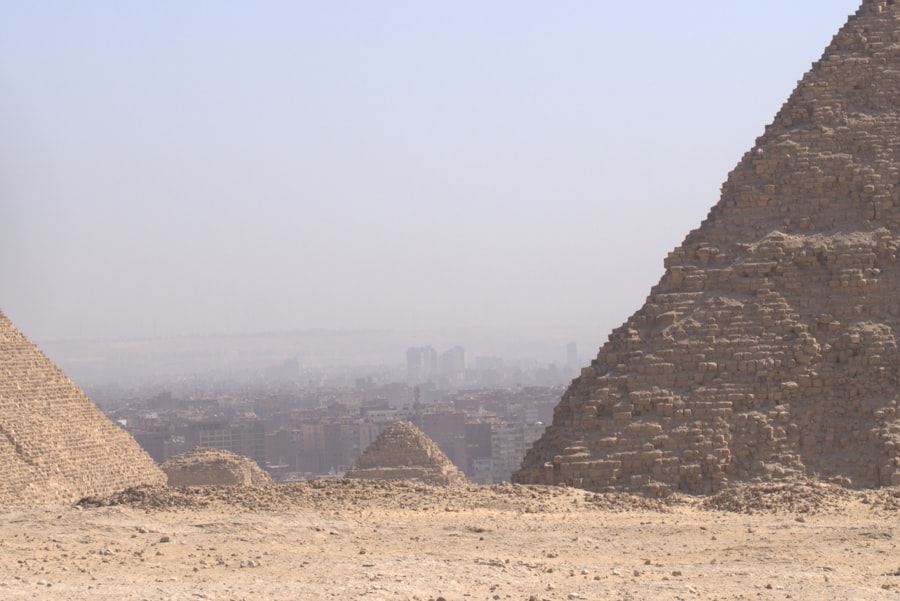
The methods employed to lift and position multi-ton blocks of stone to incredible heights remain one of the most debated aspects of pyramid construction. While no single, definitive answer exists, a combination of ingenious engineering strategies is widely accepted by Egyptologists.
Ramps: The Backbone of Vertical Movement
The prevailing theory for raising stones is the use of ramps. However, the exact nature and configuration of these ramps are subjects of ongoing research and discussion. Various types of ramps have been proposed, each with its own advantages and challenges.
Straight Ramps: Direct Ascent
A simple, straight ramp extending from the ground to the top of the pyramid. This would have been enormously long and required vast amounts of material and labor to construct.
Challenges of Straight Ramps
The sheer length and slope of a straight ramp, especially for the upper levels of a massive pyramid, would have presented significant engineering hurdles. Maintaining a manageable gradient while still allowing for the ascent of heavy stones would have been a delicate balance.
Spiral or Wrap-Around Ramps: Gradual Ascent
Another proposed method involves a ramp that spirals around the exterior of the pyramid as it rises, or a ramp that gradually zig-zags up the sides.
Advantages of Spiral Ramps
These ramps would have been shorter and potentially constructed with less material. They could also have been built incrementally as the pyramid grew.
Internal Ramps: A Hidden Pathway
More recent theories suggest the possibility of internal ramps, constructed within the pyramid itself, allowing for the gradual ascent of stones to their final positions. Evidence for such internal structures is being actively sought and investigated.
Levers and Rollers: The Power of Mechanical Advantage
Beyond ramps, it is highly probable that levers and rollers were used to maneuver and position the heavy stones. These simple yet effective tools amplify human strength, allowing for the movement of objects far greater than an individual could lift.
The Principle of Leverage
A lever, essentially a rigid bar used to lift or move a load with the aid of a fulcrum, would have been used to pivot and tilt the massive blocks.
The Use of Rollers
Logs placed beneath the stones would have reduced friction, allowing for the blocks to be rolled across the ground or along ramps with significantly less effort.
Cranes and Mechanical Systems: A Speculative Frontier
While less supported by direct archaeological evidence, some researchers speculate about the potential use of more advanced mechanical systems or early forms of cranes. However, the complexity of such systems, considering the available technology, makes this a less widely accepted hypothesis.
The Absence of Direct Evidence
The lack of physical remnants of complex lifting machinery leaves this theory in the realm of speculation. The Egyptians were masters of simplicity and efficiency; thus, more straightforward solutions are generally favored.
Precision and Alignment: The Celestial Guides

The remarkable precision with which the pyramids were constructed and their uncanny alignment with cardinal directions point to a sophisticated understanding of astronomy and geometry. These monuments were not just tombs; they were instruments aligned with the cosmos, imbued with astronomical and possibly religious significance.
Cardinal Alignment: Facing the Four Corners of the World
The base of the Great Pyramid of Giza is aligned with the cardinal directions (North, South, East, West) with astonishing accuracy, deviating by mere fractions of a degree. This precision is not accidental and suggests a deliberate method of orientation.
Astronomical Observation as a Tool
It is widely believed that the ancient Egyptians used astronomical observations to achieve this alignment. The rising and setting of stars, particularly circumpolar stars that never set, would have provided reliable reference points.
The Transit of Stars: Marking True North
One proposed method involves observing the transit of stars across the meridian. By marking the highest point a star reaches in its nightly arc, a surveyor could establish a true north-south line.
The “Sighting-Stick” Method
Simple sighting devices, possibly made of wood or reeds, would have been used to align with the stars and project their positions onto the ground.
Geometric Accuracy: The Art of Measurement
Beyond alignment, the overall geometric proportions and angles of the pyramids were executed with remarkable accuracy. This required a developed system of measurement and surveying.
The Royal Cubit: A Standard Unit of Measurement
The “royal cubit,” a unit of length defined by the distance from the elbow to the tip of the middle finger, plus the width of the palm, was the standard measurement for construction. Precise lengths and ratios were meticulously adhered to.
Right Triangles and Pythagorean Principles
While the explicit knowledge of the Pythagorean theorem as we understand it is debated, there is evidence suggesting the practical application of right triangles in achieving precise angles and corners. Builders likely used ropes with knots to create controlled right angles on a large scale.
Inclination and Slopes: The Consistent Angle
The consistent slope of the pyramid faces, particularly the Great Pyramid’s approximate 51.8-degree inclination, suggests a deliberate calculation and execution.
Engineering for Stability and Aesthetics
This specific angle not only provided structural stability but also contributed to the visually pleasing, imposing form of the pyramid. It represents a careful balance between form and function.
The construction of the pyramids has long been shrouded in mystery, with various theories attempting to explain how these monumental structures were built. Recent discoveries and research have shed light on some of the techniques that may have been employed by the ancient Egyptians. For those interested in delving deeper into the secrets of pyramid construction, a fascinating article can be found here, which explores the latest findings and offers insights into the engineering marvels of the time.
The Purpose and Legacy: More Than Just Royal Tombs
| Secret | Description | Evidence/Method | Impact on Construction |
|---|---|---|---|
| Use of Ramps | Large ramps made of mudbrick and limestone chippings were used to haul stones up. | Archaeological remains of ramp foundations and tool marks on stones. | Enabled workers to move heavy blocks efficiently to higher levels. |
| Water Lubrication | Wet sand was used to reduce friction when dragging stones. | Experimental archaeology demonstrated reduced force needed when sand is wet. | Reduced labor effort and increased speed of stone transport. |
| Precise Stone Cutting | Copper tools and abrasive sand were used to cut stones with high precision. | Tool marks found on stones and copper chisels discovered in quarries. | Allowed for tight fitting blocks, increasing pyramid stability. |
| Skilled Workforce | Organized teams of skilled laborers, not slaves, worked in shifts. | Worker villages and burial sites near pyramids indicate organized labor. | Improved efficiency and quality of construction. |
| Internal Spiral Ramps | Hypothesized internal ramps spiraled inside the pyramid for stone transport. | Some structural anomalies and voids detected by scanning technologies. | Provided a concealed and efficient method to raise stones. |
While the primary function of the pyramids is widely accepted as royal tombs for pharaohs, their significance extends beyond mere burial places. They were potent symbols of the pharaoh’s power, divinity, and his connection to the afterlife, designed to ensure his successful transition and continued influence in the next world.
The Pharaoh’s Journey to the Afterlife: Ensuring Immortality
The pyramids were built to protect the pharaoh’s mummified body and his possessions, which were believed to be essential for his existence in the afterlife. The monumental effort was an investment in the pharaoh’s eternal well-being.
Religious Significance: A Bridge Between Worlds
The construction and orientation of pyramids often held deep religious and cosmological significance. They were seen as cosmic machines, helping the pharaoh ascend to the heavens and join the gods.
The “Benben” Stone and Creation Mythology
The pyramidal shape itself may have been inspired by the primordial mound, the “Benben,” a symbol of creation in ancient Egyptian mythology. The pyramid thus represented a microcosm of the created world and a platform for rebirth.
Symbol of Power and Divine Kingship: An Enduring Statement
The sheer scale and labor involved in pyramid construction served as a powerful testament to the pharaoh’s authority and the centralized power of the Egyptian state. These monuments were a visual declaration of their dominion.
Unifying the Nation: A Shared Undertaking
The construction of pyramids often involved labor from across Egypt, fostering a sense of national unity and shared purpose under the pharaoh’s rule. It was a project that bound the kingdom together.
A Legacy of Wonder: Inspiring Generations
The enduring presence of the pyramids continues to inspire awe and wonder, a tangible link to a civilization that achieved extraordinary feats. They stand as silent witnesses to human ambition, ingenuity, and the pursuit of permanence. Their secrets, while continually being unveiled, continue to beckon us to explore the depths of ancient human achievement. The monumental architecture is a testament to what organized human effort, coupled with a deep understanding of the natural world and a profound spiritual conviction, can achieve.
FAQs
1. How were the massive stones of the pyramids transported?
The massive stones used in pyramid construction were transported using a combination of sledges, rollers, and lubricated pathways. Workers likely dragged the stones over wet sand to reduce friction, making it easier to move these heavy blocks from quarries to the building site.
2. What materials were primarily used to build the pyramids?
The pyramids were primarily constructed from limestone blocks, with higher quality limestone used for the outer casing. Granite was also used for certain interior chambers and structural elements, sourced from quarries located farther away.
3. How did ancient Egyptians achieve precise alignment and measurements?
Ancient Egyptians used simple but effective tools such as plumb bobs, leveling instruments, and sighting rods to achieve precise alignment. They aligned the pyramids with cardinal points using astronomical observations, particularly of stars and the sun.
4. Who built the pyramids?
Contrary to popular myths, the pyramids were built by skilled laborers and craftsmen, not slaves. These workers were organized into well-coordinated teams and were likely supported by a system that provided food, shelter, and medical care.
5. What construction techniques were used to lift heavy stones into place?
Theories suggest that ramps—straight, zigzagging, or circular—were used to move stones to higher levels. Workers hauled the blocks up these ramps using ropes and manpower, gradually building the pyramid layer by layer.