
The race to develop atomic weapons during World War II was a clandestine and desperate undertaking, with nations vying for a breakthrough that promised to reshape the global geopolitical landscape. Among the primary contenders, the United States, through a combination of intelligence gathering, scientific ingenuity, and sheer industrial might, managed to “crack the code” of atomic warfare before its adversaries. This article delves into the intricate mechanisms and pivotal moments that enabled the US to acquire the critical information and develop the atomic bomb, a weapon that would ultimately bring about the abrupt end of the deadliest conflict in human history.
The journey of atomic bomb development in the US did not begin with a sudden flash of inspiration but rather with a growing unease among a small cadre of scientists. These individuals, many of whom were émigrés from Nazi-dominated Europe, possessed a profound understanding of the implications of nuclear fission.
Einstein’s Letter and the Presidential Ear
The iconic moment that galvanized US government attention towards atomic research was undoubtedly the letter penned by Leo Szilard, Eugene Wigner, and Edward Teller, and famously signed by Albert Einstein, to President Franklin D. Roosevelt in August 1939. This communication, a stark warning, articulated the terrifying possibility of a Nazi Germany developing “extremely powerful bombs of a new type” and urged American investment in uranium research.
Bohr’s Revelations and Transatlantic Whispers
Niels Bohr, the renowned Danish physicist, also played a crucial, albeit unintentional, role. His discussions with American scientists in early 1939, particularly regarding the fission of uranium and the enormous energy release predicted by theoretical physics, served as a powerful catalyst. These scientific exchanges, though seemingly innocuous, acted as a transmission belt for critical knowledge across the Atlantic, further igniting concern within the American scientific community.
The British Impetus: The MAUD Committee’s Findings
While American scientists were grappling with the complexities of nuclear fission, their British counterparts were making significant strides. The MAUD Committee, established in 1940, undertook an intensive study of the feasibility of an atomic weapon. Their findings, which unequivocally concluded that an atomic bomb was not only possible but could be developed within a few years, were a seismic shock. This report, shared with American scientists in the autumn of 1941, served as a powerful confirmation of the US’s own suspicions and provided a concrete roadmap for the development effort.
The capture of atomic bomb secrets by the United States during World War II was a pivotal moment in history, significantly influencing the course of the war and the subsequent Cold War era. For a deeper understanding of the espionage efforts that led to the acquisition of these critical secrets, you can explore the article on this topic at Hey Did You Know This. This resource provides insights into the key figures and events that played a role in the U.S. securing atomic intelligence, highlighting the intricate web of espionage that unfolded during this tumultuous period.
The Manhattan Project: A Colossus of Secrecy and Innovation
The official launch of the Manhattan Project in 1942 marked a pivotal shift from theoretical speculation to a monumental engineering and scientific endeavor. This undertaking, shrouded in unparalleled secrecy, was a testament to the US’s ability to mobilize vast resources and orchestrate a complex web of scientific, industrial, and military operations.
The Intelligence Gathering Network: Peering Behind the Iron Curtain
While the US was building its own atomic arsenal, a parallel effort was underway to acquire information about the atomic research of its adversaries, particularly Nazi Germany. This intelligence gathering was a multifaceted operation, involving various agencies and methods.
OSS and SOE: Agents in the Shadows
The Office of Strategic Services (OSS) and the British Special Operations Executive (SOE) played crucial roles in gleaning intelligence from occupied Europe. Agents infiltrated scientific circles, interrogated defectors, and assessed the progress of German atomic programs. While direct evidence of a German bomb was scarce, the constant flow of information helped the Allies piece together the puzzle of Nazi intentions and capabilities.
Alsos Mission: Following the Paper Trail
Perhaps the most direct and impactful intelligence operation was the Alsos Mission, a joint American-British task force. This mission, dispatched to Europe following Allied advancements, aimed to track down German scientists, seize their research materials, and assess the extent of their atomic ambitions. The Alsos team, spearheaded by physicist Samuel Goudsmit, meticulously followed the paper trail of German scientific institutions and seized crucial documents and equipment. This provided definitive proof that Germany had not achieved a functioning atomic bomb, a discovery that offered a profound sense of relief to the Allied leadership.
Deciphering Enemy Communications: The Ultra and Magic Programs
While not directly focused on atomic research, the Allied code-breaking endeavors, such as the British Ultra program (deciphering German Enigma communications) and the American Magic program (breaking Japanese codes), provided invaluable strategic intelligence. Though atomic secrets were rarely explicitly discussed in these intercepted messages, the broader intelligence picture helped the Allies understand enemy priorities and resource allocation, indirectly informing their assessment of the atomic threat.
Scientific Collaboration: A Symphony of Minds
The brilliance of the Manhattan Project lay not only in its organizational prowess but also in its ability to bring together an extraordinary collection of scientific minds from diverse backgrounds. This collective intelligence, like a powerful current, propelled the project forward.
The Brain Drain: European Scientists in Exile
A significant advantage for the US was the influx of eminent European scientists fleeing persecution. Figures like Enrico Fermi, Hans Bethe, and John von Neumann, all giants in their respective fields, brought a wealth of knowledge and experience to the American effort. Their expertise in nuclear physics, theoretical mechanics, and engineering proved indispensable in tackling the immense scientific challenges of the bomb’s development.
Project Y: Los Alamos and the Bomb’s Birthplace
The remote desert plateau of Los Alamos, New Mexico, became the crucible where the theoretical knowledge of nuclear fission was transmuted into a tangible weapon. Under the inspired leadership of J. Robert Oppenheimer, Los Alamos assembled a “who’s who” of the scientific world. Here, the myriad scientific and engineering problems—from implosion dynamics to critical mass calculations—were meticulously solved through intense collaboration and relentless experimentation.
Industrial Scale-Up: From Laboratory to Factory
The transformation of theoretical concepts into a usable weapon required an industrial effort of unprecedented scale. The Manhattan Project transcended the boundaries of traditional scientific research and became a massive manufacturing enterprise.
Oak Ridge and Hanford: Factories of Fissile Material
The production of fissile materials—highly enriched uranium and plutonium—was a Herculean task. Entire cities were built from scratch, such as Oak Ridge, Tennessee, and Hanford, Washington, to house the sprawling complexes dedicated to these processes. At Oak Ridge, vast electromagnetic separation and gaseous diffusion plants were constructed to enrich uranium. At Hanford, enormous reactors were built to produce plutonium through neutron bombardment of uranium. These facilities, like colossal alchemists’ workshops, transformed raw materials into the incredibly potent ingredients for atomic bombs.
Calutrons and Diffusion Plants: The Race for Uranium Enrichment
The methods for uranium enrichment were varied and complex. The Y-12 plant at Oak Ridge employed Calutrons, massive electromagnetic separators, to enrich uranium isotopes. Concurrently, the K-25 gaseous diffusion plant, a truly monumental undertaking, utilized miles of porous barriers to separate uranium hexafluoride gas. The simultaneous pursuit of multiple enrichment technologies reflected the urgency and uncertainty surrounding the project.
The Atomic Bombs: “Little Boy” and “Fat Man”
The culmination of these efforts was the creation of two distinct types of atomic bombs: the uranium-based “Little Boy” and the plutonium-based “Fat Man.” Each represented a triumph of scientific and engineering ingenuity, forged in the crucible of war.
“Little Boy”: The Uranium Gun-Type Bomb
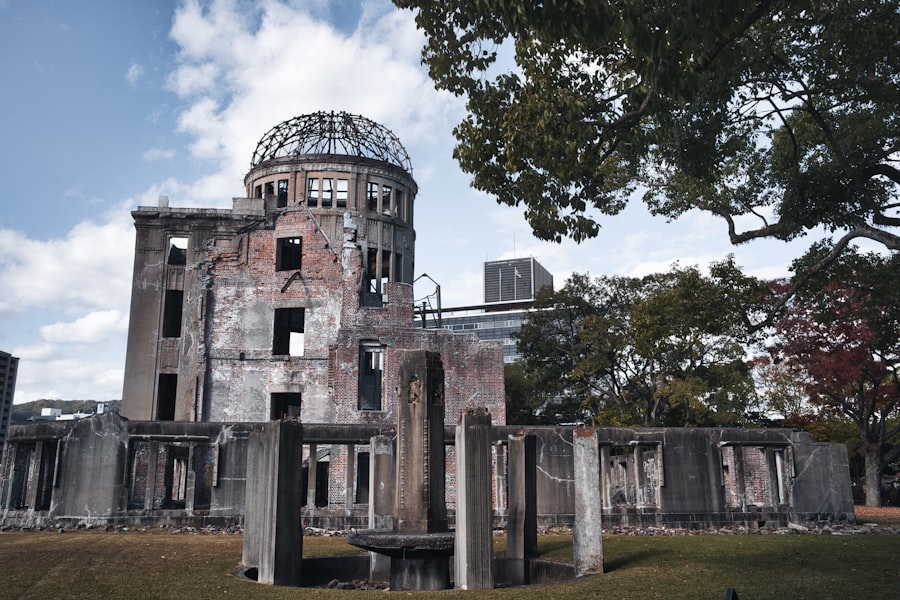
The “Little Boy” bomb, dropped on Hiroshima, was a relatively simpler design, employing a “gun-type” mechanism. This involved firing a sub-critical mass of uranium-235 into another sub-critical mass, combining them rapidly to achieve a critical state and initiate a nuclear chain reaction. The confidence in its design was so high that it was not pre-tested.
“Fat Man”: The Plutonium Implosion Bomb
The “Fat Man” bomb, detonated over Nagasaki, was a more complex and technologically advanced “implosion-type” device. This design involved compressing a sub-critical sphere of plutonium-239 using precisely timed explosive lenses, creating an inward shockwave that compressed the plutonium to a supercritical density, triggering the nuclear detonation. The complexity of this design necessitated the Trinity test, the world’s first nuclear detonation.
Lessons Learned and Lasting Legacy
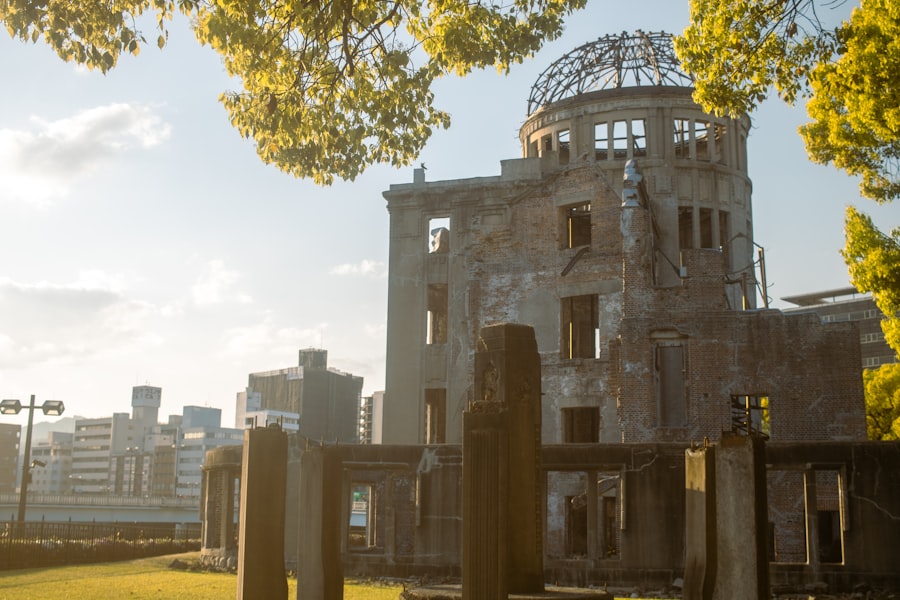
The story of how the US cracked the code of atomic bomb development is a multifaceted narrative of scientific collaboration, espionage, industrial mobilization, and unprecedented secrecy. It stands as a powerful testament to human ingenuity, both for its potential to create and its capacity to destroy.
The Role of German Underestimation and Allied Cooperation
A significant factor in the US success was the German failure to prioritize and fully commit to an atomic weapon program. Competing priorities, a misunderstanding of critical mass requirements by some key German scientists, and the devastating impact of Allied bombing campaigns on German industrial infrastructure all contributed to their inability to develop a bomb. Conversely, the close scientific and intelligence cooperation between the US and the UK proved to be a critical advantage, pooling resources and expertise.
The Ethical Dilemma and the Dawn of the Nuclear Age
The successful development and deployment of atomic weapons ushered in the nuclear age, forever altering the landscape of international relations. The immediate end of World War II came at a horrifying cost, raising profound ethical questions that continue to reverberate through history. The legacy of the Manhattan Project is therefore a complex one, a tapestry woven with threads of scientific triumph, moral quandary, and the enduring shadow of unprecedented destructive power. The pursuit of atomic secrets had yielded a weapon that redefined warfare and cast a long, cold shadow over the future of humanity, a shadow that continues to loom large in the ongoing discourse about nuclear proliferation and disarmament.
FAQs
1. How did the United States initially develop the atomic bomb?
The United States developed the atomic bomb through the Manhattan Project, a secret research and development program during World War II that involved top scientists and significant government funding to create nuclear weapons.
2. What role did espionage play in the US obtaining atomic bomb secrets?
Espionage played a crucial role, as Soviet spies infiltrated the Manhattan Project and passed critical information about the atomic bomb’s design and development to the Soviet Union, which helped them accelerate their own nuclear program.
3. Were there any notable spies involved in leaking atomic bomb secrets?
Yes, notable spies such as Klaus Fuchs, Julius and Ethel Rosenberg, and Theodore Hall were involved in leaking atomic bomb secrets to the Soviet Union during and after World War II.
4. How did the US government respond to the threat of atomic bomb espionage?
The US government increased security measures, conducted investigations, and implemented counterintelligence efforts to identify and stop espionage activities related to atomic bomb secrets, including high-profile trials and convictions of suspected spies.
5. What impact did capturing atomic bomb secrets have on global nuclear proliferation?
The capture and sharing of atomic bomb secrets accelerated the nuclear arms race during the Cold War, leading to the rapid development of nuclear weapons by multiple countries and significantly influencing international relations and global security policies.