You stood on the precipice of a new millennium, a world seemingly at the dawn of an era of unprecedented connectivity and optimism. Then, the world shattered. The morning of September 11, 2001, etched itself into your collective memory, a scar that redefined your understanding of vulnerability and the very fabric of national security. The coordinated terrorist attacks that day were not merely an assault on buildings; they were an assault on your sense of safety, on the illusion of an impenetrable fortress. This article will delve into the critical lessons you learned in the crucible of 9/11, examining how those catastrophic events reshaped your approach to national security, from the immediate aftermath to the long-term strategic shifts.
Before 9/11, your national security apparatus, while robust, was largely geared towards Cold War paradigms – state-sponsored aggression, nuclear threats, and conventional warfare. The specter of non-state actors orchestrating such devastating attacks within your own borders was, for many, a scenario relegated to fiction. The unimaginable unfolded on that Tuesday morning, demonstrating a critical failure to anticipate and adapt to evolving threats.
Intelligence Failures and Interagency Silos
A significant pillar of the post-9/11 reevaluation was the profound intelligence failures that preceded the attacks. The disjointed nature of intelligence gathering and analysis, often residing in isolated bureaucratic islands, meant that crucial pieces of information, like puzzle pieces scattered across different rooms, never formed a cohesive picture.
The “No Fly” List and Information Sharing Deficiencies
The fact that some of the 9/11 hijackers were on watchlists, yet no alarm was triggered, highlighted a pervasive lack of effective information sharing. Your intelligence agencies operated in silos, with limited communication and collaboration between entities like the CIA, the FBI, and others. This fragmentation was a breeding ground for missed opportunities, a fertile soil where potential threats could grow unchecked.
The Limits of Traditional Threat Assessment
Your threat assessment models were largely focused on conventional military power and overt acts of aggression. The idea of using commercial airplanes as weapons, a seemingly improbable tactic, fell outside the parameters of these existing frameworks. This intellectual rigidity proved to be a critical blind spot, leaving you unprepared for the ingenuity of your adversaries.
The Reimagining of the “Homeland”
The attacks fundamentally altered your perception of the “homeland.” It was no longer just a geographical territory; it became a concept deeply intertwined with your citizenry’s safety and well-being. The line between foreign and domestic threats blurred, necessitating a radical restructuring of how you defended your nation.
The Birth of the Department of Homeland Security
In response to the fragmentation and perceived weaknesses, you witnessed the creation of the Department of Homeland Security (DHS) in 2003. This massive governmental reorganization aimed to consolidate a multitude of agencies under a single umbrella, fostering better coordination and a unified approach to domestic security. It was an attempt to build a more cohesive shield, rather than relying on disparate, often overlapping, defenses.
The Expansion of Surveillance and Security Measures
The Patriot Act, enacted shortly after 9/11, dramatically expanded government surveillance powers, ostensibly to counter terrorism. You saw an increase in airport security, from baggage screening to passenger profiling, transforming the once mundane experience of air travel into a more stringent and scrutinizing process. These measures, while aimed at preventing future attacks, also sparked debates about civil liberties and privacy.
The events of September 11, 2001, significantly reshaped national security policies in the United States and around the world. For a deeper understanding of the implications of these changes, you can read a related article that explores the evolution of national security measures post-9/11. This article provides insights into how these policies have affected civil liberties and the balance between security and freedom. To learn more, visit this link.
The Global War on Terror: A New Battlefield
The immediate aftermath of 9/11 saw you launch what became known as the “Global War on Terror.” This was not a traditional war with clear battle lines and defined enemy states. Instead, it was a sprawling, multifaceted campaign against decentralized terrorist networks operating across multiple continents.
Afghanistan: The Initial Response and Its Ramifications
Your initial military response was directed at Afghanistan, where the Taliban regime harbored al-Qaeda, the organization responsible for the 9/11 attacks. The overthrow of the Taliban was swift, but the subsequent nation-building effort proved to be a long and arduous undertaking, a drawn-out engagement that exposed the complexities of state-building in a fractured region.
The Challenges of Counterinsurgency
You learned the hard way about the difficulties of counterinsurgency warfare. The enemy was elusive, blending seamlessly with civilian populations, and the terrain offered considerable advantages. The protracted nature of the conflict, the high costs in terms of human lives and resources, and the eventual withdrawal highlighted the limitations of military might in achieving lasting political solutions.
The Unintended Consequences of Intervention
The intervention in Afghanistan, while initially seen as a necessary response, also had unintended consequences, including regional instability and the emergence of new extremist groups. You began to understand that military action, while sometimes unavoidable, rarely exists in a vacuum.
The Iraq War: A Contentious Extension
The decision to invade Iraq in 2003, based on claims of weapons of mass destruction, remains one of the most debated aspects of the post-9/11 era. This military intervention, while not directly linked to the 9/11 attacks, was framed within the broader context of combating terrorism and preventing future threats.
The Debates Over Justification and Intelligence Accuracy
The justification for the Iraq War was heavily scrutinized, particularly after the absence of confirmed weapons of mass destruction was established. This led to a deep introspection regarding the reliability of intelligence that informs major policy decisions and the ethical implications of preemptive military action.
The Destabilization of the Region
The Iraq War contributed to significant regional destabilization, creating a power vacuum that facilitated the rise of extremist organizations and sectarian violence. You witnessed how a protracted conflict could have ripple effects far beyond its immediate operational scope.
The Evolution of Counterterrorism Strategies: Beyond the Kinetic
9/11 forced you to broaden your definition of national security beyond traditional military interventions. You realized that combating terrorism required a more nuanced and multi-pronged approach, one that addressed the underlying ideologies and facilitated their support networks.
Intelligence-Led Operations and Special Forces
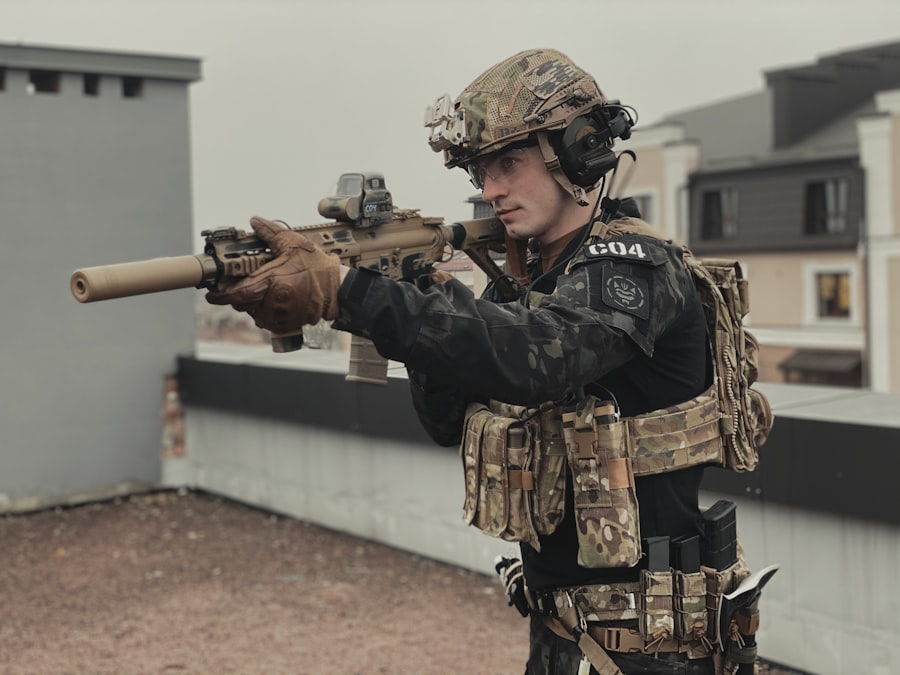
You saw a significant emphasis placed on intelligence-led operations, with increased investment in human intelligence, signals intelligence, and cybersecurity. Special forces units became increasingly prominent, conducting targeted raids and missions against high-value terrorist targets. This represented a shift towards precision strikes and intelligence gathering as primary tools.
The Rise of Drone Warfare
The advent of drone technology revolutionized your approach to remote warfare. Drones allowed for persistent surveillance and targeted strikes with reduced risk to your own personnel. However, this also raised ethical questions regarding accountability and civilian casualties, pushing the boundaries of remote engagement.
The Importance of Interagency Collaboration
The lessons learned from the pre-9/11 intelligence failures led to a greater emphasis on interagency collaboration. You witnessed efforts to break down bureaucratic barriers and foster a more integrated approach to intelligence sharing and operational planning. This was an attempt to build a more seamless defensive network.
The Countering Violent Extremism (CVE) Approach
Beyond purely kinetic measures, you began to invest in strategies aimed at countering violent extremism (CVE). This involved efforts to address the root causes of radicalization, such as poverty, political grievances, and ideological manipulation.
Addressing Ideological Narratives
You understood that terrorism is often fueled by potent ideologies. Therefore, efforts were made to counter extremist propaganda and narratives, both online and offline. This involved promoting alternative viewpoints and engaging with communities susceptible to radicalization.
Community Engagement and Prevention
Recognizing that effective counterterrorism extends to the community level, you saw an increased focus on engaging with communities to build trust, identify potential threats early on, and prevent individuals from being drawn into extremist activities. This was an acknowledgment that security is not solely the responsibility of the state.
The Digital Frontier: Cyber Threats and Information Warfare
The post-9/11 landscape quickly expanded to include the digital realm as a critical battleground. The internet, once a tool of connection and information dissemination, also became a potent weapon for adversaries.
The Emergence of Cyberterrorism
You recognized the potential for cyberattacks to cripple national infrastructure, disrupt critical services, and sow widespread panic. This led to a significant investment in cybersecurity defenses and the development of strategies to protect your digital assets.
Securing Critical Infrastructure
Protecting power grids, financial systems, communication networks, and other critical infrastructure from cyber intrusions became a paramount concern. You implemented new protocols and technologies to safeguard these vital systems.
The Evolution of Espionage and Influence Operations
Beyond direct attacks, you faced an increasing threat of state-sponsored cyber espionage and sophisticated influence operations aimed at undermining democratic processes and public discourse. This required a new understanding of information warfare.
The Challenge of Online Radicalization
The internet provided extremist groups with a global platform for recruitment, propaganda, and communication. You grappled with the challenge of monitoring and countering online radicalization, a task complicated by issues of free speech and the decentralized nature of the internet.
The Cat-and-Mouse Game of Online Content Moderation
Your efforts to moderate extremist content online often resembled a cat-and-mouse game. As platforms attempted to remove harmful material, extremist groups found new ways to circumvent these measures, adapting their tactics to remain visible.
The Importance of Digital Literacy and Critical Thinking
In response to the proliferation of disinformation and propaganda, you emphasized the importance of digital literacy and critical thinking skills among your citizens. Educating individuals on how to discern credible information from misinformation became a crucial component of national resilience.
In the aftermath of the September 11 attacks, national security policies underwent significant transformations aimed at preventing future threats. A comprehensive analysis of these changes can be found in a related article that explores the implications of heightened security measures on civil liberties and public safety. For more insights, you can read the article here. Understanding the balance between security and freedom remains a critical discussion in today’s society.
Redefining Resilience: The Long Game of National Security
| Metric | Value | Description |
|---|---|---|
| Number of 9/11 Victims | 2,977 | Total lives lost in the September 11, 2001 attacks |
| Department of Homeland Security Budget (FY 2023) | 70 billion | Annual budget allocated for national security and counterterrorism |
| Number of TSA Screenings per Year | ~800 million | Approximate number of passenger screenings at U.S. airports annually |
| Number of Intelligence Agencies Coordinated | 17 | Number of U.S. intelligence agencies integrated post-9/11 |
| Increase in National Security Personnel Since 2001 | +200,000 | Growth in federal employees focused on national security roles |
| Number of Counterterrorism Operations Conducted Annually | Hundreds | Estimated number of operations targeting terrorist threats worldwide |
| Annual Cybersecurity Incidents Reported | Thousands | Reported cyber attacks related to national security threats |
Ultimately, 9/11 taught you that national security is not solely about preventing attacks; it is also about building resilience. It is about your ability to withstand shocks, recover quickly, and adapt to an ever-changing threat landscape.
The Importance of Adaptability and Foresight
The initial shock of 9/11 underscored the need for constant adaptation and a proactive approach to security. You learned that rigid, static defenses are insufficient against dynamic and evolving threats. Your security apparatus needs to be as agile as the challenges it faces.
Investing in Innovation and Research
You understood that maintaining a security edge requires continuous investment in research and development. This includes exploring new technologies, understanding emerging threats, and constantly refining your strategies.
The Balancing Act of Security and Liberty
The post-9/11 era has been a continuous balancing act between the imperative of security and the protection of your cherished civil liberties. You have had to grapple with the delicate equilibrium required to ensure safety without compromising the fundamental freedoms that define your society.
The Global Nature of Modern Threats
You realized that the threats you face are rarely confined to your borders. Terrorism, cyberattacks, and pandemics are global challenges that require international cooperation and coordinated responses.
Strengthening Alliances and Partnerships
Your ability to confront transnational threats is significantly enhanced by strong alliances and partnerships with other nations. Diplomacy, intelligence sharing, and joint operations became integral components of your security posture.
International Cooperation and Shared Responsibility
You embraced the concept of shared responsibility in confronting global security challenges. This involves working together to dismantle terrorist networks, regulate emerging technologies, and respond to humanitarian crises that can breed instability.
The lessons of 9/11 are not static; they are a living testament to the ever-evolving nature of security. You stand today in a world irrevocably altered by those events, forever more aware of your vulnerabilities but also, perhaps, more resolute in your capacity to adapt, to persevere, and to build a more secure future. The shadow of that day serves as a perpetual reminder, a silent sentinel urging you to remain vigilant, intelligent, and united in the face of the unknown.
FAQs
What was the impact of 9/11 on U.S. national security policies?
The 9/11 attacks led to significant changes in U.S. national security policies, including the creation of the Department of Homeland Security, the implementation of the USA PATRIOT Act, and increased focus on counterterrorism and intelligence sharing.
How did 9/11 change airport security procedures?
After 9/11, airport security was dramatically enhanced with the establishment of the Transportation Security Administration (TSA), stricter passenger screening, restrictions on carry-on items, and the introduction of advanced imaging technology.
What role did intelligence agencies play in preventing future attacks post-9/11?
Intelligence agencies increased collaboration and information sharing to identify and disrupt terrorist plots. They also expanded surveillance programs and improved analysis capabilities to better detect threats.
How did 9/11 influence U.S. military strategy?
The attacks prompted the U.S. to launch the War on Terror, including military operations in Afghanistan to dismantle al-Qaeda and remove the Taliban from power, as well as a broader focus on counterinsurgency and counterterrorism worldwide.
What measures have been taken to protect critical infrastructure since 9/11?
Post-9/11, the U.S. government implemented initiatives to secure critical infrastructure such as energy grids, transportation systems, and communication networks through risk assessments, increased funding, and public-private partnerships.