
The year is 1969. Humanity, for the first time, takes a giant leap off its terrestrial cradle and plants its flag on a celestial body. The Apollo 11 mission, a breathtaking testament to human ingenuity and perseverance, achieved its primary objective: to land humans on the Moon and return them safely to Earth. Fifty years have passed since that momentous occasion, and the reverberations of that singular achievement continue to shape our understanding of the cosmos and our place within it. This article delves into the multifaceted legacy of the Apollo 11 mission, exploring its historical context, technical triumphs, scientific discoveries, cultural impact, and enduring inspirations.
The desire to reach the Moon was not a sudden spark of scientific curiosity alone. Its genesis was deeply intertwined with the geopolitical tensions of the mid-20th century, a period marked by the intense rivalry between the United States and the Soviet Union, known as the Cold War. The space race became a potent proxy battleground, a dramatic arena where technological prowess was equated with national strength and ideological superiority.
The Sputnik Shock and the Dawn of the Space Age
In October 1957, the Soviet Union launched Sputnik 1, the world’s first artificial satellite. This seemingly small metallic sphere, orbiting the Earth, sent shockwaves across the globe, particularly in the United States. It was perceived not just as a technological feat but as a stark indicator of Soviet advancement and a potential threat to American security. The “Sputnik shock” galvanized the U.S. government into action, igniting a furious effort to catch up and surpass Soviet achievements in space exploration.
Kennedy’s Audacious Proclamation: A National Imperative
The urgency fostered by Sputnik led to the creation of the National Aeronautics and Space Administration (NASA) in 1958. However, it was President John F. Kennedy’s bold challenge on May 25, 1961, that truly set the Moon landing as a national imperative. Addressing a joint session of Congress, Kennedy declared, “I believe that this nation should commit itself to achieving the goal, before this decade is out, of landing a man on the Moon and returning him safely to the Earth.” This audacious goal, announced less than a decade before the projected deadline, was a monumental undertaking, a veritable tightrope walk across the vast expanse of uncertainty. The sheer ambition of it was designed to capture the public imagination and galvanize the nation’s resources and intellect.
The Economic and Political Motivations
Beyond the purely scientific aspirations, the lunar landing was deeply embedded in economic and political calculations. For the United States, success in the space race offered a powerful propaganda tool, demonstrating the superiority of its democratic and capitalist system over Soviet communism. It was a way to project power and influence on a global scale. The enormous investment in the Apollo program also spurred technological innovation and job creation, providing a tangible economic benefit to the nation.
The moon landing remains one of humanity’s most significant achievements, and for those interested in exploring more about this monumental event, a related article can be found at Hey Did You Know This. This article delves into various fascinating facts and lesser-known details about the Apollo missions, shedding light on the challenges faced by astronauts and the technological advancements that made the lunar landing possible.
The Herculean Effort: Engineering a Lunar Voyage
The journey to the Moon was not merely a matter of pointing a rocket skyward. It was an intricate symphony of engineering, requiring the development of entirely new technologies and the meticulous execution of complex processes. The Apollo program, a colossal undertaking that spanned over a decade and involved hundreds of thousands of individuals, stands as a testament to human capacity for coordinated problem-solving.
The Saturn V Rocket: A Titan of Thrust
At the heart of the Apollo missions lay the Saturn V rocket, a three-stage behemoth that remains the most powerful rocket ever successfully launched. Standing taller than the Statue of Liberty and weighing over 6 million pounds, its sheer scale was awe-inspiring. The Saturn V’s five F-1 engines, each generating 1.5 million pounds of thrust, were the roaring heart that propelled the Apollo spacecraft through Earth’s atmosphere and onto its lunar trajectory. Designing and building such a colossal machine was akin to forging a mountain with fire and willpower, a feat of engineering that pushed the boundaries of what was thought possible.
The Apollo Spacecraft: A Three-Part Marvel
The Apollo spacecraft itself was a complex assembly designed for the rigors of deep space travel and lunar operations. It consisted of three primary modules:
- The Command Module (CM): This was the “brain” of the operation, the living quarters for the astronauts and the vehicle that would return them to Earth. Its streamlined shape was designed for atmospheric re-entry, a fiery descent through Earth’s atmosphere.
- The Service Module (SM): Attached to the Command Module, the Service Module housed the propulsion system, electrical power, and life support essentials. It was the workhorse that provided the power for course corrections and lunar orbit insertion.
- The Lunar Module (LM): The marvel of engineering that would actually land on the Moon, the Lunar Module was a two-stage vehicle. The descent stage carried the landing gear and descent engines, while the ascent stage contained the crew cabin and ascent engine, designed to lift the astronauts back to rendezvous with the Command Module. The LM was an elegant, spider-like craft, optimized for its singular, daunting task on the lunar surface.
Navigating the Void: Mission Control and Guidance Systems
The success of Apollo rested not only on the hardware but also on the human element and the sophisticated guidance systems that navigated the spacecraft through the immense emptiness of space. Mission Control in Houston, Texas, was the nerve center of every Apollo mission, a buzzing hub of brilliant minds monitoring every parameter, making split-second decisions, and communicating with the astronauts. The Apollo Guidance Computer (AGC), though primitive by today’s standards, was a revolutionary piece of technology for its time, capable of complex calculations that guided the spacecraft with remarkable precision. This intricate dance between human command and digital precision was like guiding a delicate ship through an uncharted, cosmic ocean.
Landing on the Lunar Surface: A Moment Frozen in Time

The climax of the Apollo 11 mission was the descent of the Lunar Module, Eagle, onto the Sea of Tranquility. This was a phase fraught with extreme peril, requiring perfect coordination, steady nerves, and an unwavering focus on the objective.
The Descent into the Unknown: Challenges and Triumphs
As Eagle began its descent, Commander Neil Armstrong and Lunar Module Pilot Buzz Aldrin faced critical challenges. Alarms sounded due to an over-allocation of computer processing power, a testament to the system being pushed to its absolute limits. Armstrong, taking manual control, had to skillfully pilot the LM over a boulder-strewn area, searching for a safe landing spot with dwindling fuel reserves. The tension in Mission Control was palpable, a collective holding of breath as the fate of the mission hung precariously in the balance. The successful touchdown, announced with Armstrong’s now-iconic words, “Houston, Tranquility Base here. The Eagle has landed,” was an exhalation of relief and elation that echoed around the globe.
“One Small Step for Man…”: The First Human Footprints on the Moon
The moment the hatch of the Lunar Module opened and Neil Armstrong descended the ladder, the world watched with bated breath. On July 20, 1969, at 20:17 UTC, Armstrong stepped onto the lunar surface, uttering the immortal words, “That’s one small step for man, one giant leap for mankind.” These words, etched into the collective memory of humanity, signified not just a technological achievement but a profound shift in our perspective. Buzz Aldrin soon joined him, and together they planted the American flag, collected lunar samples, and conducted experiments, their footprints becoming a silent, enduring testament to humanity’s reach.
The Scientific Bounty: Lunar Samples and Experiments
Beyond the symbolic significance, the Apollo 11 mission was a crucial scientific endeavor. Armstrong and Aldrin spent about two and a half hours on the lunar surface, collecting 21.5 kilograms (47.5 pounds) of lunar rocks and soil. These samples, when analyzed back on Earth, provided invaluable insights into the Moon’s origin, composition, and history, helping us to understand the early solar system. They also deployed scientific instruments, such as a seismometer and a laser-ranging retroreflector, which continued to send data back to Earth long after the astronauts departed.
A Lasting Legacy: Scientific, Technological, and Cultural Ripples
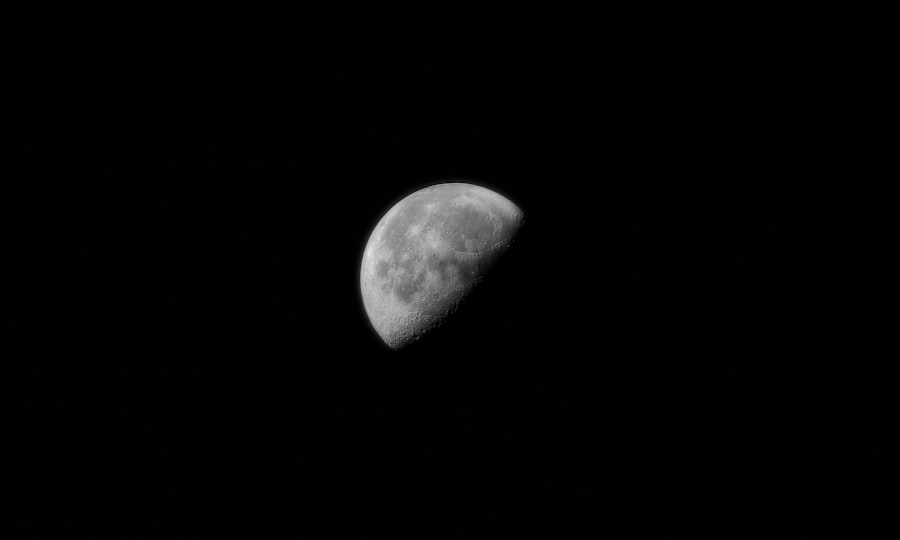
The impact of the Apollo 11 mission extends far beyond the grainy images broadcast throughout the world in 1969. It catalyzed advancements in numerous scientific and technological fields, leaving an indelible mark on society and inspiring future generations.
Scientific Advancements: Unlocking the Secrets of the Moon and Beyond
The lunar samples brought back by Apollo 11 provided a treasure trove of information for geologists and planetary scientists. They revealed that the Moon was not a pristine, unchanging body, but a dynamic world with a complex geological history. The analysis of these samples helped to confirm the Giant Impact Hypothesis, the leading theory for the formation of the Moon, which posits that the Moon formed from the debris ejected from a collision between the Earth and a Mars-sized object early in the solar system’s history. This understanding of lunar formation also shed light on the early evolution of Earth and other terrestrial planets. The data collected from lunar experiments also contributed to our understanding of the Earth-Moon system and the broader dynamics of celestial bodies.
Technological Spin-offs: Innovations That Shaped Our World
The immense technological challenges of the Apollo program spurred innovation that has since permeated countless aspects of modern life. The miniaturization of electronics, essential for fitting complex systems into the spacecraft, laid the groundwork for the microprocessors that power our computers and smartphones today. Advances in materials science, particularly in the development of lightweight, durable alloys and fire-resistant materials, found applications in industries ranging from aerospace to textiles. Even seemingly mundane innovations like cordless power tools and freeze-dried food can trace their lineage back to the intense demands of the space program. The relentless pursuit of solutions for Apollo was like a crucible, forging innovations that have since lubricated the gears of progress in innumerable ways.
Cultural Impact: Inspiring Dreams and Redefining Possibilities
The Moon landing captured the collective imagination of the world like little else in human history. It was a moment of shared human triumph, transcending national boundaries and inspiring a generation to dream bigger. The iconic images of astronauts walking on the Moon became enduring symbols of human ambition and the boundless potential of our species. The mission fueled interest in science and engineering, encouraging countless young people to pursue careers in these fields. It fostered a sense of wonder about the universe and our place within it, a feeling that continues to motivate exploration and discovery. The “overview effect,” the cognitive shift in awareness reported by astronauts when viewing Earth from space, began to filter down to the public consciousness, fostering a greater appreciation for our fragile planet.
The historic moon landing of 1969 not only marked a significant achievement in space exploration but also sparked a myriad of discussions about the future of human space travel. For those interested in delving deeper into the implications of this monumental event, you can explore a related article that examines the technological advancements that followed the Apollo missions. This insightful piece can be found here, shedding light on how the legacy of the moon landing continues to influence modern science and exploration.
The Spirit of Exploration: A Continuing Journey
| Metric | Value | Details |
|---|---|---|
| Date of First Moon Landing | July 20, 1969 | Apollo 11 mission |
| Astronauts on First Moon Landing | 3 | Neil Armstrong, Buzz Aldrin, Michael Collins |
| Duration on Moon Surface | 21 hours 36 minutes | Time spent by Armstrong and Aldrin on lunar surface |
| Distance from Earth to Moon | 384,400 km | Average distance |
| Number of Moon Landings | 6 | Successful Apollo missions landing humans on the Moon (1969-1972) |
| First Words on Moon | “That’s one small step for [a] man, one giant leap for mankind.” | Spoken by Neil Armstrong |
| Moon Gravity | 1.62 m/s² | Approximately 1/6th of Earth’s gravity |
| Moon Surface Temperature Range | -173°C to 127°C | Varies between lunar night and day |
Fifty years on, the spirit of Apollo 11 continues to fuel humanity’s enduring quest to explore the cosmos. The lessons learned, the technologies developed, and the inspiration ignited by that singular mission remain vital as we turn our gaze towards new frontiers.
The Scientific Imperative: Understanding Our Cosmic Neighborhood
The scientific questions that Apollo 11 began to answer are far from exhausted. Understanding terrestrial planets, searching for signs of life beyond Earth, and unraveling the mysteries of the universe remain paramount. Modern space missions, such as those to Mars and the outer planets, build upon the foundational knowledge and technological capabilities pioneered by Apollo. The quest is no longer solely about planting flags but about gathering data, conducting research, and deepening our scientific comprehension of the cosmos.
The Future of Lunar Exploration: Stepping Stones to the Stars
The Moon, once a distant dream, is now viewed as a potential stepping stone for future space exploration. Plans are underway for renewed human presence on the lunar surface, with the goal of establishing sustainable bases and utilizing lunar resources. This renewed focus on the Moon is not just about returning to a familiar landmark, but about preparing for bolder expeditions. The Moon offers a relatively accessible proving ground for technologies and strategies needed for more challenging journeys, such as crewed missions to Mars. It represents a cosmic rehearsal space for the grander stages of exploration that lie ahead.
Inspiring Future Generations: The Unfinished Symphony of Discovery
The legacy of Apollo 11 is ultimately about inspiration. It reminds us that even the most audacious goals are achievable through dedication, collaboration, and a relentless pursuit of knowledge. The “giant leap” taken in 1969 continues to resonate, encouraging new generations of scientists, engineers, astronauts, and dreamers to push the boundaries of human endeavor. The unfinished symphony of discovery continues, and the Moon landing serves as a powerful Overture, a promise of the extraordinary feats yet to come. The challenges of space exploration are immense, the voids vast, but the ingenuity and courage displayed fifty years ago serve as a beacon, illuminating the path forward.
FAQs
What was the date of the first moon landing?
The first moon landing occurred on July 20, 1969, during NASA’s Apollo 11 mission.
Who were the astronauts involved in the first moon landing?
The astronauts were Neil Armstrong, Buzz Aldrin, and Michael Collins. Armstrong and Aldrin walked on the moon, while Collins remained in orbit.
What spacecraft was used for the moon landing?
The Apollo 11 mission used the Saturn V rocket to launch, and the Lunar Module named “Eagle” to land on the moon.
What was the significance of the moon landing?
The moon landing was a major milestone in space exploration, demonstrating human capability to travel to and walk on another celestial body.
How long did the astronauts stay on the moon during the first landing?
Neil Armstrong and Buzz Aldrin spent about 21 hours on the lunar surface before returning to the command module.