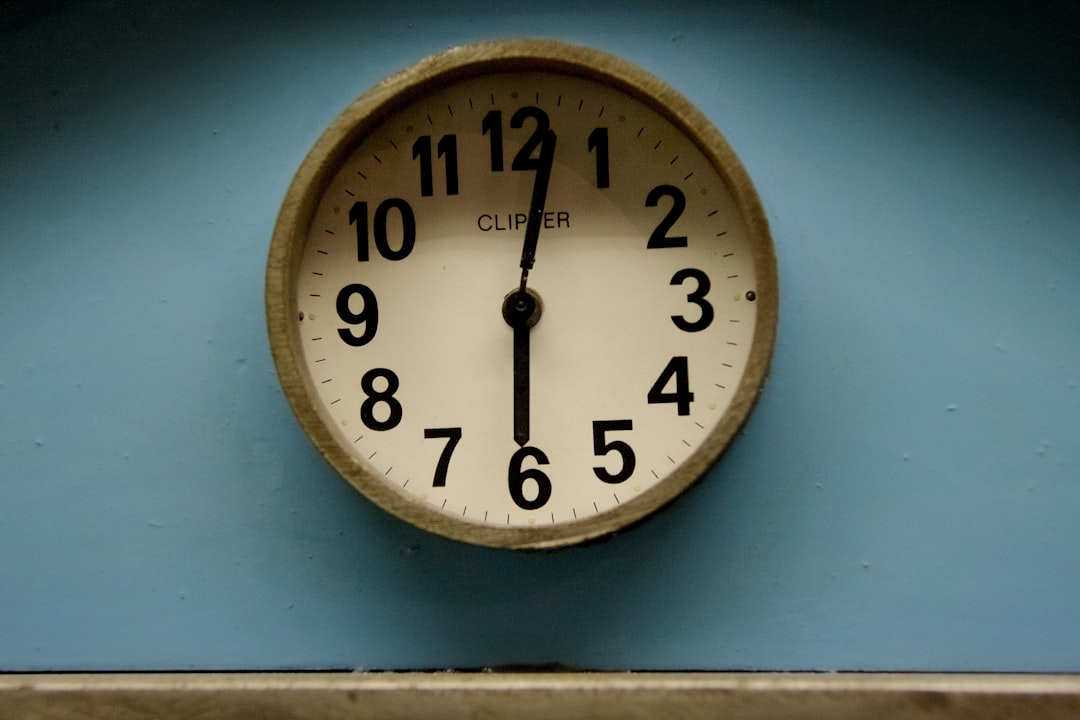
You’ve always thought of time as a steady, unwavering river, a constant flow from yesterday to today to tomorrow. It’s a comforting notion, isn’t it? Predictable. Manageable. But what if I told you that this perception, this very foundation of your daily existence, is far more fluid, far more fragile, and far more mind-bending than you ever imagined? Prepare yourself, because we’re about to embark on a journey through 25 time facts that will fundamentally alter your understanding of reality.
You’ve spent your entire life experiencing time, measuring it, marking it. But have you ever stopped to truly consider what it is? It turns out, the very concept of time is something humanity has grappled with for millennia.
A Human Construct, Not an Absolute Truth
You likely see time as a linear progression, a straight arrow pointing from the past, through the present, and into the future. This is a construct, a way your mind organizes experiences.
Your Brain as a Timekeeper
Your own brain, in fact, acts as a rudimentary internal clock, an intricate biological mechanism that helps you perceive the passage of moments. This internal rhythm, while often accurate enough for daily life, is surprisingly susceptible to external influences.
The Subjectivity of Time’s Passage
This leads to a profound realization: time isn’t a universal constant that ticks at the same rate for everyone, everywhere. Yours, specifically, can be experienced quite differently depending on your internal state and your surroundings.
Emotions: Warping Your Internal Clock
Think about it: a thrilling adventure might feel like it flew by in an instant, while a dull, tedious lecture can stretch on for what feels like an eternity. Your emotions directly influence your perception of time’s speed. Joy, excitement, and engagement tend to make time feel like it’s accelerating, while boredom, anxiety, and sadness can cause it to drag. This psychological phenomenon is a powerful testament to how your inner world shapes your experience of the external world, or at least your interpretation of it.
Age: The Accelerating Illusion
As you get older, you might notice that time seems to speed up. This isn’t just a feeling; it’s often attributed to the sheer volume of experiences and memories you’ve accumulated. Each year, a given period represents a smaller fraction of your entire life, making it feel shorter in comparison. Imagine learning to walk versus remembering your 50th birthday. The novelty and intensity of initial experiences make them seem longer in retrospect.
External Influences on Your Temporal Perception
Beyond your internal emotional landscape, external factors also play a significant role in how you perceive time.
The Pervasive Influence of Light and Sound
The presence or absence of light, for instance, can subtly influence your internal clock. Natural light cycles have evolutionarily shaped our circadian rhythms, affecting our perceived wakefulness and the pace at which we feel events unfold. Similarly, the rhythm of sounds around you, from music to ambient noise, can either speed up or slow down your perception of time. A driving beat can make a workout feel more energetic and faster, while a slow, melancholic melody might enhance a feeling of introspection and slower passage.
If you’re fascinated by the concept of time and want to explore more mind-bending ideas, check out the article titled “25 Facts About Time That Will Break Your Brain.” This intriguing piece delves into the complexities and peculiarities of time, challenging our perceptions and understanding of this fundamental aspect of reality. For further exploration, you can also read a related article that discusses the philosophical implications of time travel and its representation in popular culture. Discover more by visiting this link.
Einstein’s Revolution: Time as a Dimension
For centuries, time was viewed as an absolute, unchanging backdrop against which the universe played out. Then, Albert Einstein stepped onto the scene and fundamentally shattered that notion with his theories of relativity.
The Intertwined Fabric of Spacetime
Einstein’s groundbreaking work revealed that time isn’t a separate entity but is instead inextricably linked with space, forming a unified four-dimensional fabric known as spacetime. This means that time is, in effect, a dimension just like length, width, and height.
Time is a Dimension, Not Just a Measurement
You can move through space in any direction, right? You can go forward, backward, left, right, up, down. But with time, you can only move in one direction: forward. This inherent directionality, often referred to as the “arrow of time,” is a fundamental aspect of our universe and a key element in the laws of physics that govern its existence.
The Mind-Bending Phenomenon of Time Dilation
One of the most astonishing implications of Einstein’s theories is the concept of time dilation, a phenomenon where the passage of time is not absolute but is rather dependent on an object’s motion and proximity to gravitational fields.
Motion: The Speedometer of Time
According to Einstein’s special theory of relativity, the faster an object moves through space, the slower time passes for it relative to a stationary observer. This isn’t a theoretical quirk; it’s a demonstrable fact. If you were to travel at speeds approaching the speed of light, your clock would tick noticeably slower than the clocks of those you left behind on Earth. Imagine embarking on an interstellar journey at near-light speed. You might return after what felt like a few years to you, only to find that decades, perhaps even centuries, have passed on your home planet. This isn’t science fiction; it’s the consequence of the universe embracing its relativistic nature.
Gravity: The Pull That Slows Time
Similarly, Einstein’s general theory of relativity explains that gravity also affects the passage of time. The stronger the gravitational pull in a particular region, the slower time will flow. This means that time passes even slower for you on Earth than it would for someone floating in the vacuum of space, far from any significant gravitational influence. This effect is subtle in our everyday lives but becomes significant in extreme gravitational environments, such as near black holes.
The Mechanics of Timekeeping and Cosmic Clocks

While the philosophical and relativistic aspects of time are mind-boggling, the practical measurement and understanding of time have also evolved dramatically, leading to incredibly precise instruments and global standardization.
The Dawn of Precision: Atomic Clocks
When it comes to accuracy, nothing surpasses the atomic clock. These marvels of modern engineering utilize the resonant frequencies of atoms to measure time with astonishing precision, making them the most accurate timekeeping devices known to humanity. The ticks of an atomic clock are not based on macroscopic mechanical movements but on the fundamental vibrations of subatomic particles.
Atoms as the Ultimate Timekeepers
These atomic vibrations are incredibly consistent and are unaffected by external factors that might perturb mechanical clocks. This reliability allows atomic clocks to remain accurate to within a few seconds over billions of years, a testament to our ability to harness the fundamental laws of physics for practical applications.
Standardizing the World: Time Zones and the International Date Line
The realization that time is indeed relative complicated interstellar communication and global coordination. To navigate this, humanity implemented systems to standardize time across vast geographical distances.
The Necessity of Time Zones
The creation of time zones was a pragmatic solution to the chaos of varying local times. As transportation and communication advanced, it became essential to have a common understanding of what time it was in different parts of the world. Without them, coordinating a simple phone call or an international flight would be an exercise in extreme complexity. You now navigate your day using these zones, implicitly acknowledging the global agreement on temporal reference points.
The Boundary Between Days: The International Date Line
At the opposite side of the world, the International Date Line serves as a conceptual boundary that separates two consecutive calendar days. Crossing this line, whether you’re sailing across the Pacific or flying eastward, means you either gain or lose a full day. It’s an artificial construct, yes, but one that’s essential for maintaining the coherent flow of our calendar system across the globe. It’s a stark reminder that even our very definition of a “day” is a shared agreement, applied to the planet’s rotation.
The Universe’s Clockwork and the Mystery of Existence

Beyond human constructs and relativity, time is woven into the very fabric of the universe, underpinning its physical laws and posing profound questions about existence itself.
Time: A Fundamental Pillar of Physics
You may not think about it when you’re living your life, but time is not just an arbitrary measurement; it is a fundamental component of the laws of physics. Without it, the universe as we understand it simply couldn’t exist. All physical interactions, from the smallest subatomic particle to the largest galaxy, unfold and are governed by temporal progression.
The Ever-Shifting Present
The concept of “now” is a fleeting and ever-changing point in time. As swiftly as you comprehend this sentence, the present moment has already become the past. This constant forward march of the present underscores the dynamic and continuous nature of time. Your personal “now” is always moving, always transitioning.
Beyond Linearity: Multiverses and Time
The mind-bending concept of the multiverse, a theoretical framework suggesting the existence of multiple universes, opens up even more perplexing possibilities regarding time.
The Multiverse and Non-Linear Time
In some multiverse theories, time may not be linear at all. Other universes might experience time in ways that are fundamentally different from our own, perhaps with multiple timelines branching off or even a complete disregard for sequential progression. This is where you enter the realm of pure speculation, but it’s a fertile ground for the imagination and for challenging your preconceived notions.
The Irreversible Arrow of Time
The “arrow of time” refers to the observation that time appears to flow in only one direction – from past to future. While the laws of physics at a fundamental level are often time-symmetric (meaning they work the same forwards and backward), macroscopic events are irreversible. You can’t un-bake a cake, and you can’t un-spill milk. This observed irreversibility is a key characteristic of our experience of time.
The Inseparability of Time and Space
As we touched upon with Einstein’s theories, time isn’t simply a separate line of progression. It’s intrinsically woven into the very fabric of reality, inseparable from the three spatial dimensions. You exist in a four-dimensional spacetime continuum. To understand the universe, you must consider time not as an external clock but as an integral dimension of existence itself. Think of it as a tapestry where space and time are thread, each reliant on the other.
If you’re fascinated by the concept of time and want to explore more intriguing insights, you might find the article on 25 facts about time that will break your brain particularly enlightening. It delves into the complexities and peculiarities of time in ways that challenge our everyday understanding. For additional mind-bending information, check out this related article that offers even more fascinating facts about the universe and our perception of reality. You can find it here: related article.
The Enduring Enigma of Time
| Fact | Description |
|---|---|
| 1 | Time is relative, not absolute |
| 2 | Time can be influenced by gravity |
| 3 | Time moves faster in space |
| 4 | Time travel to the future is possible |
| 5 | Time travel to the past is theoretically possible |
| 6 | Time is not experienced uniformly by all people |
| 7 | Time can be affected by speed |
| 8 | Time is a dimension |
| 9 | Time is not constant |
| 10 | Time can be dilated |
| 11 | Time is a human construct |
| 12 | Time can be influenced by motion |
| 13 | Time is a fundamental part of the universe |
| 14 | Time can be experienced differently at different altitudes |
| 15 | Time is not absolute |
| 16 | Time can be affected by the presence of mass |
| 17 | Time is a one-way street |
| 18 | Time can be influenced by acceleration |
| 19 | Time is a fundamental part of the fabric of the universe |
| 20 | Time can be experienced differently in different reference frames |
| 21 | Time is not absolute |
| 22 | Time can be influenced by the curvature of spacetime |
| 23 | Time is a mysterious and complex phenomenon |
| 24 | Time is a fundamental aspect of our existence |
| 25 | Time is a mind-bending concept |
Despite our incredible advancements in understanding and measuring time, its ultimate nature remains one of the universe’s most profound and persistent mysteries.
Time’s Deep Roots in Culture and Consciousness
From ancient calendars and philosophical debates to modern physics and artificial intelligence, the concept of time is deeply ingrained in human culture, history, and our very consciousness. It shapes our narratives, our ambitions, and our understanding of our place in the cosmos. Your entire existence is framed by the temporal progression of your life.
The Unanswered Questions
Even with sophisticated instruments and complex theories, you are left with a profound sense of wonder. The true nature of time continues to baffle and intrigue scientists, philosophers, and curious minds like yourself. It’s a journey with no definitive end, a constant exploration of the underlying mechanisms that govern your reality.
You’ve just scratched the surface of what makes time such a mind-blowing concept. Each fact you’ve encountered challenges your intuitive understanding, pushing the boundaries of what you thought was possible. So, the next time you glance at your watch, remember that you are not merely observing the passage of seconds, but a profound and enigmatic dimension of existence.
FAQs
1. What is the concept of time dilation?
Time dilation is a phenomenon predicted by Einstein’s theory of relativity, where time passes at different rates for observers who are moving relative to one another. This means that time can appear to move slower or faster depending on the speed and gravitational pull of the observer.
2. How does time travel work according to physics?
According to the theory of general relativity, time travel could be possible through the use of wormholes or by traveling at speeds close to the speed of light. However, the practicality and feasibility of time travel remain highly theoretical and have not been demonstrated in reality.
3. Can time be experienced differently based on location in the universe?
Yes, due to the effects of time dilation, time can be experienced differently based on an observer’s location and motion in the universe. For example, time passes more slowly for objects in strong gravitational fields, such as near a black hole, compared to objects in weaker gravitational fields.
4. What is the concept of “arrow of time”?
The “arrow of time” refers to the asymmetry of time, where time appears to have a specific direction from the past to the future. This concept is related to the increase of entropy in the universe, where systems tend to move from a state of lower disorder to higher disorder over time.
5. How does time perception vary among individuals?
Time perception can vary among individuals due to factors such as age, attention, and emotional state. Studies have shown that individuals perceive time differently based on their experiences and cognitive processes, leading to subjective differences in the perception of time.